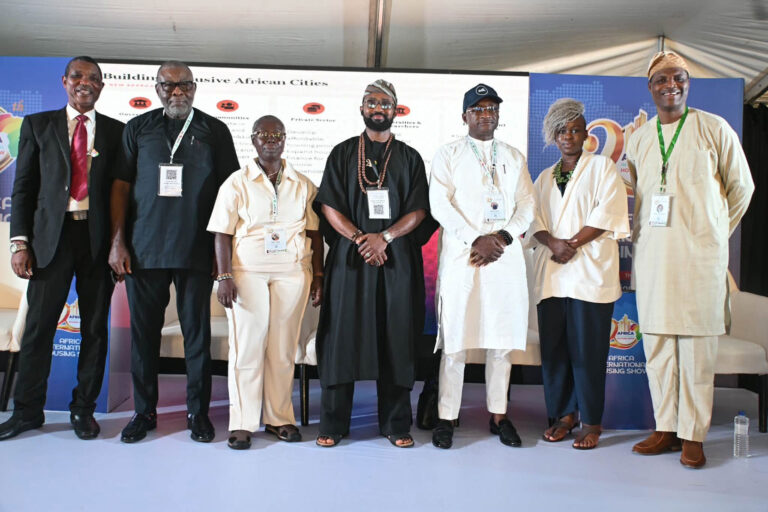
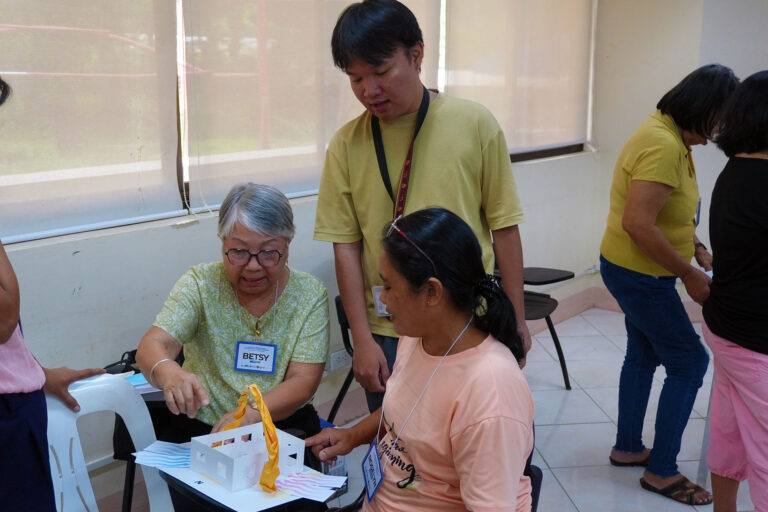
The event brought together community practitioners from around the world to advance community-driven climate action. The SDI delegation included representatives from Brazil, Kenya, the SDI Secretariat, Tanzania, the Philippines, Uganda, Zambia, and Zimbabwe.
It is more than just about four walls
Housing is the first line of defence against climate change, but it is about more than just about four walls. Housing inequalities and injustices drive climate vulnerability. Secure land tenure is essential for sustainable climate adaptation and long-term impact. Forced evictions, fuelled by the commodification of land, is the unjust reality for countless low-income households.
Organised communities have the collective power to negotiate land rights and lead incremental, community-driven slum upgrading efforts.
Forced Evictions: A threat to Climate Adaptation
During the session Living the LLA Principles – Women and Traditional Communities Leading Action from the Global South, Theresa Carampatana from the Homeless People’s Federation of the Philippines shared how the women-led federation secured land ownership for nearly 3,000 informal settlement residents who were threatened with evictions. Once land tenure was secured, the federation facilitated efforts to mitigate flood and fire risks through incremental upgrading of homes and the settlement.
Youth as Agents of Change
In a dialogue on coalitions for inclusive climate action, urban labs and youth-led climate planning, Lizian Onyango from SDI Kenya asked those in attendance: “We often frame urban youth as a marginalised group vulnerable to the impacts of climate change. But what if this narrative is holding us back? What if, instead of being seen solely as recipients of support, urban youth were recognised as active agents in shaping climate adaptation?”
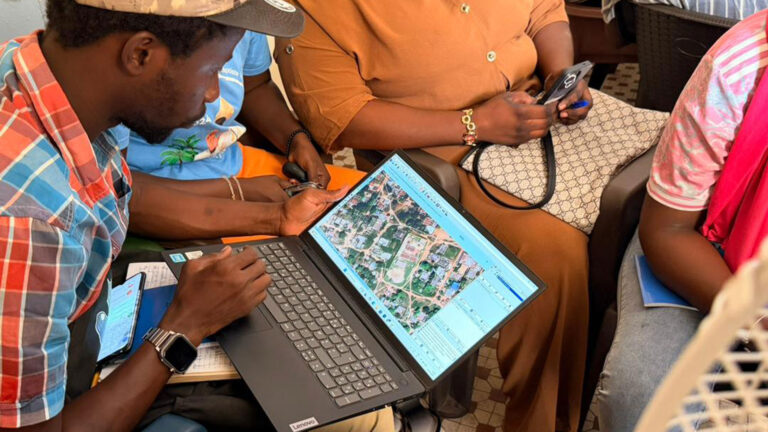
Lizian shared how SDI Kenya has engaged youth as co-researchers. Using GIS mapping, they identified key infrastructure, assessed risks, and visualised social, economic, and environmental vulnerabilities. This combination of technology and local knowledge shows how youth can drive practical, community-led adaptation.
Locally-led adaptation begins with shifting power!
Milka Kori, also from SDI Kenya, took part in a dialogue on building stronger global partnerships to support local action. Participants explored how civil society organisations can connect grassroots groups with national and international efforts.
Communities must lead and set their own priorities to design solutions that work for them. While intermediaries like NGOs can provide support, they must ensure communities remain in control.
Financing Adaptation from the Ground Up
The SDI Secretariat, together with the Centre for Community Initiatives in Tanzania, co-hosted a session showcasing SDI’s Urban Poor Funds (UPFs), savings groups, and community-led data collection (profiling and enumeration) as successful examples of grassroots-led climate finance mechanisms.
This interactive session demonstrated how pooling funds as an organised collective, combined with community-led data collection, helps address the most urgent climate risks through incremental upgrading in slum communities. It also highlighted the vital role of community-driven governance in ensuring financial management is transparent, accountable, and impactful.
LLA Supports Food Sovereignty and Livelihoods
Ian Matimba, representing the People’s Process on Housing and Poverty in Zambia (PPHPZ), was recognised at CBA19 for presenting the most inclusive solution during the “Shark Tank” – a platform where participants pitch locally-led climate adaptation ideas to a panel of experts with investment experience.
The winning initiative, Sustainable Enterprises for Urban Resilience in Zambia, focuses on scaling up hydroponics and black soldier fly farming. This innovative approach conserves water, improves soil quality, enhances access to nutritious food, supports better waste management and creates new income opportunities for local communities.
Judges commended the PPHPZ team for a well-rounded project that applies circular economy principles to improve food production and soil health in marginalised areas, using waste as a resource. They also highlighted the hydroponic system’s efficiency and its potential to be replicated in diverse contexts. The project’s contributions to water and soil conservation, food security, local livelihoods and the team’s commitment to reinvesting profits for continued growth and sustainability were welcomed.