By Celine Santos
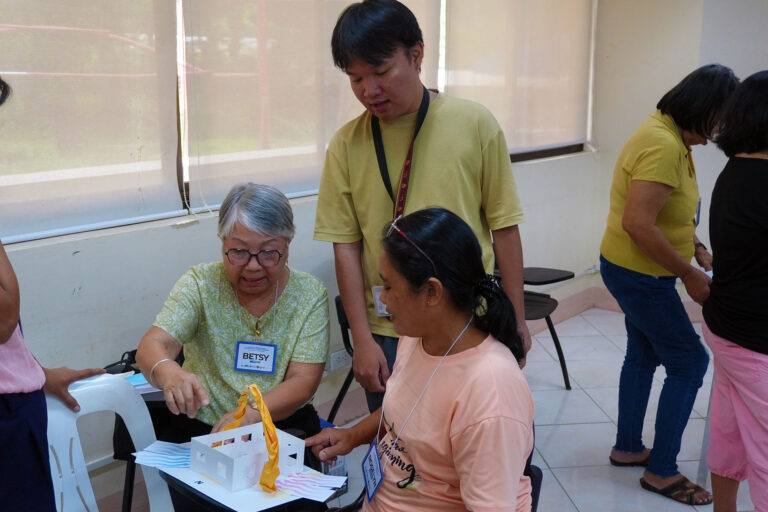
Effective waste management in urban poor communities requires more than technical solutions; it demands shared understanding, local ownership, and sustained participation. As part of the Zero Waste for Better Spaces campaign, a series of community-centered listening and co-creation sessions aims to assess the current waste management issues in the pilot community of Homeless People’s Federation Philippines Inc. (HPFPI), in Sitio Mahayag Alliance of Structure Homeowners (SMASH) Association, Incorporated, Pakna-an, Mandaue City, Cebu.
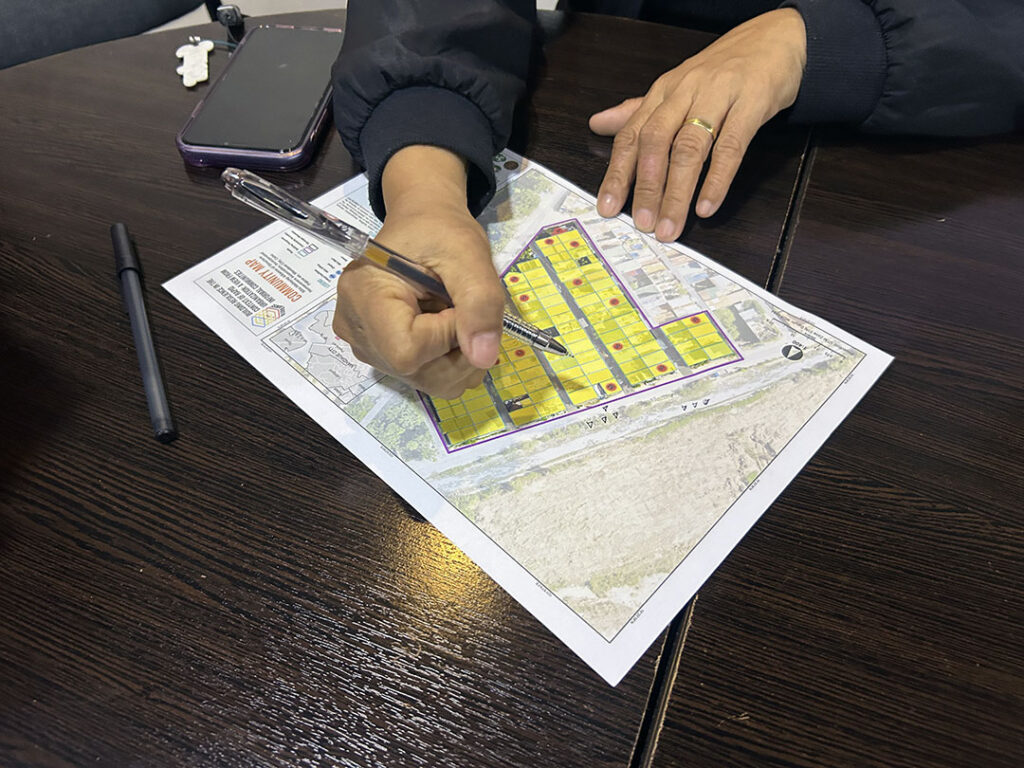
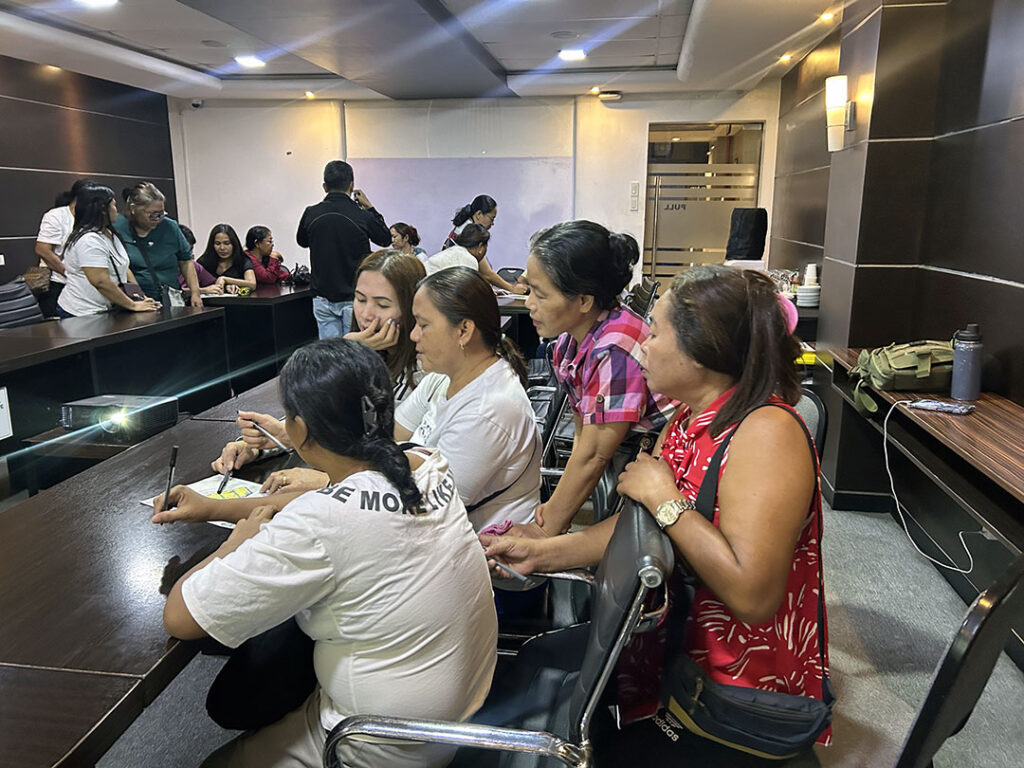
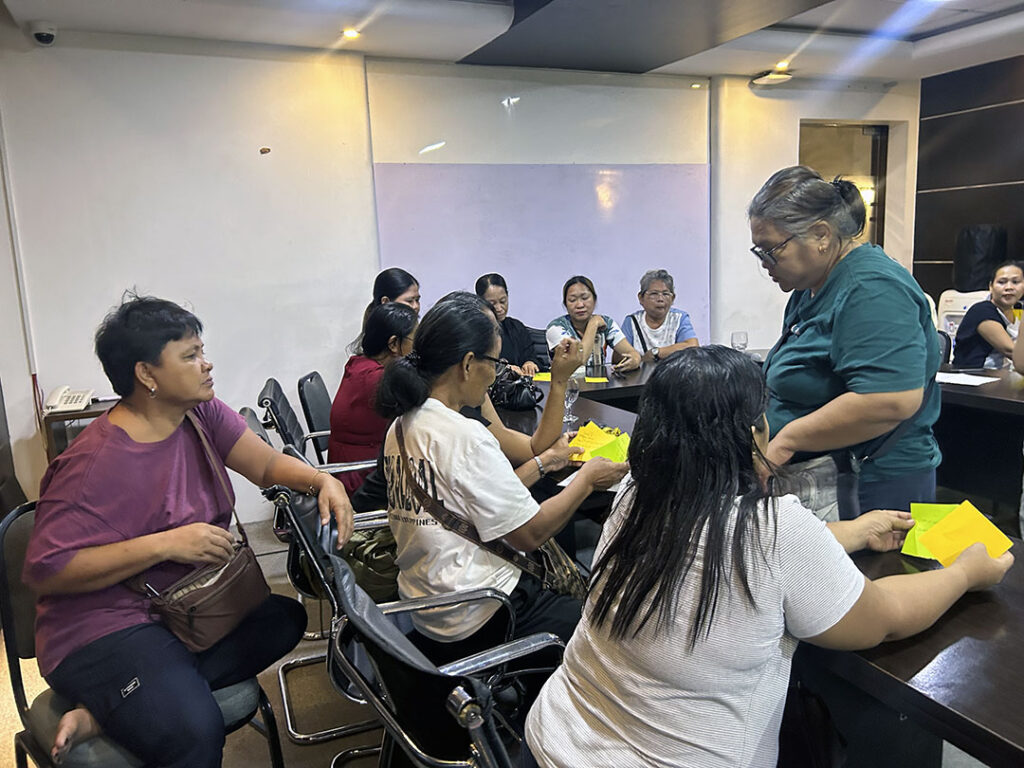
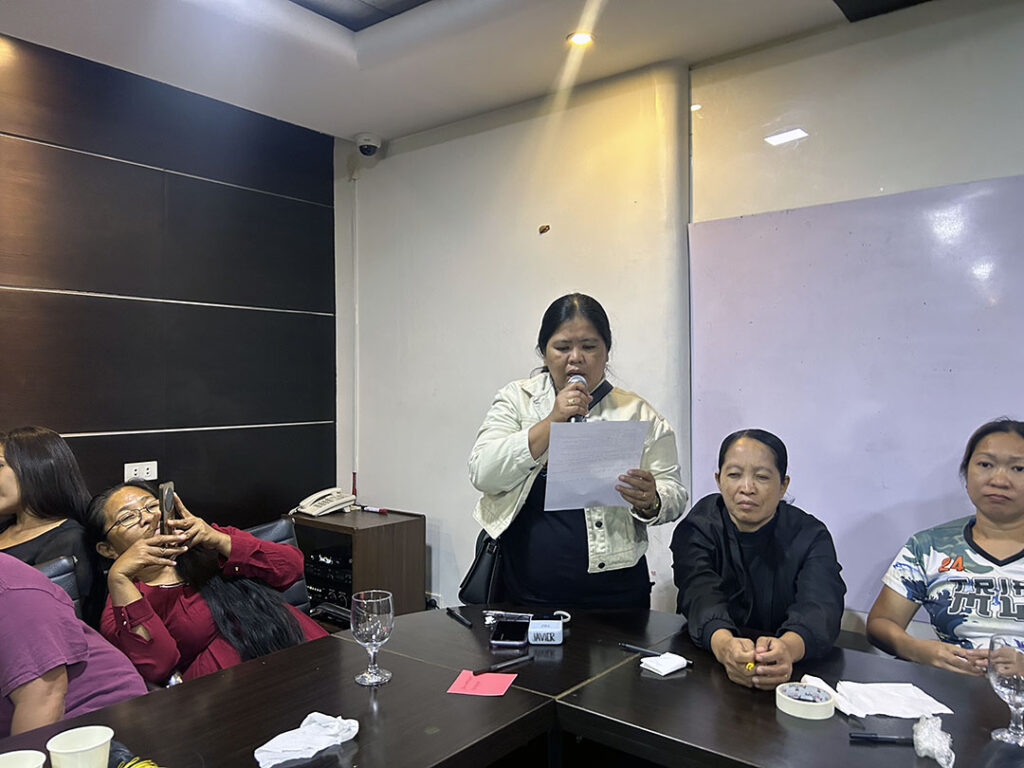
The Zero Waste for Better Spaces: Community Listening and Co-Design Session in SMASH focused on assessing and co-designing the community’s waste management situation and identifying gaps that will enable us to find solutions toward a Zero Waste system through community participation and capacity building. Through inclusive dialogue and hands-on activities, participating community members are not only informed but actively involved in shaping practical, locally relevant strategies. towards a more resilient, functional and sustainable waste management system in SMASH.
Community members engaged head-on in mapping and identifying waste management issues and gaps in their area. They discussed major issues such as garbage accumulation in creeks and roads, clogged drainage causing flooding, irregular waste collection, illegal dumping, foul odors, and septic tank overflow. Existing efforts like household waste segregation and monthly clean-up drives were recognized, but composting, recycling and gardening programs were not sustained due to limited space, lack of training, insufficient resources and weak policy enforcement.
Through the session, the participants were able to emphasize the need for training in segregation, composting, recycling, MRF operations and continuous environmental education while promoting the long-term vision of a cleaner, organized and resilient community. The co-creation session was also able to produce a strategy on Zero Waste for Urban Poor Communities (UPC) and Informal Settler Families (ISF). Overall, the meeting concluded that stronger coordination with government agencies, better systems, and gradual community-led actions are necessary to achieve a sustainable Zero Waste future.
Processing Waste into Opportunities for UPC and ISF Communities transforms waste management from a daily challenge into a pathway for community development and resilience. Through collective action and community-led initiatives, recyclable and reusable materials are processed to support savings programs, create sustainable livelihood opportunities, strengthen social security mechanisms and promote environmental responsibility. The initiative also highlights the vital role of youth empowerment by engaging young people in climate action, leadership, innovation and community organizing. By turning “Waste with Purpose and Opportunities,” communities can build cleaner, safer and more inclusive spaces while generating opportunities that improve everyday life and long-term sustainability.
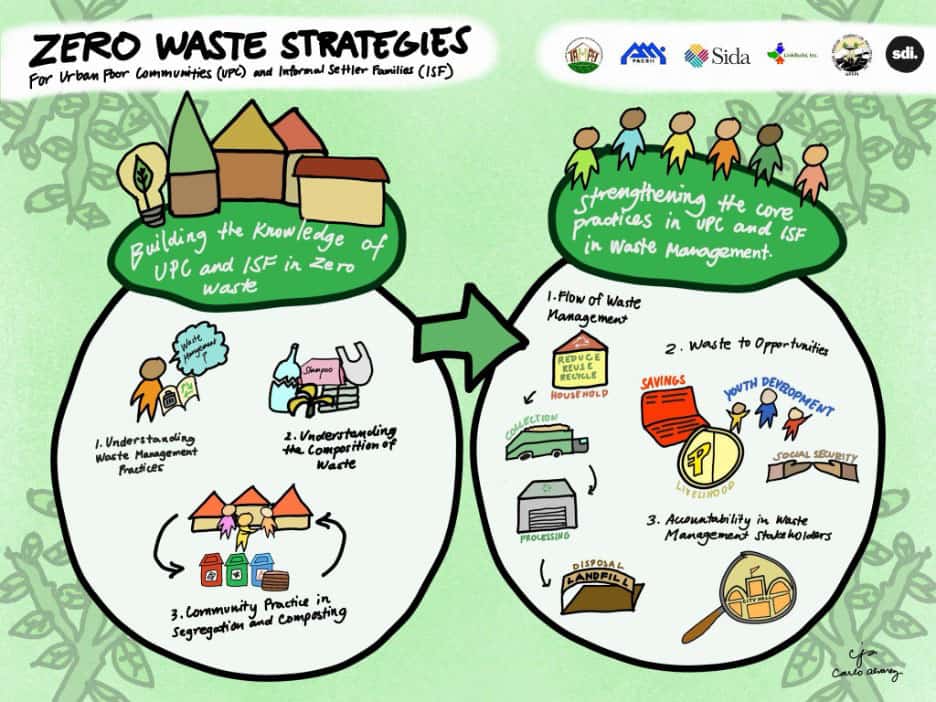
Strategies for Zero Waste:
- Understanding the overall Zero Waste concept for urban poor and informal settlement communities (Building the Knowledge of the UPC and ISF communities in ZW) (Individual and Interpersonal Level)
- Understanding the day-to-day waste management practices of informal settlements and urban poor communities (Knowledge and Capacity Building of Waste Management at the Household Level)
- Basic knowledge and understanding of available waste management practices, principles, concepts, laws and projects
- Understanding of the Status Quo of the overall Waste Management; Composition of Waste (e.g., toxic waste, food waste, plastic waste, etc.) in the community
- Understanding the behavioral patterns of the community in waste management (e.g., community practices in waste segregation, composting, etc.)
- Understanding the day-to-day waste management practices of informal settlements and urban poor communities (Knowledge and Capacity Building of Waste Management at the Household Level)
- Strengthening the core practices of UPC and IS communities in understanding the waste management concepts, together with the existing practices, laws, and ordinances in waste management
- Practical waste management training and understanding the best practices of different communities in other island groups, regions, municipalities, and cities.
- Flow of waste management in the community from households, MRF, landfills, etc.
- Household management (3 Rs; Generation/Segregation (sorting at the source))
- Collection/Transportation (gathering and moving waste),
- Processing/Treatment (recycling, composting, or recovering energy), and
- Disposal (final placement, often in landfills)
- Processing of wastes for opportunities of UPC and ISF communities
- Savings Programs
- Livelihood
- Social security
- Youth Empowerment
- Accountability and responsibility mechanisms of stakeholders in waste management systems.
- Accessibility of the facilities from private and public institutions (e.g., barangay, NGOs, etc.)
- Flow of waste management in the community from households, MRF, landfills, etc.
- Practical waste management training and understanding the best practices of different communities in other island groups, regions, municipalities, and cities.