Tree cutting, firewood and survival in Otjinene

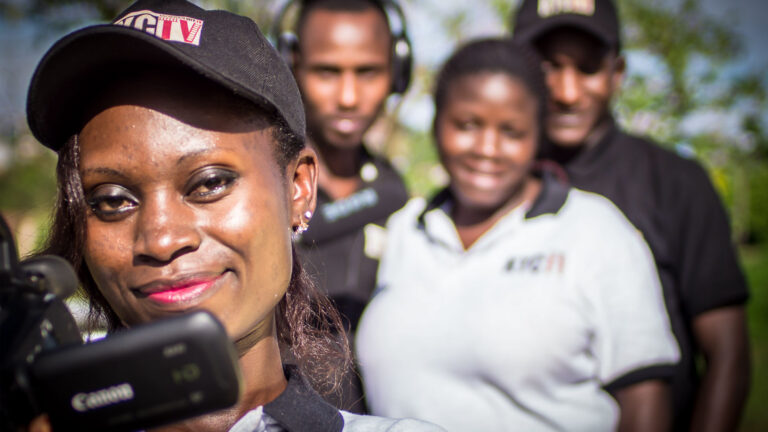
By Samantha Hendricks, Thomas Rooinasie and Veueza Kaunatjike of the Big Three crew, KYC.TV Namibia
In Otjinene, tree cutting has become a major issue for the community and the environment. Trees are cleared to open up pasture for cattle and other livestock. They are also cut for firewood and many families here sell that firewood to survive.

We are three KYC.TV youth members. We visited the Ozohambo settlement in Otjinene to interview people about tree cutting, together with SDI intern Pietro Sandro Chiri Zapata. In total, we interviewed five people, but only three agreed to be recorded.
Silvia Mujoro is 50 years old and makes her living selling firewood. She buys it from local people who bring it in by donkey cart, for between N$150 and N$200. What she earns feeds her children and she also helps others in the community who have no income of their own. Her difficulty is supply. Some weeks her suppliers bring a lot of wood, other weeks very little and that makes it hard to run a steady business. She has asked the councillor for donkey carts, so that she can collect and carry the wood herself instead of buying it from others.

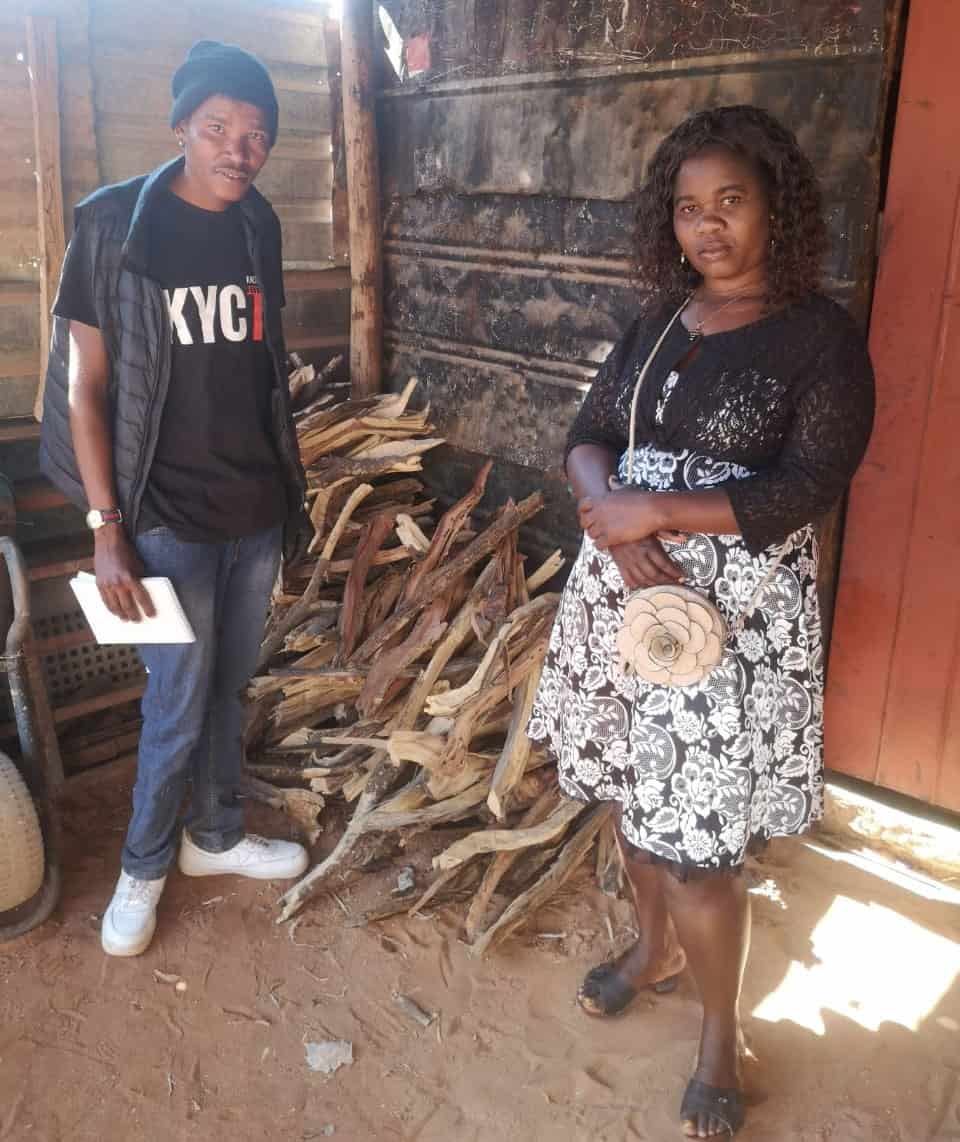
Uasaneka Hengari is 39. She has sold firewood since 2010, because she had no other income. At first she collected the wood herself and carried it home on her head. Later she began buying from people with donkey carts. She also sells basic household goods such as sugar and tea bags. Her goal is to improve her family’s living conditions. Her challenge is that she cannot cut the wood herself. She has to pay someone else to do it, and that takes a share of what she earns.

Thomas Rooinasie, KYC.TV Youth member, pictured with Uasaneka, Otjinene community member who sells wood to make a living
The Big Three crew. From left: Samantha, Thomas, Veueza.
Unotjarikatjiri, 43 years old, says that he simply goes into the forest to cut trees without experiencing any problems. He only cuts trees when buyers ask him to and he uses the income to support his children and feed his family. He requested that the councillor provide him with an axe. He says he is a member of the team building SDI Namibia federation houses.
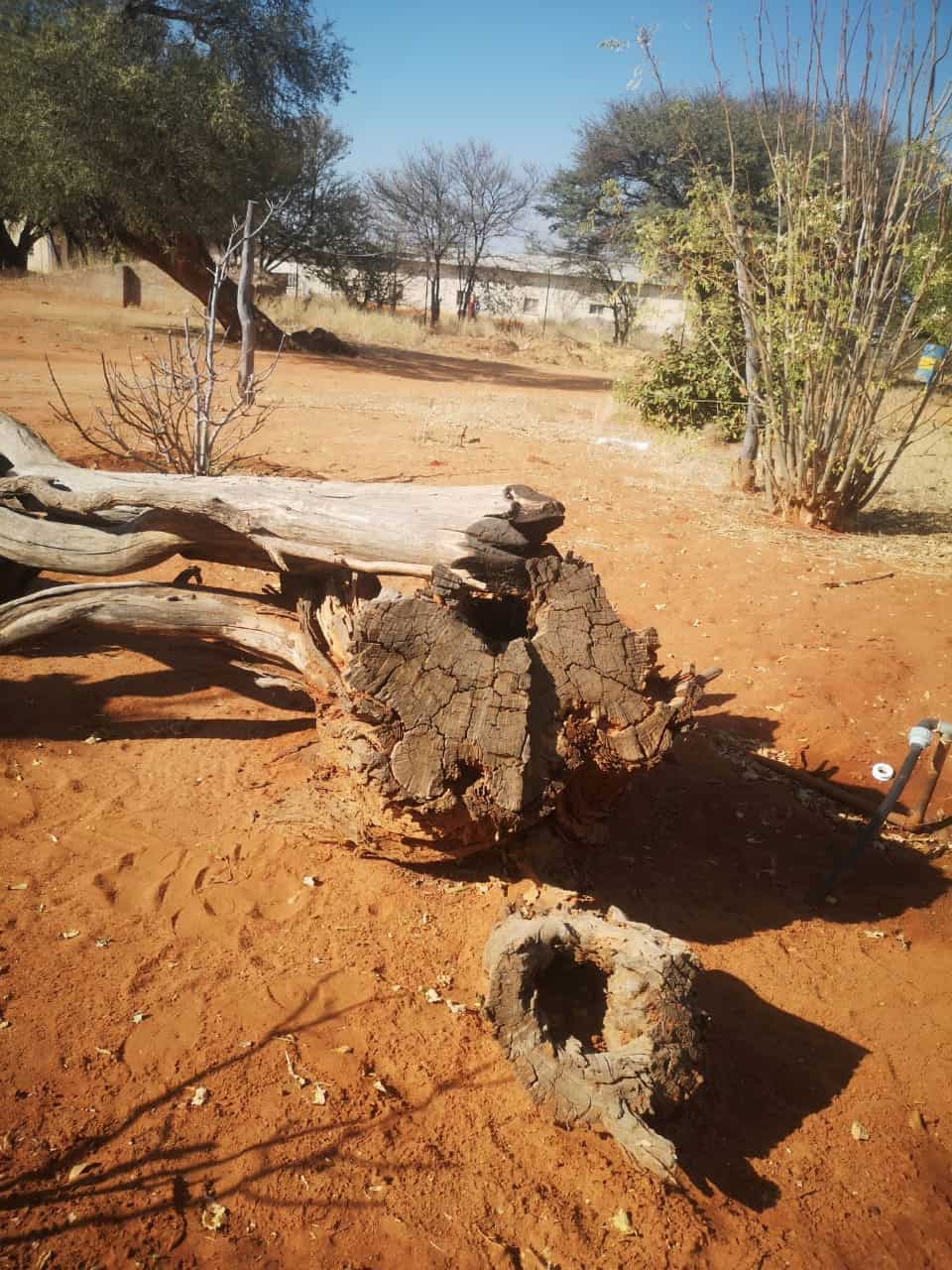
A dry felled tree in Otjinene
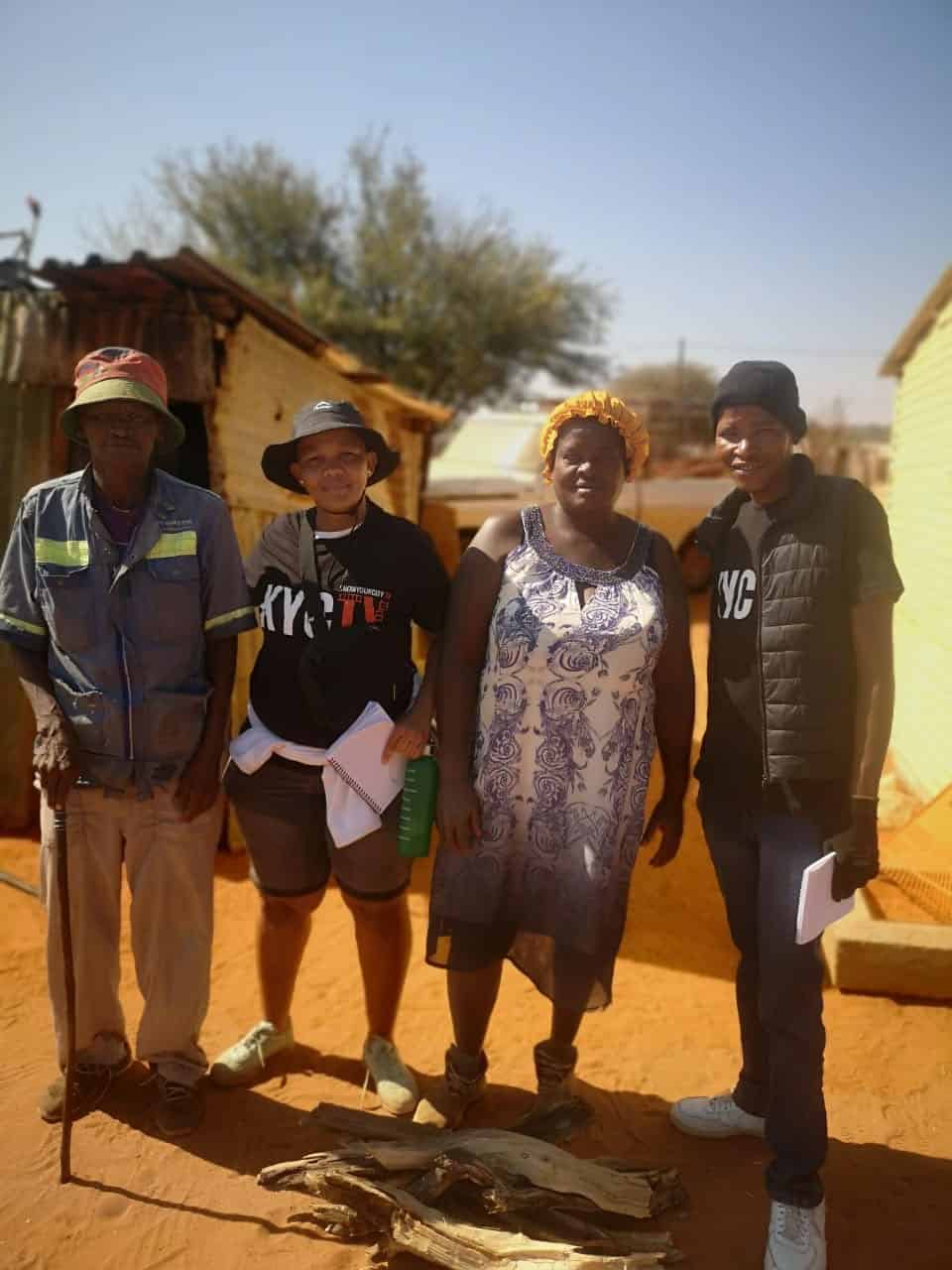
The crew with local community members
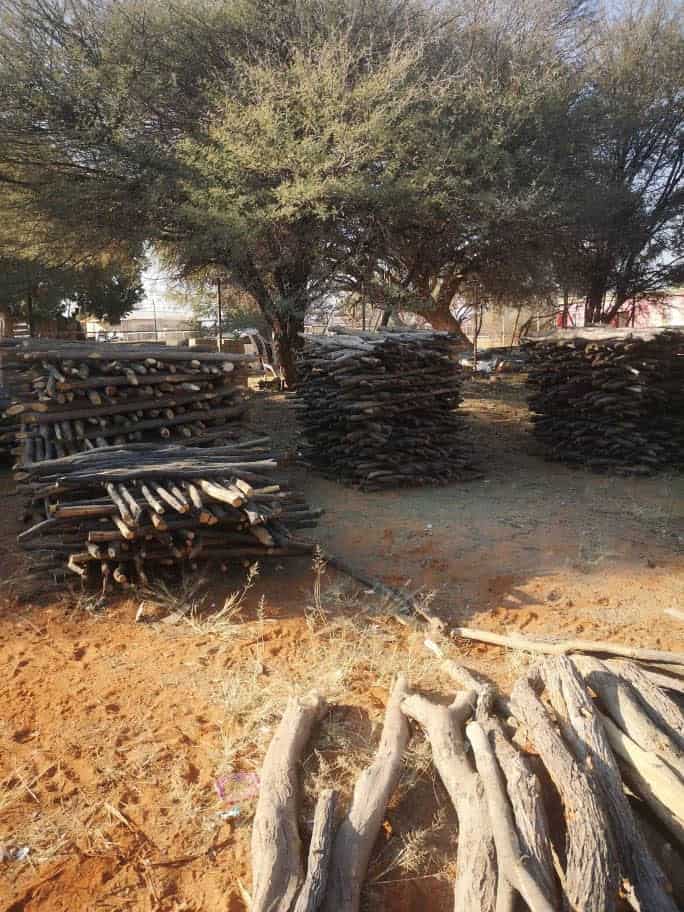
Piles of logs around the Ministry of Forestry in Otjinene
The stories show that tree cutting represents an economic lifeline for the urban poor in Otjinene. But trees are an essential part of our ecosystems, more so in times of drought, extreme heat and other climate change phenomena. Trees are essential for life because they provide oxygen, protect wildlife and help keep the environment healthy. As a team, we believe the municipality should reduce unnecessary tree cutting and plant more trees to protect our environment, while at the same time helping these families with alternative economic opportunities to protect their livelihoods. Nobody in Ozohambo should have to choose between feeding their children and protecting the forest.