IBSA and Enumerations: WUF Day 2
By Louise Cobbett, SDI secretariat
The second day opened with the same unforgiving humidity that Rio is famous for. Let there be no confusion – it is very, very hot here, but the majority of the SDI delegates are taking it in their stride. It is just this reporter who is the delicate flower and is finding it a struggle to survive…
There was a session on the IBSA (India, Brazil and South Africa) development challenges, and there were some very interesting points to have come out of it. Firstly the panel, which was made up of various governmental individuals, highlighted that cities reproduce poverty, and that poverty is defined by location. Brazil has been attempting to produce better equity and therefore equality within it’s cities, but that public resources are stacked.
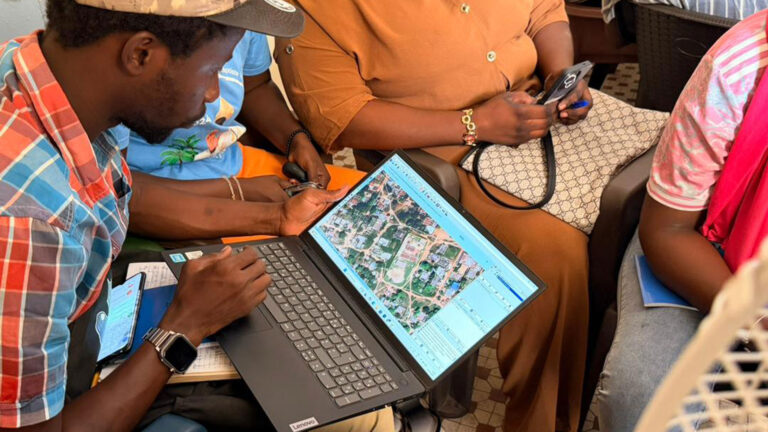
The panel had therefore indirectly supported SDI’s constant belief in the enumeration. If the resources are stacked against the poor, the only way they will be able to challenge the flow of resources, is if they are organized. After conducting an enumeration communities then know where the resources need to be channeled – sanitation, electricity or flood prevention
The Indian minister revealed that India is only 30% urban, and here is clearly an opportunity for SPARC, Mahila Milan and the National Federation of Slum Dwellers to build upon their success and work with governments to prepare for the eventual urbanization of India.
Edith Mbanga of the Namibian Shack Dwellers Federation gave a presentation to the Global Land Tools Network (GLTN) of the United Nations on the power of enumerations in the community process:
I felt it went very well, and even though I was sitting up there as SDI, we were able to give examples from other countries. I was talking about enumerations, which is something that happens all over the SDI countries.
Action on the ground: Day 1 at the WUF
By Louise Cobbett and Jack Makau, SDI secretariat
The first day of the World Urban Forum in Rio de Janeiro, Brazil, began with SDI making a grand – and visual – entrance. The 67 delegates broke the traditional monotony of the gray suit brigade. It was a fitting visual representation of SDI’s way of saying that it’s what happens in the communities, and not the meetings, which counts.
The forum’s opening ceremony featured a very well choreographed dance production. But the message that the toned dancers were trying to get across, was somewhat lost on the 3, 500 strong crowd. Perhaps it is the best analogy of the fear that SDI has about the conference.
It gave deeper meaning to Jockin’s advice the previous day, which was to make full use of the opportunities to get governments to make firm commitments on land and services.
For example, on the first day the Tanzania, Ghanaian and Zimbabwean federations organized meetings with their respective governments.
Highlights of the first day were SDI’s networking event, called “Protocols for large informal settlement upgrading.” It was probably the only session that started and ended with a song. The session featured 5 case studies and of struggles for secure tenure and fights against eviction. There was Mzwanele Zulu from Joe Slovo in Cape Town; Jack Makau from SDI spoke about Kibera in Nairobi; Philip Kumah spoke about the process of upgrading Old Fadama in Accra; Claudius Pereira of URBEL (Urbanisation Company of Bele Horizonte) and Marcos Landa, the coordinator of the Brazilian movement talked about Osasco, which is a settlement in Sao Paulo and finally Jockin, the president of SDI and the National Slum Dweller’s Federation of India gave his views on the experiences of Dharavi in India.
Jack Makau’s impression of the event was it was a session about things that people have done, rather than a session about hypothetical situations and new thinking. And there are very few sessions like that. The examples of concrete achievement largely consist of answers coming out of communities, which is exactly what SDI is here to showcase and build upon.