Strengthening Civil Society Voices on Urban Poverty
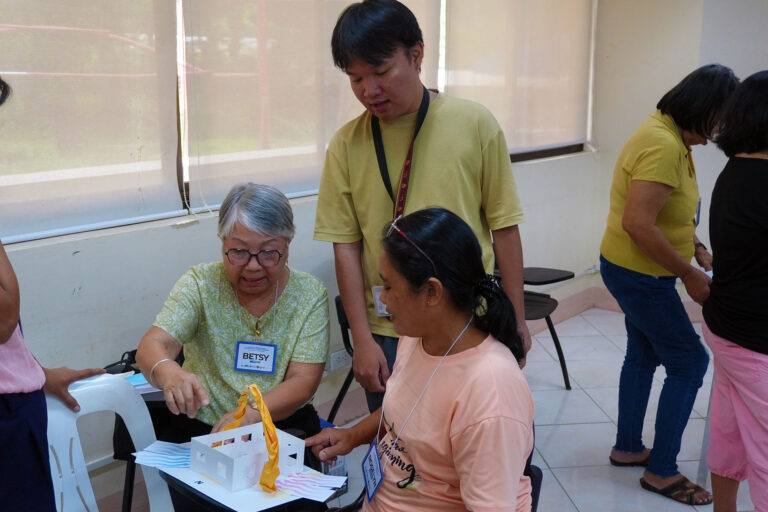
The Indian SDI Alliance, SPARC-NSDF-Mahila Milan, alongside long-standing partner PRIA initiated events in various states in India to seek deeper community participation on government poverty linked programs in cities. Participants explored ways that state and city authorities and NGOs can facilitate effective partnerships with communities, making space for them to be centrally involved in upgrading, infrastructure and design projects.
This small video attempts to share glimpses of initial workshops help in Patna, Bihar, and Ranchi in Chhattisgarh, India. These initial workshops will be followed up more in depth engagements, so stay tuned to the blog for updates.
The Sanitation Deficit Reflects a Deficit in Governance for the Poor

**For the full article, please visit The Global Herald**
By Sheela Patel, Chair of SDI Board
Water and sanitation represent the most clear and obvious amenities that link cities citizens, their local government and national state. SDI Board Chair Sheela Patel sent the message at the World Water Week 2011 that the existing deficit in sanitation is obvious and clearly one of the unachieved Millenium Development Goals set out by the United Nations nearly twelve years ago. Dr. Patel went on to say that this deficit reflects the real deficit in governance, since for the poorest in the city, inclusion and concern about them gets reflected in whether they get access to these amenities. Below is an excerpt from her article, which originally appeared in The Global Herald.
“A secure place to live, and access to basic amenities, followed very closely by the right to undertake livelihoods are the crucial safety networks for the urban poor. Yet these have remained outside the purview of the increasing informal habitation seen in cities, and this exclusion has impacts and implications for an average of 25%, but often up to 60%, of the city residents. Accountability must be sought in national and local policies that continue to ignore the urgent need to address the terrible conditions in which the poor live in informal settlements…
Change has to come now, so that deficits can be addressed and growth in urbanization in the next decade does not have to see such terrible inequities in cities in the future. And this cannot happen unless the poor and their organizations and settlements are seen as partners addressing this challenge. Events like World Water Week have to have community leadership to bring their voices to such debates and it was telling that I, as a professional, was their lone representative among over 2500 people who registered.”
To read the full article, visit The Global Herald here.
Back to Basics: Expanding Enumeration Processes across SDI
By Mitali Ayyangar
SPARC India
In January, 2011, the Indian Alliance of SPARC, NSDF and Mahila Milan hosted a four day workshop with SDI affiliate members from across Africa and South-East Asia to consolidate members’ enumeration processes and experiences. The workshop was intended to create a space for, firstly, collective reflection on the importance of this fundamental SDI activity and, secondly, to develop strategies to strengthen the SDI Secretariat’s ability to assist member federations expand and deepen their enumeration processes.
About Enumerations: Functionally, enumerations and surveys are tools by which the community collects information about its resources, land ownership, history, services that are provided and the community’s priorities. The various forms in which enumerations are exercised are detailed here. This information forms an important basis for addressing deprivations in slum areas, long-term strategic planning and for negotiating with authorities for land, tenure and infrastructure.
However, enumerating activities do much more than that. They are used not only as a tool to collect information about their communities, but also as a means of connecting and reaching out to people, and through this process, give individuals a collective sense of identity. They provide communities and their aggregated federations with a sense of who they are, what their collective needs are and information and data to produce insights about their situation. People learn to explore processes of contestation with the state about information the state has generated about the poor, which is often not comprehensive and can generally not be disaggregated to produce projects and investment possibilities or to benchmark what needs to be improved upon.
Workshop and its Objectives: In SDI’s collective experience, enumeration processes have been invaluable. Enumerations need to be expanded and carried forward at a large scale – and it was with this overarching objective in mind that the workshop was organised. Within this, a sub-objective was to focus on how support professionals and NGOs can improve their roles in assisting their federation-partners design and execute surveys, manage data and prepare reports.
The Workshop was therefore designed to create a space to:
- Discuss each participating country’s enumeration process, with the goal of clarifying and strengthening the various activities involved, identifying challenges and planning strategies to overcome these challenges
- Identify opportunities for the SDI Secretariat to support country-exchanges for federations to learn about various enumeration processes strategies
- Increase capability of federations and supporting NGOs in terms of data management and analysis
- Exchange thoughts and ideas about the potential for standardization of basic data used by cities and countries
- Discuss the possible future uses of GIS for mapping settlements and possible future production of biometric ID cards
Participants at the workshop included representatives from the SDI Secretariat and NGOs and federations from Ghana, Malawi, Uganda, Kenya, South Africa, Zimbabwe, Philippines and India.
Structure of the Workshop: The Workshop was spread over 4 days. Introductions and outlining individual participants’ expectations of the Workshop dominated the first half of the first day, while the second was dedicated to “setting the stage” – i.e. identifying the current status of federation work, common challenges and an overview of SDI’s near-future objectives. The second day included presentations from each country representative about their enumeration “journey” – each followed by a Q&A session which probed deeper into the role and value of enumerations in addressing needs of federations in that country. On the third day, the Indian Alliance organised a field visit to Pune, where local Mahila Milan presented, on site, their journey from savings and credit activities to enumerations to negotiations with governments to improved housing and sanitation. On the final day, participants evaluated whether their expectations had been met at the Workshop, developed action plans to expand their enumeration activities and identified key peer-to-peer exchanges that would, with the support of the SDI Secretariat, facilitate their goals.
Main themes discussed: Several important issues emerged over the course of the workshop, particularly during the individual country presentations. A brief on each participating country – their enumeration history, processes, key achievements, challenges and top priorities – is included in the full report. Some of the prominent and common issues that emerged were:
- The ‘age’ of NGOs and federations, in terms of experience and capacity for enumerations, in creating processes that lead to effective engagement at the individual/community level and enable a strong federation to take root.
- The importance of building the legitimacy of enumeration processes and data gathered to, firstly, facilitate engagement with outside partners and stakeholders and, secondly, to transform relationships so that federations are valued as partners in national development processes
- Balancing the fundamental commitment of the process to be accountable to its constituents with the demands of governments (and others) to “make data look” a certain way – in an effort to produce information in ways that suit the needs of both, the communities and others
- Understanding the subtleties of the process – including survey design
- Understanding the data – in terms of its findings, its role in bringing communities together and in promoting ownership of the process (translating the data back to the community)
*** A full report with country briefs and other key insights can be downloaded here***
Indian government bestows its highest award on SDI founders
The national government of India has bestowed its highest civilian honor, the Padma Shri award, on Jockin Arputham, President of SDI and the National Slum Dwellers Federation (NSDF) of India, and Sheela Patel, Chair of the Board of SDI and founder of the Society for the Promotion of Area Resource Centers (SPARC). The entire SDI family wishes our two dear colleagues and friends a hearty congratulations!
In its citation for Jockin, the Indian government notes his pioneering strategies for facilitating learning between and among the poor, as well as the significant results these methods have achieved. Such an approach to horizontal learning stands as a significant alternative to dominant development models of training workshops and programs determined by professionals:
Through the same sorts of slum-to-slum learning exchanges that he initiated in India, Jockin Arputham has now extended such efforts to several neighboring countries. Through the Slum Dwellers International, which he helped found, Shri Arputham has assisted urban poor communities in South Africa to organize themselves and work effectively with the government and, in Cambodia, to set up the country’s first government-sponsored resettlement program for squatters. Likewise, the Federation’s community-organizing techniques and practical know-how has been exported to Sri Lanka, Nepal, Laos, Indonesia, the Philippines, and several countries in Africa.
In electing Jockin Arputham to receive the 2000 Ramon Magsaysay Award for International Understanding, the board of trustees recognized his extending the lessons of community building in India to Southeast Asia and Africa and helping the urban poor of two continents improve their lives by learning from one another.
Ms. Patel’s award cites her commitment to developing a model of professional NGO that supports the work of community-based federations of the urban poor. In particular, the citation notes her success in bridging the gaps between government and such organizations of the poor:
In 1984, she founded SPARC along with other professionals. SPARC came into existence to address the problems of pavement dwellers, the poorest of the poor in the city of Mumbai, who were not recognized as legitimate citizens by public authorities. Soon thereafter, SPARC entered into an alliance with NSDF and Mahila Milan. It would be fair to say that the patient advocacy of the cause of pavement dwellers by this alliance led to their recognition by Maharashtra Government’s State policy and programme to resettle and rehabilitate them.
Smt. Patel and Shri Jockin Arputham, President of NSDF and of SDI, worked closely together to support and create federations of the urban poor both in India and abroad, with a special focus on the empowerment of women – through their savings collectives – and who have now become forces for change all over the world. If one main plank of the alliance’s efforts was to support the organizing processes of the urban poor, the other plank was to build partnerships with municipal, state and central governments so that government policies and programmes would be designed and implemented such that they not only benefited the poor but cities as well.
Solving the land information gap through GIS
By Jack Makau, SDI secretariat
Traditionally land information held by most governments (certainly all developing world governments) is stored in cadastral formats. What this means is that governments store records of plot boundaries and who owns those plots.
Meanwhile urbanization has rendered this level of information irrelevant. Often a slum will consist of one or two or three plots, while there are 1000 families living, trading, worshiping, schooling in those plots. If the economic, judicial, and governance systems are based on cadastral information, it is no wonder we cannot solve urban poverty issues, regardless of how much money we throw at the problem.
This huge gap in the ability of Southern governments to understand and govern urban centers is in large part an information gap. The cadastral format cannot reflect the reality of how land is organized in urban areas. It cannot account for 1000 families in 3 or even 20 plots of land. The reality of urban land usage completely belies the fundamental concepts of the cadastral system: families living in ungovernable 10 foot by 10-foot spaces and having their primary toilet function 20 meters away in a 3 foot by 3 foot carton shade; and their kitchen on the sidewalk.
What does this all mean? The contract between citizen and state in Nairobi, Kampala, Cape Town and more in Mumbai cannot take place. The contract is based on the cadastre.
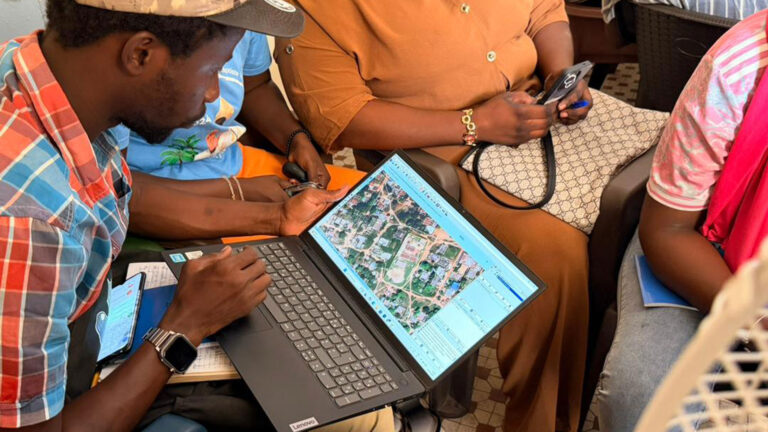
So what about GIS? If we were to change how land information is defined then the challenges of urban slums would not be so intractable. GIS allows you to capture, easily and cheaply, the actual use of space. So instead of government having a plot boundary and owner’s name, they could have, for far less than it costs to survey the plot conventionally, the boundary, the size and type of structures, the actual arrangement of structures, the trees and the owner’s name.
And fortunately this is not just about slums. For example, how does the Cape Town municipality manage water if they do not have a land information system that recognizes swimming pool? How is climate change reversed when plot owners are cutting down trees to put up gazebos? Because planting trees at the outskirts of the cities is not enough.
It’s not the cost of the technology that matters — all of a sudden the constraints of plot sizes are removed. The limitations associated with the management of land (by government) do not exist. They have a true picture of the city. And if someone comes along and builds something at night, government can find out and manage it the very next day. It’s cheap, it’s real time and it’s true.
And, when they are done GIS-bombing Bagdad and Afghanistan and putting navsat in every Bentley, Bimmer and Boxter, what are they going to do with all those satellites?
So, the UN Habitat’s Global Land Tools Network (GLTN) and Social Tenure Domain Model (STDM) experiment in Uganda is the first stirrings of change in altering the way urban land is managed. STDM at the back-end is a land registry system (sort of a cross between Google Earth for governments and the Land Act). At the front end is GIS and Microsoft Excel that’s appropriate for capturing enumeration and mapping information at household level, one base lower than plot level cadastre-type information.
In January, GLTN and SDI started a discussion on testing the newly developed STDM platform in Uganda. This isn’t the first land tool interaction between the two agencies. At UN Habitat, the developers of STDM studied the federations’ enumeration experiences in Mumbai, Nairobi and Kisumu and coded them onto the open source Quantum GIS program.
However, the STDM discussion was a plugin to an activity already underway: The Government of Uganda, Cities Alliance and SDI urban transformation program that targets transformation of urban slums in five secondary cities (Jinja, Arua, Kabale, Mbale and Mbarara). Estimated to reach 200,000 slum families, the program seeks among other things to register all informal settlement in these cities.
So significant is the application of GIS technology to Uganda that the STDM plugin could attain program engine status. Uganda has one of the most complex, un-resolvable urban land tenure systems in the universe. In certain places, like Kisenyi slum right at the heart of Kampala city, the Kabaka — constitutional king of the Buganda kingdom — owns the land. Over time, landowners have recieved land grants, held at the king’s pleasure. In turn they have parceled the land and made out their own leases to structure owners who have built a sprawl of 35,000 shacks and rent them ever month to the city’s urban poor. Any attempt at slum upgrading is confronted with the question, “who among these layered interests is the beneficiary?”
SDI’s Ugandan affiliate, the 29,000-family-strong Uganda Slum Dwellers Federation, and the federation’s support NGO, Actogether, seek solutions that recognize all interests. Solutions that are underpinned by the corresponding usage and investment on the land. That integrate with the city’s aspirations of future sustainability and prosperity. So citywide enumerations and mapping exercises planned for early 2011 are important for determining the usage and investment patterns, are critical in anchoring possible solutions.
The success of this experiment, at least on the land information side, is hinged on the ability of UN Habitat and SDI to get the Ministry of Lands to buy into STDM. Then the federation enumerates, maps and puts the information into STDM and voila! A real urban land information system and 200,000 slum families in Uganda are in the government registry. And thereafter if anyone invests in infrastructure or housing it doesn’t matter because once the land information system changes so will the definition of land ownership. The title deed will be replaced by the use-deed. Effectively we circumvent a herculean slum land tenure mess. And then we take the show to the next land mess in Nairobi or any other rapidly growing city with byzantine understandings of land usage.
UPFI board meets in Stockholm

Pictured above: SDI President Jockin Arputham speaks while Ugandan Housing Minister Michael Werikhe, and Mats Odell, Swedish Minister for Finance, Local Government and Housing, look on.
By Benjamin Bradlow, SDI secretariat
The Board of Governors for SDI’s Urban Poor Fund International (UPFI) held its second and last meeting of the year last week in Stockholm, Sweden. Such gatherings are a unique chance to mobilize political support for a people-centered agenda for urban development. High-ranking government officials from countries in Europe, Africa, Asia, and South America, joined slum community leaders to discuss how to support initiatives of locally-rooted community organizations in cities throughout the Global South.
The UPFI provides seed funding to local urban poor funds of national federations affiliated to SDI. The idea is that the money provided by UPFI catalyzes local initiatives that can leverage further resources, have an impact on urban policy, demonstrate possibilities for reaching further scale, and increase sustainable financial practices of the poor through savings.
“I see it as a tool that supports the SDI affiliates in upscaling their development,” says Rose Molokoane, member of a savings scheme of the Federation of the Urban Poor in Oukasie, South Africa, and deputy president of SDI. “For us to have one basket of funds draws the funders to come closer together to create space for the poor and strengthens our self-reliance.”
The Zimbabwe Homeless People’s Federation (ZHPF) is an instructive example of the ways in which the poor control their developmental future through the UPFI. The ZHPF has used the funding to build “eco-san” toilets in cities such as Bulawayo and Chinhoyi. These toilets are pioneering a cheaper, environmentally-friendly alternative to basic sanitation provision in slums where the high cost of traditional basic services has impeded any kind of incremental development.
The Malawian Federation, also affiliated to SDI, served as a horizontal resource for the development of the ecosan model. In March of this year, a Malawian team comprised of three builders, one federation member and a Water and Sanitation Programme Manager, went to Zimbabwe to teach the ZHPF about the ecosan toilets and construct model toilets in those areas. The projects have enabled the ZHPF to change policy at the local level by involving city officials, and have also had an impact up to the national level. The ZHPF is the leading community voice of the poor for housing in negotiations for a new Zimbabwean constitution. The incremental upgrading strategies employed by the Federation, especially with regards to sanitation, are affecting local university planning curricula as well.
The Stockholm meeting of the UPFI board, hosted by the Swedish government, was coupled with a seminar on “reshaping financial markets to make them more relevant to the poorest of the poor.” This seminar featured a mix of slum dweller activists, academics, NGO professionals, and finance experts, presenting on policy and practice in urban settings in Asia, Africa, and South America. Over 75 people from the Swedish business world attended the seminar, and the hope is that private institutions can begin working to develop financial instruments for poor individuals and communities. Access to finance is one of the biggest challenges impeding many people’s ability to get out of poverty, especially in urban environment.
Jockin Arputham is the founder of the National Slum Dwellers Federation in India and president of SDI: “To empower the poor you need to organize the people and make them taste the fruit of organizing. Your power is strengthened by your negotiating power. You don’t go empty-handed to negotiate with government. The UPFI helps people to win the kind of power you need to negotiate with government: statistics, finance, everything. Now no government cannot ignore SDI. There’s no way anyone can ignore this process. They have to engage communities,” he says.
The Swedish government has posted a video from a press conference at the UPFI board meeting, as well as documents used in presentations at the following day’s seminar.
Concrete Future

By Ahona Ghosh
Originally published by Outlook Business magazine (India).
Every day, 65-year-old Sudhir Jagtap, a retired government peon, takes a walk down the narrow alleys of Mother Teresa Nagar slum in Pune to see how far the construction of his new house has progressed. Unlike the crumbling, squalid tin-roofed shack that he has called home for the past 25 years, Jagtap’s new concrete house will have bigger rooms and its own toilet and kitchen. But, more than the stability of concrete and cleanliness, what matters most to him is the fact that the new house will be legal—that his family will own the title, at least for the next 99 years. Looking at the under-construction house, the short, wiry man mumbles: “I don’t know when it will be completed, but they’re doing good work.”
Mother Teresa Nagar is one of seven Pune slums selected for a pilot project under the Jawaharlal Nehru National Urban Renewal Mission’s (JNNURM) plan to improve the living conditions of the urban poor. The programme, rather insipidly titled Basic Services for Urban Poor (BSUP), was launched about 15 months ago. Under it, the national, state and city authorities tie up with NGOs to develop resettlement and rehabilitation solutions for slum-dwellers.
About 17% of the world’s slum population lives in India. Authorities have tried everything from eviction and demolition to resettlement and selling slum areas in the open market to resolve the problem. But their success has been partial at best. The slum rehabilitation effort in Pune, however, is very different.
Team Work
The project follows an in situ rehabilitation model. Essentially, that means reconstructing and upgrading slums where they are, without moving the residents. Under the BSUP project, about 1,200 families in seven slum areas of Pune—Mother Teresa Nagar, Yashwant Nagar, Bhat Wasti, Netaji Nagar, Sheela Salve Nagar, Wadar Wasti and Chandrama Nagar—will be rehabilitated in upgraded, rebuilt houses. Rs 3 lakh has been allotted for the construction of each house, of which 90% (Rs 2,70,000) will be funded by central, state and civic bodies with the slum-dwellers paying the remaining 10%. They pay Rs 10,000 initially and the remaining Rs 20,000 in four instalments.
According to the grant regulations, all houses are to have an area of 270 sq ft. At about Rs 850 a square foot, the new houses have an estimated value of Rs 2.29 lakh. The rest of the Rs 3 lakh grant goes into conducting surveys and workshops to engage the slum-dwellers. Once the houses are rebuilt, the Pune Municipal Corporation (PMC) will grant a 99-year tenancy lease in the name of the head of each household and establish these slums as legal colonies.
Giving slum-dwellers legitimacy and a chance to restore their dignity is in itself a big achievement, but what is far more significant is the extent of community participation in the programme. That has come about thanks to the partnership with NGOs.
At the start of the project, the PMC invited tenders from NGOs for reconstruction of the houses. The Mumbai-based Society for Promotion of Area Resource Centres (SPARC) bagged the contract to upgrade 750 homes out of a total of 1,200. It works closely with two other sister organisations—the National Slum Dwellers Federation (NSDF) which comprises pavement and slum-dwellers, and Mahila Milan (MM), a network of women’s collectives organised around savings and credit. Avinash Salve, a PMC Corporator from the Yerwada area, is all praise for their efforts. “Without the help of NGOs like SPARC, the process would have been very tedious for us,” he says.
Hand-Holding
The presence of the NGOs helps in addressing many of the concerns of the slum-dwellers. One big impact is that the potential beneficiaries become active participants in their rehabilitation. Says SPARC founder Sheela Patel: “Our goal is to demonstrate, through such projects, what communities can achieve when drawn in as participants.”
First, there is free flow of communication and information. The NGOs invest a lot of time in convincing the slum residents about the benefits of joining the scheme. There are quite a few fence-sitters, the majority of whom hold back because of financial insecurity; others simply do not trust the authorities. “We take ropes and mark out 270 sq ft to make them understand the increase in space,” says Jon Rainbow, SPARC’s Project Co-ordinator. They also present the slum-dwellers with scale models of the houses—made of cloth and timber—to help them appreciate the benefits of moving into new, bigger houses.
The consultations ensure that the slum-dwellers have a say in the design and planning of the houses. “Interactions like these help them better understand issues and communicate their needs to architects and government officials,” says Patel. On their part, the NGOs have hired a civil engineer, who works closely with PMC officials.
The discussions go on until the new home-owners move in. Of course, sometimes, the exchange of ideas results in disagreements. For instance, the PMC has enforced a 10-metre height restriction on these buildings, which the NGOs oppose. Says Dhannanjay Tukaram Sadalapure, Mahila Milan’s civil engineer: “It makes sense to build vertically as the ground space is often limited in these slums.” His proposal for construction of four-storeyed houses is still pending with the corporation.
Says Kedar Vaze, junior engineer from the corporation, and one of the supervisors of the project: “We are in talks and should soon approve it.”
Another problem cropped up when, halfway through the project, the PMC asked for proof of occupancy dating prior to 1995 from the slum-dwellers. “That was an absurd demand and impossible to fulfil,” points out Rainbow. In the end, the PMC abandoned the condition, but by then work had been delayed by a month.
The loss of time comes at a critical juncture. The corporation is already facing the heat from the state and central governments to finish the first phase of the project and complete 300 houses within 15 months. Nine of those months have already gone by but work has started on just around 20 houses.
Still, neither the PMC nor the NGOs appear to be discouraged by the slow progress. “About 100 houses are being processed and we will try our best to finish 300 by September this year,” says PMC’s Salve. SPARC’s Patel agrees. “We will take time to build the first 50 houses. After that, it will move faster as issues begin to get ironed out.”
Money Talks
The NGOs also have plans to help the slum-dwellers get loans and jobs. Most of them earn between Rs 1,500 and Rs 3,000 a month, and struggle to pay even the token 10% charged by the government towards construction. Pramila Malik Pawar is candid about her need for monetary support. Pawar’s husband, a factory worker, recently had an accident and lost his leg. Her son, the only earning member, works as a driver and earns Rs 2,000 a month. “I have already paid the initial Rs 10,000. Now, I am struggling to pay the instalments. I need help,” says the housewife from Mother Teresa Nagar.
One way out is through microfinance loans. “No slum-dweller can pay the 10% contribution at one go,” points out Jockin Arputham, President of NSDF. He says he is in talks with a few microfinance institutions (MFIs) to help slum residents secure loans to pay the initial loan amount as well as the instalments.
Mahila Milan has a more innovative solution. The organisation is offering construction jobs on the site to people who cannot afford their initial loan amounts.
“Currently, we have employed about 12 people. Once the pace of construction picks up, we expect this number to increase six-fold,” says Savita Sonawane, leader of Mahila Milan, Pune. Mahila Milan’s members also collect socio-economic details and conduct biometric surveys of each household’s members. They submit these details to the municipal corporation, which maintains a record.
Transit Problems
A major challenge, however, is transit housing. There is no budgetary provision for transit camps under the JNNURM scheme. Most people are forced to stay with relatives or in rented rooms when their shacks are demolished to make way for the new houses. Says Arputham: “These people cannot pay for transit camps and also pay up 10% of the loan.” Ideally, the project should include budgetary provisions for such transitory housing. Corporator Salve says he is helpless: “Transit camps are not the business of the PMC.”
Still, some effort is being made. The PMC has released government land to build transit homes for the residents of Chandrama Nagar slum. The NGOs are trying to raise funds to build these camps, which will cost Rs 20,000-25,000 per household. “We have approached the Bill and Melinda Gates Foundation. They have shown interest in helping,” says Arputham.
It’s just a small beginning, but it’s a good beginning. And it will enable many like Jagtap to have a concrete future.
What is incrementalism?

Pictured above: Residents of the Kambimoto incremental housing development in Huruma, a slum area in Nairobi, Kenya.
By Benjamin Bradlow, SDI secretariat
Top-down strategies for “eradicating slums” are seemingly always in vogue. Planners, government officials, commentators, and most non-governmental civil society actors, all aim for State-conceived, State-driven solutions to the “problems” of slums. Occasionally, we might hear about the potential of the social energy and even the density of informal settlements. But the solutions, we hear, must always come from the State.
But we can consider for a moment where these “formal” actors are headed, and from where they get their ideas. It is not the State. Governments of the Global South are quite evidently incapable of conceiving and implementing solutions without the people such policies are intended to address. The slums of the South are growing. And in the absence of effective State interventions, the poor — the world of the “informal” — are providing the vast majority of shelter solutions.
So “formal” actors — the State, planners, etc. — are getting their ideas from those who populate the world of the “informal” — the urban poor themselves. Instead of centrally-planned, greenfields housing developments, governments from South Africa to Kenya are talking about “slum upgrading” or “informal settlement upgrading.” In India, the term that most closely mirrors this is “redevelopment.” To varying degrees, policies that deploy these terms in each country are rooted in “informal” practice. Improvements in the living spaces where people already live.
But “upgrading,” while a step in the right direction towards more people-centered kinds of urban policies and planning, is often too vague. It can still mean big projects that results in the removals of many shack dwellers to new slums outside of the city to make way for improvements that often accrue only to a few of the original residents of the area. The goal of any kind of urban policy will always, at some point, mean fully-serviced and titled top-structure housing with secure tenure. Given the capacities of all the actors involved in the policies that would address that kind of goal, in addition to the magnitude of slums in most of the cities of the South, such achievements are still far off in the future.
The poor know this, and address it on a daily basis in the only way they can: incrementalism. To build incrementally is to live within one’s means, adding on and improving one’s dwelling and environment bit-by-bit. There are obstacles to this approach, namely lack of security of tenure. How can a person save to upgrade when he or she faces the constant threat of being evicted? But even without total security of tenure (i.e. full title), the poor are willing to build incrementally.
I wrote a couple months ago about the Federation incremental housing project in the Kambimoto neighborhood of Huruma in Nairobi, Kenya. There, each homeowner is building the floors of their houses day-by-day, making their own laddi bricks — an alternative egg-shell shape of bricks used for ceilings and floors for the first two floors of the houses — through exchanges with SDI-affiliated savers in India. The residents of this project do not have full title. What they do have is a memorandum of understanding with the city council approving the project. They also receive municipal services. This is just one example about how the poor are leading the way towards new understandings of tenure arrangements and how such attempts to provide security to the poor achieve great things on the ground.
The key is to enable the poor to enact the solutions they already have at their disposal, not to run over them with State-developed, new top-down plans. Even though “formal” actors are beginning to adopt the rhetoric of “upgrading,” they usually stray from its original “informal” meaning. “Informal settlement upgrading” still means programmatic, State-driven responses to urban poverty. The “informal” does not fit so easily with the strictures of the “formal.” Incrementalism gets brushed aside in favor of rhetorical slights of hand that only glance at the true intentions of “informal” solutions.
The issue of incrementalism got a high-profile mention this week in an article in the Financial Times’ latest installment of its special issues on cities. Heba Saleh reports on development plans in Cairo, where slum dwellers are getting pushed further and further out of the city, while more poor people push back into the city for jobs:
The result is that Cairo is ringed with extensive areas of densely inhabited slums, where the streets are often too narrow for cars to pass and no land has been allocated for services such as schools, hospitals, markets or parks. But affordability and proximity to jobs in the central parts of the city continue to attract people to these neighborhoods, where homeowners build cheap but sturdy housing, adding extra rooms or floors whenever they have the cash.
Laila Iskandar, a development expert who heads CID Consultants, argues that the dynamics in the slums have much to teach government planners when they lay down their schemes for the expansion of the city. “All they are thinking about is how to send people to live in the desert [around the city],” she says. “They still have a top-down European view of the city and they deny that migrants from the countryside need a style of housing that they are not planning for.”
“These people do not have lump sums to pay for flats, and mortgages are out of their reach. Rent is also too expensive for them. They need to be able to build their homes incrementally.”
In the coming months, we will explore this theme further, analyzing examples of incremental solutions, and the ways in which the “informal” world can lead the “formal” world to actionable solutions to the problems of urban poverty. Your comments are, as always, most welcome.
SA slum dwellers and government learn together in India

Below is the text of a report by Cape Town Informal Settlement Network leader Vuyani Mnyango on an April exchange to India that included members of the ISN and Cape Town city officials. A report on the same exchange written by the Cape Town city officials can be found here.
——————
15 April 2010
Meeting with Mr. Jockin Arputham & Mr. Sundar Burra
* He introduced himself to the visiting team from South Africa, he also share his long way & stories while in the struggle around the developments for the poor.
* He said that he can just tell the team of the middle -up system not starting from the bottom -up otherwise it will be a long story to tell. He said that they managed to collect people from the streets/ pavements convincing them to form part of the movement (Savings).
* He also stressed that organizing will be the best tool to fulfill the people’s need wherever they will be staying.
* He also encouraged that people need to be patient on whatever they wanted to achieve for communities.
16 April 2010
Federation – Mahila Milan
* They had managed to relocate people from different directions such as Railway line Dwellers, Under – Bridge & Pavement Dwellers & the Harbour Dwellers.
* They convinced these different groups to form part of the movement for the poor (savings) so that they can have a say to the government but the people saw that as a one step forward.
* The Federation had played more than a big role in these different people with different needs.
* Before any development to take place, they also do the enumerations so as to know more about the community its people’s needs.
* There are about 2000 units in each flat that accommodates about 10 000 families.
* Each unit is about 125 square metres wide and that is the size of most units that you can find in each flat.
* These buildings are being managed by these communities.
* The maintenance of these buildings depends to the co-operatives, the people that had chosen by the communities to look after these buildings.
* Each house has its own sanitation (tap & toilet) including electricity; each house has its own electricity box so that the owner is responsible for the use of the service.
* People who were not part of the savings were included in the development to take place in their communities they were not excluded at all.
* Mahila Milan is the platform and the group which is based in the presenting and focusing in the Federation needs but it is presented by people from different communities and different groups.
* The sanitation block is being managed by the communities not the government as the government had failed to look after them.
* People are still saving while in the houses but they called it a general savings which is based on the daily problems that faces the people around the community and that is playing a big role.
* Mahila Milan is also looking at poverty that also affects poor families by supplying food parcels and that is done through the help of SPARC (the NGO that is helping the Federation its needs for its communities.
* Out of their savings they had managed to buy the land which was not that expensive at all they paid for it.
* These buildings had been built after year 2000, but these buildings looked very old on the outside as if they are more than old.
* Mahila Milan is busy on the designing of the plans of the houses (flats) and they also play another role of training the people who will be building the houses training them on how to build from the bottom to the top.
17 April 2010
Pune
* The team SA was looking at the contractor when it was starting to build houses in the in-situ upgrading at Pune at Mother Teressa informal settlement.
* Also the savings here are playing a big role amongst the community development as the people are keen to be part of any kind of a change in their communities, even if somebody has to move so that the in-situ upgrading has to take place but people are all in the same page nobody is against of anything.
* They said that Mother Teressa had once visited this settlement that is why they also called it by her name just after she left.
* The in-situ upgrading is taking place in this settlement without of any disturbances from the community side.
* The government is being told by the people on what they wanted & on how it should be done.
Sanitation Block (Toilets)
* SPARC had also played a big role in the construction of the sanitation blocks to these communities with the help of the Federation as they are working closely.
* They had convinced & explained the communities for the need of these sanitation blocks to be built in their communities.
* There are about 300 – 500 families that are using these toilets in daily basis.
* People had to pay for the membership in order to use these facilities and pay the monthly fees the use of them but that is done by each family in the community.
* These toilets are being managed & maintained out of the monthly payment that is being paid by each family.
* The toilets before were not in a good condition for the use of the public (people of each community).
* There is a small amount of money to be paid by the community that will be specifically for the toiletries to keep these toilets healthy.
* The ones for the city are totally different from the ones that are for the projects according to the management of them.
Community Policing
* All the communities had the same way of controlling crime in each area.
* There are about 4 females and the males are about 4 to make what we call it a Police Forum but they call it a Police Panchayat.
* This more than linked to the state policing as this had played a big role in decreasing crime in each community.
* This is only based to the abuse, civil cases including the criminal cases.
* They take the person to the police station where a person has to pay a huge amount regarding that will be reported.
* This had been recognized & authorized by the Commissioner as it will be helpful to the communities at large.
* This had made a big change as it had decreased the crime rate throughout the country.
General Points that had been found in the Indian Exchange (Summary)
* People of India are more than commitment when it goes to the development of their communities.
* They show more than a willingness to co-operate in any kind of process that will lead to the success of their developments.
* They are also peaceful as they will all be wishing to be the go -getters, they won’t fight during the developments.
* They are having more patients to wait for what they want even if it can come after 10 – 20 years but they will wait.
* The human rights are not an issue there, people are focusing on their priority needs and they go for them.
* The communities need to be taught about the processes of the developments to be followed during the period of the development.
* Federation had managed to organized to gather together different people from (i) Pavement Dwellers, Railway Line Dwellers, Under –Bridge Dwellers & the Harbour Dwellers.The savings is the best tool that the communities had put more focus on as the best tool to be used when organizing people but it is based their daily needs.
* They had been taught on how to keep their hope around what they wanted to achieve in future.
* They had also been taught about on how to be strategic when dealing with organizing people for the development of their communities.
* Poor people are more than involved in the developments that will affect them on the ground for making decisions of what they want & how to go for it.
Culture, identity and slum areas: opportunities and challenges seen from slum dwellers’ perspective
By Sheela Patel, SPARC
Adapted from remarks given at Habitat Norway’s panel discussion on “The role of cultural heritage in poor urban settlements,” 5 October 2009, in Oslo.
Despite the rapid spread of urbanization, we do not know enough about cities and who lives in them. Words like “degradation” and “deprivation” are frequently used to describe slums, with little recognition of their amazing capacity for growth and change. It is this capacity that brings people to cities, and that makes them incredible engines for transformation. It does not make sense for people to stay in villages where they have no jobs, no incomes, and no opportunities when cities offer the chance for a brighter future. Instead of bemoaning the problems caused by the growth of cities, therefore, we need to revisit and rethink images of slums, cities, and urbanization.
Urbanization is hardly a new phenomenon. Many Northern countries have forgotten the former poverty of their own countries and the migration of millions of people from villages to the growing urban centres of Europe and North America just a century ago. Many neighborhoods in those cities were also slums, but they were transformed over time into historical districts that reflect the heritage of their cities and countries. Yet few plans to redevelop the slums of the global South recognize this potential for transformation or the value of what those who live in the slums have built.
At the same time, it is clear that Southern cities will never become European cities. Already, many are five to ten times larger and still growing: the slums of Mumbai, for instance, are home to more people than the entire country of Norway. We must therefore work with the development community to adapt the lessons of Northern cities to a uniquely Southern context.
Envisioning a new urban future will also require us to reevaluate the way we think about slums. The word slum conjures images of squalor, crime, and disease. Yet slums are places of enterprise, of innovation, of creativity, and of hard work. Despite their seeming chaos, slums are vital and energetic, efficient and purposeful. Nothing is wasted, and no opportunity is missed. The culture of the slums is built on the unique knowledge that communities own and use to address the challenges that they face. This local, community-produced knowledge is key to the resilience, growth, and vitality of the thousands of informal settlements in cities throughout the global South, even as they are being threatened by development schemes that do not acknowledge their strengths and needs.
It is estimated that 70% of people in Southern cities work in the informal sector, a sector that is frequently described as “marginal” even though it accounts for the majority of the population. Yet for all the vitality of the slums, they are slowly crumbling for lack of infrastructure. This is in part because development plans have tended to privilege the private domain over the public. Whether consciously or unconsciously, all development investment makes huge decisions about this issue. These decisions have tremendous consequences for the future of Southern cities, and ripple effects that stretch far beyond their intended impacts. Although the informal sector, for example, is currently thriving, it is being threatened by certain types of development. As foreign investment comes in, informal markets are being demolished to make room for air-conditioned malls, and street food vendors selling traditional fast food like samosas and sev puri are being replaced by Western chains like McDonald’s.
These choices about public and private goods are also made on a very large scale. Mumbai, for example, planned two transportation projects to be built in tandem: one public transportation upgrading plan, and one aimed at improving roads and private transportation infrastructure. The public project was negotiated with the World Bank, and has been in progress for fourteen years and counting. The second project, consisting mainly of upgrades to roads and flyovers, cost the same amount but was finished in 4.5 years. This is clearly a case of misplaced priorities in a city where just 5% of the population drives cars as opposed to the 65% who use public transport systems on a daily basis. Yet elites in Southern cities are often aligned with the Northern development elite in their view of what a city should be, favoring investment in private over public goods.
Poor people are not merely objects of development to be dealt with. Of course, almost no one in the development community would argue otherwise: individually, we all want people to be able to make choices about their lives. We talk about participatory planning, community-led development, and so on, but institutionally and organizationally, we have yet to see these principles truly put into practice. And so we must ask, how do we make choices about development? What is the culture of development that does not allow communities to make their own decisions? What role do poor people really play in development and what contributions do they make?
Community-led decision-making is time-consuming, messy, and complicated, to be sure. And nothing is messier or more complicated than dealing with slums. Their problems encompass not just the slums themselves, but an entire system that has ignored the rights of people who have uprooted themselves in pursuit of their aspirations. But why do we run away from things that are messy and complicated? It is those processes and issues that have the greatest potential for transformation. Instead of dealing with them head-on, however, cities and countries have attempted to create boundaries to stem the migratory tide. But it cannot be stopped: it is not a tide, but a tsunami. Throughout history, across continents, people have always moved when they see greater possibility over the horizon, and have proved themselves willing to make any sacrifice to change the lives of their children for the better.
The solutions offered by global institutions often result in consequences that communities were not able to truly accept because they did not have a true choice. The ability to dissent requires institutional capacity, and most informal communities do not have the type of institutions that allow them to make their views known. So when those of us in the development community seek to make changes in slums, we need to recognize the extraordinary sacrifices people have made to come to cities and the extraordinary capacity they have shown to thrive once there. We must listen to the people who have built their homes from the bottom up, and hear what they have to say about plans to redevelop their communities. This is what SPARC seeks to do by supporting the urban poor in organizing their own communities and learning from each other’s experiences. It is only by putting power in the hands of the communities themselves—the power to know the options available, the power to discuss and negotiate for one’s interests, and the power to ultimately make a choice about one’s future—that development can truly claim to be community-led.