
Liberia Federation Response to Covid-19


On behalf of the Federation of Liberia Urban Poor Savers and YMCA Liberia – SDI presents the work to fight COVID-19 in Liberia.
Malnutrition and disease means COVID – 19 could be more deadly in Africa than elsewhere in the world. Health systems in Sub-Saharan Africa, including in Liberia, have limited capacity to absorb large numbers of patients made sick by the pandemic. The impacts of COVID-19 will have profound human, social, and economic consequences for millions of urban poor in Liberia. The Federation of Liberia Urban Poor Savers (FOLUPS) and the YMCA are working together on mitigation activities in a number of slums across Liberia’s capital city, Monrovia. These include West Point, Clara Town, Cow Field, Blamo Town, and King Peter communities, with activities targeting approximately 170,000 people, as per a recent community profile conducted. Most of these slum communities have limited access to basic water and sanitation services. These conditions, combined with high population densities, are likely to contribute to the person to person contact rates of COVID-19 and result in exponential rates of infection in these cities.
As of mid-May 2020, health authorities in Liberia reported 229 confirmed cases, 22 death, and 123 recovered. The Ministry of Health’s capacity to provide critical care is still unknown, as severe forms of COVID-19 leads to respiratory failure which requires ventilators, uninterrupted electricity, and oxygen. It is unclear whether Liberia’s government health system has the capacity to provide this level of support, especially for large numbers of people. At the moment, Liberia’s Intensive Care Units (ICU) have limited ventilators, unstable electricity and limited personal protective equipment for health care workers. Because of this limited capacity to absorb the pandemic it is critical that efforts are taken to contain the number of cases and rate of spread of the disease. As such, the overall strategic approach to address Covid-19 will focus on containment and aggressive preventive measures.
In Liberia, as in many countries, government instituted a lockdown in order to contain Covid-19. While this is an effective measure, the impacts of lockdown can be devastating for urban poor communities who rely on daily income for basic needs such as water, electricity and food. Containment and preventive measures require adequate preparation, creativity and innovative ideas in collaboration with these communities to avoid severe impacts to these communities for whom a few days’ lockdown can mean the difference between poverty and starvation.

The Ministry of Youth and Sports has appointed YMCA on the COVID-19 National Youth Task Force. This puts FOLUPS in a better position to receive first-hand information, training and updates on government and civil society interventions and strategy. As the supporting NGO to the Federation of Liberia Urban Poor Savers (FOLUPS), YMCA is collaborating with the Ministry of Health, Cities Alliance and LIFT Liberia to provide initial engagement and awareness support through women-led savings groups, community youth advocates, and peer educators groups. In order to expand the current community level engagement as a bottom-up behavior change process, FOLUPS through the YMCA has sought to expand the ongoing awareness and support services to targeted urban slum communities in Monrovia. These efforts include:
- Collaborate with the Ministry of Health to increase awareness of preventative measures required to contain the spread of COVID-19. This includes identifying and preparing communities for measures to decrease risks, and taking action to protect vulnerable groups, such as older people and those with underlying health conditions;
- Distribute flyers, hand washing buckets, disinfectants, sanitizers, soap and chlorine at public facilities and major locations;
- Engage in advocacy activities with government at settlement and city level for the early dissemination of information to affected communities in order to minimize threats of evictions and counterproductive closures of essential informal services during periods of lockdown or protracted national emergency. This includes ensuring that the fundamental rights of affected and target population groups are safeguarded, that they have access to testing and healthcare services, and that they are included in national strategies to receive information and assistance from government. Additionally, COVID-19 awareness activities will aim to prevent, anticipate and address risks of violence, discrimination, marginalization and xenophobia towards people of concern.
YMCA and FOLUPS will work as the coordinating body to engage in the co-development and delivery of the above project activities. Existing collaborating partnerships and working relationships with government officials and community structures will determine the extent to which YMCA will be able to operate freely and effectively. Capacity building will be provided by MOH and YMCA where required, in order to smoothly implement this project activities and transition to the level of community ownership for safety prevention/containment of COVID-19.
Please keep following SDI as we highlight the initiatives of SDI affiliates across Africa, Asia & Latin America in the fight against COVID-19 to support the most vulnerable throughout this pandemic.
Turning Evidence to Influence at Forums in Monrovia


Organize
As of 2017, the Federation of Liberia Urban Poor Savers (FOLUPS) has organized 62 groups in 2 cities. In July 2016, as part of the Cities Alliance-supported Liberia Country Program (LCP), slum dwellers in Liberia began profiling, enumerating, and mapping their settlements. This year, the federation conducted the citywide slum profiling and mapping of Greater Monrovia Area and fully enumerated West Point, one of Monrovia’s settlements most at risk of coastal flooding and eviction. While organising communities to undertake this feat was historic, the federation had more organising work to do in order to influence planning.
Collaborate
Based on lessons learned from their peers in Uganda, Kenya, and Ghana, the Liberians decided to organize settlement forums to interrogate the data with the community and extract priorities for slum upgrading and the City Development Strategy. In June, the federation convened its first forums. In West Point, Clara Town, Peace Island, and Duport Cow Field Community, the federation convened spaces for residents and officials to return and verify the information gathered and to generate consensus on the interventions required to transform their settlements into safer, healthier neighborhoods. SDI federation leaders from Uganda and Kenya supported the establishment of these settlement forums, which will continue to be used for community planning and identification of projects to be funded by the Community Upgrading Fund set to launch next year. Collaboration is a key hallmark of the Cities Alliance Country Programs and SDI is proud to play a lead role in community organizing across the programs in Africa.
Thrive
These efforts positioned the federation as a key player in the first Monrovia City Forum held at the Monrovia City Council in February 2017. The slum dwellers stood out for their in-depth knowledge of informal settlements across the city and their readiness to partner in development of the National Urban Policy, the Monrovia City Development Strategy, and frameworks under development including the Slum Upgrading Strategy and Affordable Housing Framework. FOLUPS presented on their efforts to build a culture of savings and active citizenship in Greater Monrovia. The Liberia federation aims to improve tenure security, services, and housing for the urban poor.
The Liberia slum dweller federation efforts contribute to improved city resilience through building effective mechanisms for community partnership with government, collaborative hazard monitoring and risk assessment, and proactive multi-stakeholder collaboration to develop inclusive urban policy frameworks.
This post is part of a series of case studies from our 2017 Annual Report titled ‘The Road to Resilience.’ Emerging from the field of ecology, ‘resilience’ describes the capacity of a system to maintain or recover from disruption or disturbance. Cities are also complex systems and a resilience framework addresses the inter- connectedness of formal and informal city futures. Moreover, it enables a nuanced reflection on the nature of shocks and chronic stressors – recognising that the latter are particularly acute in slum dweller communities and that this critically undermines the entire city’s economic, social, political, and environmental resilience.As with personal resilience, city resilience demands awareness, acknowledgment of reality, and a capacity to move beyond reactivity to responses that are proactive, thoughtful, and beneficial to the whole. The most enlightened individuals and cities will be those that understand their responsibility to the most vulnerable and to the planet. Our 2017 Annual Report showcases some of SDI’s achievements over the past year on the road to resilience. Click here for the full report.
Information is Power: Turning data into Action in Liberia
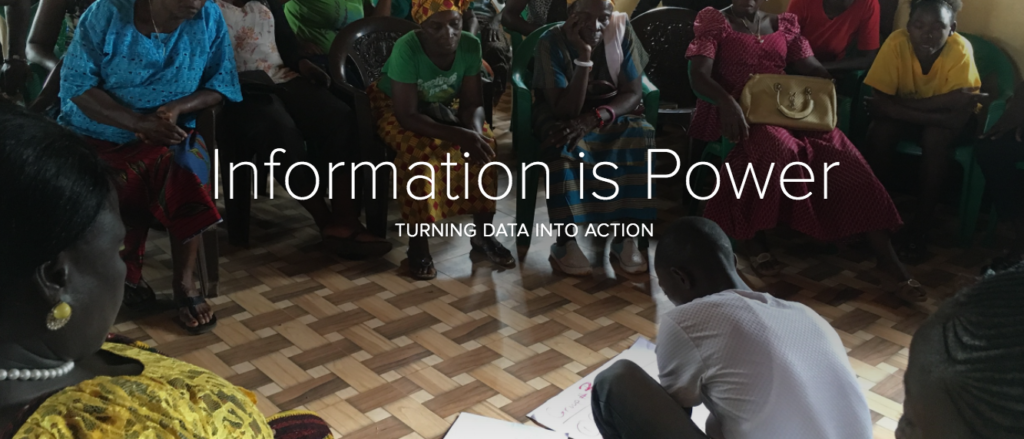
Click on the image below for a multimedia look at the data collection work being done by organized communities of slum dwellers in Monrovia.

Transformation begins: city-wide profiling and mapping in Monrovia


Joint Communique Against Forced Evictions Affecting the Urban Poor


Read the Joint Communique Against Forced Evictions Affecting the Urban Poor.
Last week the West Africa Regional Hub released a joint communique addressing the recent spate of forced evictions in Sierra Leone, Ghana, and Nigeria. The communique condemns the use of counter-productive demolitions and forced evictions against the urban poor and calls on governments, development partners, and regional organisations to join hands with organised communities of the urban poor to take concrete measures to prevent these practices. Read the communique here and keep an eye out for more news from last week’s West Africa Regional Hub meeting in Ghana.
Building on Community Responses to the Ebola Crisis in Monrovia


By Mara Forbes, SDI Secretariat
Liberia has a unique history compared to other African countries. Monrovia, the capital of Liberia was founded in 1822 by freed slaves from the United States of America and was named after the U.S. president James Monroe. The current population of Monrovia according to the 2008 census is around 1 million people, of which 70% live in informal settlements.
Since the late 1980’s the country has faced three civil wars. Years of conflict have devastated the infrastructure. An estimated 80% of the housing stock was destroyed. However, the central role played by women in the aftermath of the conflict was internationally recognized in 2012, when two of the leading women received the Nobel Peace prize. This recognition of women as central players in the development of the country has continued with the election of a female president in 2006, Ellen Johnson Sirleaf, and the current Mayor of Monrovia, the Honorable Mayor Clara Mvogo.

In 2014, Liberia was hit with another outbreak – Ebola. Again, much of the development that was achieved over the past decade is now being undermined by the spread of the outbreak. Ebola has not only affected people’s health and lives but also has social and economic consequences. Inadequate basic services and infrastructure aided in the rapid spread of the disease. Liberia was one of the hardest hit countries with 9,238 reported cases and 4,037 related deaths (WHO, Feb. 2015). The majority of those affected have been women and those living in informal settlements.
SLUMDAL with the support of YMCA Liberia, the local SDI affiliate in Monrovia, took it upon themselves to develop, implement, and monitor a community Ebola emergency response project for some of the hardest hit informal settlements. The goal of the project was to conduct awareness and sensitization training on Ebola and provide preventative hand washing buckets and chlorine to some of the poorest of the poor living in these slums.
In total SLUMDAL provided 650 hand washing buckets and chlorine to 11 informal settlements (WestPoint, Clara Town, Slipway, S.K. Doe, Logan Town, New Kru Town, Jallah Town, 12th Street, Peace Island, Rock Spring Valley, and St. Paul Bridge).

SLUMDAL begins distribution of Ebola response materials
During this time SLUMDAL stepped up and played a key role in bringing the Government of Liberia’s Fight Ebola Campaign into the slum communities through sensitization and distribution of hand washing materials and has been recognized by Monrovia City Corporation (MCC) and other stakeholders for their active and vital role with organized communities of the urban poor.
The role of urban poor communities and local authorities in Monrovia in response to the Ebola crisis helped turn the trajectory on new Ebola infections. Monrovia was the hardest hit area in Liberia and had the most fatalities in the region. Liberia is now seen as a success story compared to neighbouring countries due to a shift of approach on behalf of the government. Investments to the national government were decentralized to local authorities and community groups for implementation. Liberia now has the least outbreaks of new cases each week and curfew and land border lock downs have recently been lifted.
From 1-6 of February a team from SDI visited Monrovia to get a deeper understanding the organization and the work of SLUMDAL and YMCA Liberia. We visited 5 settlements (WestPoint, S.K. Doe, New Kru Town, 12th Street, and Peace Island) and met with 13 savings groups. Federation leaders from Uganda worked with SLUMDAL and the savings groups to better understand the role of the federation and the rituals it practices, particularly the importance of savings. These peer-to-peer exchanges help emerging federations like in Liberia better understand and see the power and importance of federated communities from their more mature affiliates. Ideas are shared and then discussed and adapted to fit the local context.

Members of the Uganda Federation share their experiences with savers in S.K. Doe settlement
The key role of SLUMDAL now will be to move beyond crisis response to a sustainable community development approach by continuing to build on their relationship with local government, expand federation membership, and governance structures.
Cities Alliance is working with SDI and the Monrovia City Corporation (MCC) to develop a joint local government/community led Monrovia City Programme, modeled on country programmes that have been implemented in Uganda and Ghana. The programme seeks to support the resilient social and economic recovery of slum dwellers in Greater Monrovia in response to the Ebola crisis while also improving the living and working conditions of the urban poor. Through this programme organized communities of slums dwellers will work with local government to profile and map all settlements within Greater Monrovia. Communities collect and analyze data about their settlements to inform dialogue with authorities on resource flows and development priorities, to mitigate against disaster and conflict and to make poor communities vocal and visible. This is a critical next step in the development of the Liberian affiliate to demonstrate the potential of community driven solutions in partnership with local government.


