Slum Dwellers Drive Informed Planning in Kampala


By Laura Guzman, AcTogether Uganda
Photos by Maria Carrizosa
Collecting information in partnership with communities about their needs and priorities is a tenet of the work of ACTogether and the National Slum Dwellers Federation of Uganda (NSDFU). By helping collect this information, analyzing it, and presenting it back to communities and their municipal officials, projects can more specifically respond to community needs and desires. In June, as detailed in an earlier post, international and local interns, ACTogether staff, and Federation members surveyed slum dwellers and municipal officials in the five divisions of Kampala in order to learn more about the needs of slums in the city. The surveys were intended to gather information on the slum dwellers’ and municipal officials’ opinions on the state of governance, data and information, sanitation, and livelihoods. The survey was only an exploratory one, meant to identify potential trends and patterns throughout the city. The survey is a first step in a process including enumeration, mapping of settlements, and in-depth conversations between slum dwellers and municipal officials. Based on the findings of the preliminary survey, further enumerations, and multiple stakeholder conversations, NSDFU and ACTogether are investigating replicating Municipal Development Forums (MDFs) – which have demonstrated great promise in Ugandan’s secondary cities – in Kampala. The information will also be used to guide Federation-led, low-cost sanitation facilities and finance facilities to support communities to build their own projects.

In July, after analyzing the results, the information and lessons learned were presented to municipal officials and federation members from each division. Overall, the results of the survey given to slum dwellers show a high level of dissatisfaction with opportunities for interaction with municipal governments – 61 percent reported meeting one time per year or less – and a desire to meet more often. Slum dwellers also showed a high degree of willingness to participate in new forums of interaction with municipal officials. If forums like the Municipal Development Forums were to exist, 86 percent of slum dwellers would be willing to participate. In terms of sanitation, the surveys showed a dissatisfaction with current toilet facilities. There were not enough toilet facilities, and those that did exist were not adequately maintained. The results on sanitation showed that 83 percent of slum dwellers report sharing toilets, 73 percent lack access to a waterborne toilet, and 78 percent would be willing to pay for a well-maintained waterborne toilet facility. In terms of access to loans, 69 percent of slum dwellers interviewed reported dissatisfaction with access to loans for livelihood projects, and 74 were unsatisfied with the terms of loans. In terms of capacity to save and to increase quality of life, 73 percent and 78 percent, respectively, were unsatisfied with their capacity.

For slum dwellers, these trends were fairly steady across gender lines, but vary in key areas such as satisfaction with opportunities to interact with municipal government (males, at 83 percent, were more unsatisfied than females, at 56 percent), perceived ease of access to data on slum settlements (58 percent of males found data difficult to access, 32 percent of females reported difficulty), willingness to pay for well-maintained, waterborne toilet facilities (females, at 92 percent, were more willing to pay than males, at 88 percent), and satisfaction with loan availability (males, at 87 percent dissatisfied, were more unsatisfied than females, at 60 percent).
In the breakdown across municipalities, slum dwellers in Kawempe were consistently the least satisfied in terms of governance and information on slum settlements, and those in Nakawa were consistently the most satisfied. In terms of loans for livelihood, residents in Makindye were the least satisfied with availability and terms of loans, and those in Nakawa were the least satisfied with the ability of savings to increase savings and quality of life.

On the whole, the results of the survey showed that municipal officials and slum dwellers had similar perceptions of the current situation with regard to information on slum settlements, and – to some degree – with regard to loans for livelihood. However, municipal officials reported that they met to discuss issues of development considerably more frequently than slum dwellers (with only 31 percent reporting meeting once per year or less, whereas 61 percent of slum dwellers reported meeting this infrequently), and more municipal officials found the opportunities to meet together with slum dwellers to be adequate. In terms of sanitation, municipal officials believed that fewer slum dwellers share facilities (reporting that 75 percent of slum dwellers share a toilet), and that a much larger proportion used free facilities (with 79 reporting that slum dwellers use free facilities, whereas slum dwellers reported that only 48 percent do use free toilets). Significantly, municipal officials believe that slum dwellers are much less likely to pay for clean, waterborne facilities (44 percent willing) than the slum dwellers themselves report to be (78 percent willing).
By taking this information, sharing it widely, and informing future projects with the new knowledge, NSDFU and ACTogether can get an idea of the situation faced by slum dwellers. It is important to continue the process with careful enumeration and mapping of each slum settlement in order to identify specific needs for each community. In order to address identified needs and problems, it is key to develop a dialogue between municipalities and slum communities. By using survey information, enumeration data, and dialogues, interventions like MDFs, sanitation facilities, and finance facilities can be developed in a way that involves all stakeholders.
Financing Sanitation Solutions in Uganda


By Noah Schermbrucker, SDI Secretariat
The relationship between development donor and recipient is by its very nature a tenuous and unsustainable one. The vagaries of donor funding are subject to sudden sea changes as international development agendas shift focuses and locations. The very fact that phrases such as “development trends” or “funding focus” exist in popular vernacular underscore the impermanence of donor finance. Ironically this occurs amidst a plethora of calls for sustainable projects, cities and resource use. How can projects be sustainable if the funds that support them will not always be available?
Mobilised and organised communities provide a long-term framework with the capacity to develop and maintain infrastructure developments. However if these projects are merely physical manifestations of donor finance they will not have the ability to go to scale across cities-they have to work within the formal market to revolve at least part of the finances invested. In some cases they may even yield a small profit for the urban poor who can re-invest money gained to further improve their areas. Successful models can be tracked, refined and shared across the SDI network taking into account local contexts and constraints. As such projects gain traction and momentum they become more attractive to funders who wish to maximize the limited resources they have to invest and perhaps even other urban poor federations who wish to invest in infrastructure projects and realize a return on these investments.
The communal toilet projects in Nakawa and Rubaga market in Uganda are beginning to grapple with these pressing issues. In working towards a model that can pay for itself and realize a small profit, infrastructure is separated from the donor-recipient cycle and becomes self-sustainable and possibly, at a later stage, self perpetuating. This presents an opportunity for the tangible infrastructure results of a pro-poor community driven process to go to citywide scale.
After providing a brief project background the main focus will be on the project finances and loan repayments for the Nakawa project that demonstrate the possibilities for an economically sustainable pro poor model toilet model. Further community context will be given by a transcribed interview with Mdamba Umar from the Rubaga Market toilet Project Management Committee (PMC).


Background:
The Federation’s 2011 enumeration revealed that over 82.5% of slum residents in Jinja do not have access to a toilet on their compound, while 95% do not have access to clean water and sanitation. Rubaga settlement/market alone has a population of over 1000 people who visit the premise on the daily basis. Over the years the market had one pit latrine which filled up and was demolished. Currently, the settlement has no single toilet and thus the population either visits the neighborhood or use plastic bags. The federation has been working very closely with the Jinja municipal council to mobilize and organize the people to address this challenge through a number of interventions. Finally the Jinja municipal councilor has allocated a piece of land to put up sanitation (both toilet and shower facilities) and a community centre to support the affected families and the community. The project is being boosted by a contribution from the Municipality (land) & the Community is contributing labour and savings, and then SDI is contributing seed capital worth USD7843.
Finances:
The tables below present a basic breakdown of the most important aspects of the project finance; the initial capital contributions, running costs, profits and projected timeframe for loan repayment. These form a key part of the project and are managed through the PMC and other relevant committees.
Contributions for Nakawa:
|
20% from community |
20% from government |
60% from SDI |
|
Labor and savings |
Technical support Transportation vehicle (no fuel) and Land
|
Requested |
|
Total = 13M (UGX) |
Total = 13M(UGX) |
Total sought = 40M (UGX) |
Projected running costs & profits for Nakawa:
|
Unit est. daily takings |
Per month |
Per Year |
Running costs (maintenance, wages) |
Balance (ie. minimum repayment pa) |
|
$330.40 826,000UG |
$991.20 2,478,000UGX |
$11,894.40 29,736,000UGX |
$5,947 14,868,000UGX |
$5,947 14,868,000UGX |
Loan Terms and Repayments
In the interests of conservatism and in order to cater for unexpected expenses, the federation would like to spread the loan repayment over 6 years.
Projected loan period: 6 years
Interest rate: 8% pa
Loan amount: 37,440,000 UGX = $15, 600
|
|
year 1 |
year 2 |
year 3 |
year 4 |
year 5 |
year 6 |
TOTAL |
|
Principal repayment |
6,240,000.00 |
6,240,000.00 |
6,240,000.00 |
6,240,000.00 |
6,240,000.00 |
6,240,000.00 |
37,440,000.00 |
|
Interest |
2,995,200.00 |
2,496,000.00 |
1,996,800.00 |
1,497,600.00 |
998,400.00 |
499,200.00 |
10,483,200.00 |
|
Total payment |
9,235,200.00 |
8,736,000.00 |
8,236,800.00 |
7,737,600.00 |
7,238,400.00 |
6,739,200.00 |
47,923,200.00 |
|
TOTAL IN USD |
3,848 |
3,640 |
3,432 |
3,224 |
3,016 |
2,808 |
19,968 |
|
Monthly contribution |
769,600.00 |
728,000.00 |
686,400.00 |
644,800.00 |
603,200.00 |
561,600.00 |
|
Community Perspective:
Mdamba Umar: Toilet Project Management Committee (PMC)-Rubaga Market Toilet, Jinja
I am from the project managment committee of this sanitation project here in Rubaga market, Jinja region. We aquired land from Jinja municipal council free of charge due to our relationship with the council. Drawings were made by the community and these were approved.
We are constructing this toilet with one side for men and another for ladies and access for the disabled. Above the toilet we are going to put our community hall for Jinja. The municipal council promised to put a sanitation line. Now there is a temporary septic tank.
We have almost 1000 vendors at the market but only one toilet which was not enough-this was made clear by the enumeration. This toilet was a pit latrine but the new one will be a water-borne toilet that can accommodate more people and has a shower. We have used new forms of technology like T-beams and ladders which are cheaper than conventional options
Under the Project Management Committee (PMC) we have a procurement committee, the tender board. First we do material sourcing. We go to suppliers and ask for a formal invoice and quotation which we then compare at our local office. We discuss what material we can purchase, at what price and who is supplying both quanity and quality.
The members of the community will pay for this service. Those who wish to use the urinals will pay 200 shillings and the shower will be 500 shillings. We agreed on these prices after analysing the enumeration information.
The main challenges we face are; funds come in installments so that delays the work, at times the council comes late to supervise the work,. The community has participated fully because they were interested in this project. We have built this modern toilet which is a pilot project not only for Jinja but for the whole of Uganda and all the work has been done by the community.

Uganda Loses USD $177m Annually Due to Poor Sanitation: What is the Federation Doing?


By Skye Dobson, SDI Secretariat
A World Bank report released this month estimates Uganda loses USD $177 million annually due to poor sanitation. According to the report, Economic Impacts of Poor Sanitation in Africa – Uganda, the majority of these costs come from the annual premature death of 23,000 Ugandans from diarrheal disease, including 19,700 children under the age of five. Nearly 90 percent of these deaths are directly attributable to poor water, sanitation, and hygiene. The study estimates 13.8 million Ugandans use unsanitary or shared latrines and 3.2 million have no latrine at all and defecate in the open.
The National Slum Dwellers Federation of Uganda is working to address the country’s sanitation crisis, which is experienced most severely by those living in the country’s crowded slums. Having already completed two sanitation units, one in Kisenyi – a slum in central Kampala – and one in Rubaga, a slum in Jinja, the federation is pushing to scale up its approach throughout the country. It has begun construction of a unit in Nakawa, Kampala and is about to commence construction of units in Mbale, Mbarara, and five other settlements in Jinja. The federation prioritizes settlements revealed by enumerations to be particularly underserved.
Federation-built sanitation units vary in size, depending on the amount of land the federation is able to secure through negotiations with landowners and municipal councils. Generally, however, the federation attempts to design units with at least 3 stances for males and 3 for females as well as bathing and disabled facilities. In addition to the sanitation services, a second floor is constructed for use as a community hall. This hall can be used for federation meetings, saving money on renting space, and also rented to others to generate income.
Project funds typically come from three sources: the first is community contribution. This contribution takes the form of financial capital (usually 20% of project costs in order to secure a loan) and also community labor and management. An additional contribution is sought from the municipal council in order to strengthen collective responsibility for sanitation and contribute towards the kind of institutional strengthening required to take the strategy to scale. The final contribution comes from SDI’s Urban Poor Fund International (UPFI). This money comes to the federation as a loan at an interest rate of 8%.
In order to repay the UPFI loan the community has structured their sanitation units as income generating facilities. Community members pay a small user fee – typically much lower than that charged by similar facilities – and can rent out the community hall. The fees collected are used to maintain the facility and repay the loan. The federation conservatively expects to repay a loan of $25,000 within 6 years based on use projections for the toilet and bathing facilities.
During the construction phase the federation forms a Project Management Committee (PMC) headed by a PMC chairperson and PMC treasurer. The PMC has 4 sub-committees: Procurement committee; Finance Committee; Construction Committee and a Security and Store Committee. These sub-committees are comprised of federation members, members of the local community that are not in the federation but may be central to the project – such as the landowner or market chairperson – and local authorities. The PMC receives training from other federation members in the SDI network and where necessary outside experts. A recent training held in Uganda, for instance, was conducted by the World Bank for the purpose of exposing the federation to procurement standards in the hope that the federation will be better equipped to participate in future large scale Bank projects.
Once construction is complete, the PMC changes. The project operations PMC is comprised of 2 caretakers to maintain the facilities to a high hygienic standard, 2 collectors responsible for day-to-day collection and banking of user fees, and federation Health and Hygiene representatives, a treasurer and project chairperson. All projects within the federation are overseen by regional leadership and the National Slum Dwellers Federation of Uganda’s National Executive Committee (NEC).
As the projects grow, so too will the number of Ugandans with access to adequate sanitation. The federation will continue to strengthen partnerships with outside actors and streamline its internal processes to make its approach more efficient and more scaleable. This is how the federation is working to reduce the incidence of premature death, preventable disease, and the wasted precious resources outlined in the Bank’s report.
A New Way for Kampala’s KCCA?


Photo courtesy of ugandaonline.net
By National Executive Council (NEC), National Slum Dwellers Federation of Uganda (NSDFU)
The following letter was submitted as an OpEd to the Daily Monitor in Uganda following a tragic shooting during an eviction by the Kampala Capital City Authority (KCCA) in Kampala in January 2012.
Many opinion pieces in this newspaper have, rightfully, condemned the violence that accompanied the recent eviction by KCCA of kiosks in Port Bell. They have lamented the dysfunctional legal system that allowed Agaba to be released on bond; the trigger-happy security operative; and KCCA’s heavy-handed approach when it comes to dealing with the deprived.
Like the rest of you, we watched in horror the sickening footage of the Port Bell eviction and shuddered at every gunshot. For too many years we have witnessed brutality in the name of development as community members in places such as Loco, Kisenyi, and Nakawa have been not only stripped of their homes and livelihoods, but also in some tragic instances their lives.
Despite wishing to add our voice to those condemning the operation we also wish to take the discussion a step forward by suggesting a way to ensure such events do not occur again.
As the governing body of a national urban poor organization – the National Slum Dwellers Federation of Uganda – which is linked to over 30 such federations around the world, we can categorically state: there is another way.
We fully accept that sometimes evictions are necessary. Sometimes they are necessary to protect residents from hazards, sometimes in the name of infrastructural development, and sometimes to protect the environment. Throughout the Slum Dwellers International (SDI) network to which we belong, community-based organizations of the urban poor have been involved in this process to ensure that those affected understand the process, that resettlement options are presented, and that, where appropriate, adequate compensation is granted.
In Kenya, our affiliate is working with the government to relocate over 10,000 families from along the country’s railways; our Indian affiliate is assisting the government with the resettlement of 25,000 pavement dwellers and has already helped resettle about 14,000 families from along their railways; in Tanzania our affiliate federation has assisted the relocation of tenants from the land upon which Dar es Salaam’s port is being expanded; and in Ghana our affiliate federation is working with the Accra Municipal Authority to resettle around 3,000 residents from vulnerable wetlands.
How do they do this? The federations use tried and tested tools such as enumeration, mapping, and negotiation. Enumerations are like community run censuses, in which communities move door-to-door and collect information about families in the area. When officials and professionals attempt to extract such information they are often met with fierce resistance from fearful residents, but when local organized urban poor groups manage the process they are able to move much more freely.
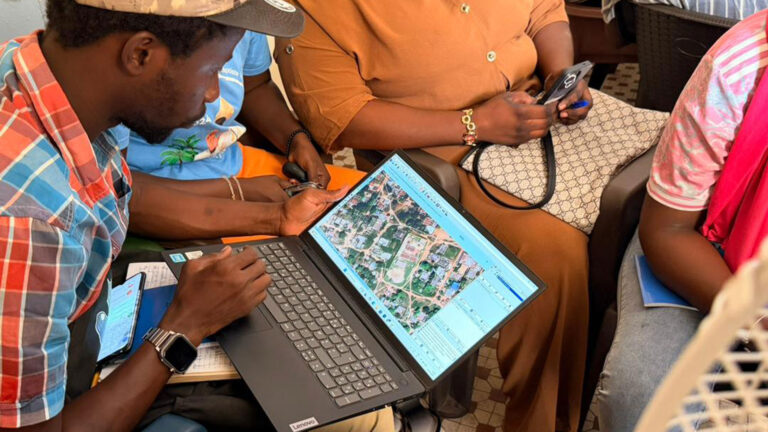
Enumerations are often followed by community mapping, which is conducted in order to spatially represent the information collected. These maps are often vital for planning purposes and community involvement has proven successful in ensuring local residents appreciate the need for the proposed development and resettlement options. With their data in hand, communities can furnish local authorities with accurate and up-to-date information so that planning is more responsive to on the ground realities. To the negotiating table they also bring financial resources, mobilized through the daily savings of thousands of members.
The negotiation that follows is one based on mutual respect: respect for the need to plan our cities and an equal amount of respect for the residents of those cities who – often through no fault of their own – live at odds with long neglected or recently adopted urban development plans.
As the KCCA works to turn Kampala into a planned city, let it work with organized communities of the urban poor. Perhaps the process will move slightly slower than an early morning bulldozer raid, but it will legitimize the development agenda and prevent the loss of more innocent lives.
For more information on the National Slum Dweller Federation of Uganda, visit their website www.nsdfu.org.
The Beginnings of Enlightened Planning?


By Skye Dobson, SDI Secretariat
In a previous piece on the Makerere/SDI partnership in Uganda, Noah Schermbrucker, questioned the sources of knowledge that guide urban planning. In this second installment I would like to continue that discussion. When considering the planning profession I am often reminded of Michel Foucault’s account of the clinician and the evolution of scientific empiricism in The Birth of the Clinic: An Archaeology of Medical Perception (1963).
The “gaze” of the planner these days is often perceived to possess the same objective and rational wisdom as that of Foucault’s clinician. In urban development circles urban planners are believed capable of revealing the city’s hidden truths and taming urban unruliness through a classificatory kind of wisdom, which enables them to identify nodes of dysfunction with supposedly enlightened and absolute objectivity. The planner, like the medical clinician, is believed to possess no agenda and seek solely to maximize efficiency.
Such scientific empiricism, Foucault explains, abstracts knowledge from the subject. This, I believe, is the danger of modern urban planning and the reason SDI, with support from AAPS, is eager to ensure the planning profession reconnect with the subject of analysis.
In this, the second phase of the partnership, Uganda’s future planners ventured into the field with their community professors – placing the “knowers” firmly in the realm of the “known” – to use Foucault’s terminology. Groups of approximately 10 students boarded buses on the 5th and 6th of March bound for the 5 secondary cities in which NSDFU works. From Arua in the country’s north-west, to Mbarara and Kabale in the south, and Jinja and Mbale in the east, the students secured a rich exposure to the urban challenges facing Uganda.
These 5 cities, part of the Cities Alliance-funded Land Services and Citizenship (LSC) program (called TSUPU in Uganda), have a strong federation presence that is driving community collected information gathering, forging deep and productive partnerships with municipal government, and launching community managed development projects in slums. This new partnership will certainly contribute toward strengthening and deepening this ongoing initiative.
When the students arrived in each of their respective cities they first met with federation leaders who debriefed them on the urban reality in their municipality, the work of the federation, and the enumeration process. The students asked these members many questions and engaged them in rich discussions on issues of land tenure, services, and housing.
The groups then paid a visit to the Municipal Council to meet with various political and technical municipal officials. The federation introduced the students and partnership to the municipal officials and its links to the LSC/TSUPU program. In each city the officials, most of whom had been part of the enumeration effort, praised the new partnership and expressed commitment to supporting the initiative as well as incorporating federation enumeration data into the municipal planning process.
Following the visit to the municipality, students ventured into the settlements in which the federation members live. Armed with the enumeration data the students were able to interrogate the data and enrich their understanding of its meaning. In focus group meetings and one-on-one interviews life was breathed into the data. The stories of members about eviction, lack of services, and housing conditions ensured the students would see the data for what it is: an account of life in slums and an essential ingredient for effective urban planning. They also came to see the local community for what it is: the best resource for local knowledge and the most invested in the urban development agenda.
For most of the Makerere students it was their first time to visit these cities and as the country’s future urban planners they expressed gratitude for the opportunity to see that Kampala’s urban planning needs are not the same as those of secondary cities.
In Kampala, each of the capital’s 5 municipalities (formerly divisions under Kampala City Council, these are now municipalities under the newly formed Kampala Capital City Authority) played host to a group of about 10 students as well. The federation first took the students to the Municipal Offices in Nakawa, Makindye, Rubaga, Kawempe, and Kampala Central. Like they did in the secondary cities, the Kampala students were able to meet officials from the Division and introduce the program as well as ask questions.
The students then split into smaller groups in an effort to verify federation profiling data on each of the parishes within the 5 municipalities/divisions. This was a massive undertaking and one that involved the students covering great distances each day. Though they live and study in Kampala, many of these students had not ventured so deeply into the city’s slums nor examined so closely the socio-economic realities therein.
With their community professors leading the way and the blessing of municpal officers, the students were able to move freely in the slums, ask questions, make notes, and take photographs to enrich the profiling data collected by the community. These observations were critical for the students as it enabled them to problematize the certainties of planning they have learned in the academic world.
The students will now take the data – hopefully no longer abstracted from the subject – and analyze it further in order to compile reports that will be returned to the federation for verification in the next phase of the partnership. After verification, the students will finalize the reports in a uniform format that will be published. In the final stage of the program students will return to the municipalities in which they worked and assist the federation to present the information to local authorities and discuss the critical contribution such information should play in the planning process. They will also share lessons on the way their conceptualization of what it takes to be an effective planner has changed during the program.
In Noah’s blog post he correctly pointed out the power that comes with knowledge. Foucault argues the reason the myth of the clinician’ s objectivity survived for so long is because, “the gaze that sees is a gaze that dominates.” In this first field visit as part of the urban studio, the gaze of the planner was brought closer to that of the subject, which we think is a positive step toward making the planning profession more responsive and more capable of executing its duties.
SDI will keep you posted as the workshop in Uganda unfolds.
Learning from Community Professors in Uganda


By Noah Schermbrucker, SDI Secretariat
“In communities we know the number of settlements, services and origins of the people. We know how they spend their money and how they would like to develop their areas. You cannot plan from the office but if you go to the ground and speak to people and learn from them it can help you plan better”-Katana Goretti (Treasurer of Ugandan Federation)
The old adage that “knowledge is power” is particularly pertinent when it comes to traditional modes of development thought and planning. Who is afforded the right to speak? To what purpose do they speak and in whose interests? Who is included and, far more importantly, who is excluded? Far from being benign such narratives inform practices, models and interventions. They become a version of the truth ratified by officials, academic texts and practitioners. In this case the truth is not absolute it is socially produced within a very specific set of paradigms and engagements which all too often exclude the diversity, flexibility and value of community based knowledge. Surely those living in areas earmarked for development know their own needs best?
If we are to challenge current models of development to be inclusive of communities we have to confront the knowledge regimes that perpetuate them. These are housed within various spheres of society including the state, large development agencies and academic institutions. Through partnerships, negotiations and the setting of infrastructure precedents federations across the SDI networks attempt to create new spaces in which community knowledge comes to influence and inform development decisions. One such example is currently underway in Uganda where future city planners and geographers are being exposed to the knowledge and experience of federation members.
SDI has entered into a collaborative field project with third year planning students at Makerere University. Community members will accompany students in Kampala as well as 5 secondary Ugandan cities (Mbarara & Kabala, Mbale, Jinja and Arua) where students will conduct enumerations, transect walks, mapping exercises and other important community centered rituals. The students will be broken into groups with a specific focus for each member (e.g. housing, sanitation, education). In this manner students will have an in depth engagement around a core issue. Throughout the fieldwork process community members will assist, guide and teach the students about their communities and the obstacles that they face. Not only will future planners, geographers and architects be exposed to conditions of informality but also just as significantly they will come to see the intrinsic value of incorporating informal knowledge and practices in the planning processes.

Community professor Zam explains savings schemes to the Makerere students
The outputs of the project will be detailed reports reflecting community challenges that will be submitted to local authorities that will also be drawn in throughout the process. Reports will validate enumeration data around key issues decided upon by community members at a meeting on the 5th of March. These issues include; water, toilets, roads, health centres, ownership of land and housing typologies. The verification of data arose out of community needs to present concise reports to authorities about their areas in order to create awareness and leverage resources. Importantly this is a demand driven process and not one determined by a top down intervention.
On Wednesday the 29th February federation members visited the Makerere campus for the launch of the collaborative studio project. Katana Gorreti Bwakika Zam and Kasalu Ronald from the Ugandan Slum Dwellers Federation spoke to the students about savings, enumerations, mapping and how these processes had created social and political capital as well as solidarity within slum communities. The importance of knowing ones own community and the collection of information was also stressed. The students received the presentations enthusiastically and by the end of the meeting community members had taught the students the “Umeme” gesture popular amongst the East African federations (waving of the hands instead of clapping, a movement which does not exclude those who cannot clap).

Umeme!
Reflecting on the session over a cool drink in the University cafeteria federation members joked about becoming community professors and teaching students, a position that they never imagined themselves in. As the project progresses this is exactly the role that members of the Ugandan federation will fulfill. As students visit their settlements and become engrossed in the processes that they employ they will be the community professors whose experience, perseverance and knowledge begins to inform practice. Katana tells me “ What I would like to see is the community, students and the government working together…as someone within the community we know best where to put the roads, drainage and garbage.”

Community Professor Katana explaining the SDI rituals
Peter Kassaija, the enthusiastic teacher spearheading the partnership at Makerere stated “ We want students to go beyond sitting in the office and into the field in order to get to know the communities which they plan for. For the federation members the lines of communication are now open and they [the students] will learn as much from you as you will from them.” This is a welcome attitude and one from which many academic institutions can learn. Practical field experience of informal settlements not only debunks myths but exposes students to conditions and people who are normally excluded or given mere “lip service” in planning decisions about their own areas. During this process students will be forced to engage beyond the confines of the classroom with forms of knowledge that are not included in their curriculums but which are absolutely vital to the future equitable development of cities.
It is these types of partnerships that have the potential to not only create new spaces for learning but also enable informal community knowledge to become part of citywide slum upgrading processes. Across the SDI network tireless federation members are working to ensure that the knowledge of community professors is taken seriously and incorporated in developmental frameworks. If we are truly to change the segregated spatial form and exclusionary policies of future cities it is time that we all sat up and took very seriously the lessons which community professors can teach us. As Katana aptly sums up, “ An old broom sweeps better than a new broom. That is community members they have experience of all the corners and the problems in their communities.”
SDI will keep you posted as the workshop in Uganda unfolds.
For more photos from Noah’s trip to Kampala, visit our Facebook page.
Click here for more information about the Uganda Slum Dwellers Federation.
“I dreamt of sleeping in a dry house”

Cross-posted from the Actogether Uganda blog
—-
By Lutwama Muhammed, Actogether Uganda
Katana Goretti , 35, lives about three miles from Kampala City Center with her family. While juggling several seasonal and short-term small businesses, Katana faced domestic violence at home. She alone provided for her five children. It was difficult. Her business required her to spend most of her time away from home and unable to care properly for them. Katana said, “I never felt alive at that time, although I could breathe and walk. I had no confidence in myself.”
In 2007, ACTogether and members of the Uganda Slum Dwellers Federation mobilized and sensitized residents in her settlement about savings and working together to solve their problems. She helped form a savings group and was elected as both the secretary and the collector. She participated actively and worked tirelessly to balance these new roles with her business and household responsibilities. “I started dreaming of sleeping in a dry house. I was tired of sleeping in water and the children fell sick all the time,” she said.
Using her savings, Katana bought 4 bags of cement and presented them to her husband, demanding that the family build another house. “That shocked me a lot, but somehow we pulled it together and started construction,” said James. He used his carpentry and masonry skills to provide most of the labour for the construction.
“Participation in federation activities has changed a lot of things in my life. The first time my husband, James, saw the importance of saving was when he did not have money for school fees. I just withdrew money from my savings and paid the school fees.” James agreed to join the federation and start saving too.
The family is now united, sharing problems, joys and responsibilities. Katana runs a small business in Owino, the biggest market in Kampala City. She plans to seek training in business skills and management to improve her current business as well as explore new opportunities.
In addition to saving, some training on rights and responsibilities, problem solving, and leadership skills was provided by the federation. The settlement she lived in was threatened with eviction and Katana actively mobilized the community to come together as a ‘single voice’ and demand Government protection from eviction. With support from LWF and ACTogether, the eviction was stopped.
Thanks to daily saving, the family has abandoned their old flood damaged house. Katana’s dream of sleeping in a dry house is becoming a reality. A wheelbarrow of cement, sand and bricks welcome you at the new three-roomed house being constructed with the savings of Katana and James. The raised foundation of the new house will help to keep them dry during times of flooding, protecting them from sickness and disease.