Zimbabwe Federation Response to Covid-19


On behalf of the the The Zimbabwe Homeless People’s Federation and Dialogue on Shelter Trust, SDI presents the work to fight COVID-19 in Zimbabwe. The following is an account from the SDI affiliate in Zimbabwe.
***
Zimbabwe recored its first Covid 19 case on the 20th of March 2020. On the 23rd of March the nation recorded its first C19 death of a well know public personality. This jolted skeptics to the reality of C19, a few weeks after a Government Minister had dismissed C19 as a disease of the West that does not affect Africans. On the 30th of March the government announced the beginning of the first lockdown phase. The lockdown has been extended into phase 2, which allowed businesses to open. Intercity travel is prohibited. Unfortunately, the relaxation of lockdown rules has resulted in an increase in confirmed cases. As at May 31st 2020, Zimbabwe had 178 confirmed cases, 29 recoveries and 4 deaths out of a total of 45,395 people tested. The confirmed cases are mainly returnees in Government Quarantine centres. These centres have become a hotspot of COVID-19 infections. This has led to the stigmatization of returnees. Most agencies have been urging government to accelerate its testing.
Impact of COVID-19 in Zimbabwe slums
The Covid19 pandemic has presented complex health and humanitarian crises to the Zimbabwean society which was already burdened with a crippled health service, economic and financial crisis as well as unemployment and food shortages. Other governments responded to the pandemic with lockdowns in the interest of flattening the curve. While these measures are commendable, they have been viewed with much skepticism in terms of how they have been roundly applied to contexts in the Global South without regard to the different realities such as widespread poverty and inequalities. Conditions of urban informality rife in the Zimbabwe, for instance, beg for customised and measured responses. Social distancing, in particular, may not neatly work with overcrowding in slums. Informal business closures also suffocate the very lifeline for most slum/urban dwellers who sustain livelihoods on daily incomes. The high incidence of informality in the Global South also means that there is potentially high risk of exclusion of slums and informal businesses in both public and private sector-driven responses to the Covid-19 crisis.
The Zimbabwean government has responded to the C19 reality by demolishing all informal trading spaces in all areas of the city including residential areas. The C19 is being used as an excuse of demolishing informal markets and homes under the disguise of sanitising and decongesting the city. Unfortunately, this has increased the number of homeless people and overcrowding as families take in evictees. In addition, the markets for basics such as fruit and vegetables are now centralised. The markets now open for a short time forcing people to converge and crowd the market for the short hours they are open. The markets are a potential hotspot for C19.
On top of this, the loss of employment due to C19 has resulted in families loosing income and failing to pay rent. Evictions of non-paying lodgers are imminent..
Crowded and poorer settlements, where it is difficult for people to safeguard themselves against getting infected, are likely to see worse outcomes. The COVID-19 pandemic has created a disruptive new normal for everyone through its social distancing guidelines. But for the urban poor households, these guidelines aren’t just burdensome but they are essentially impossible. Social distancing is a critically important response to the pandemic, but it also assumes that people have adequate space, services and social safety nets to survive such an order. This is simply not the reality across slum settlements in urban areas.
Against this background, the Zimbabwean SDI Alliance received resources towards the following Covid related strategic priorities and activities:
1. Contain the spread of the COVID-19 pandemic and decrease morbidity and mortality.
Knowledge is power. The Alliance came up with awareness packs that they circulated through social media. Hardcopy fliers are discouraged and social media is the communication of choice available to people in informal settlements. Support was given for communication and leaders are reaching savers through social media
Over the years the Alliance has invested in settlement profiles, enumerations as well as spatial maps of slum settlements. These were used to assess the degree of deprivations in the informal settlements. Information was shared through the government-chaired Emergency Strategic Group that the Alliance is part of. Informal and slum communities such as Mucheke in Masvingo and Tafara in Harare are benefiting from increased water supply through rehabilitation of a borehole funded by SDl and in Masvingo projects funded by the Bilbao.
2. Decrease the deterioration of human assets and rights, social cohesion and livelihoods
When the first case of Covid was confirmed The Zimbabwe Homeless People’s Federation stopped all federation meetings, even before the government announced a lockdown. However, the Alliance became concerned that the social cohesion of groups would be compromised by not meeting. To continue communication with groups, leaders set up social media platforms. The platforms are being used to communicate with savers. Some groups have now started saving. Some are saving using mobile money, others are meeting in small groups to save, respecting self-distancing as required by our lockdown rules. Some groups are splitting up so that they have smaller groups as well as meeting for not more than an hour. Some groups have revived community gardens to augment food sources. The next steps are to continue to check the status of all savings groups as well as to develop guidelines for saving and maintaining group cohesion when living and working with Covid. With the funding from SDI, the Management Committee allocated resources to all the 12 federation regions. Allocation was on the basis of the number of active savers in the region. The regions were divided into 3 categories from the biggest region to the smallest in terms of membership. Each region decided on its priorities. The funds were used to support the following activities:
- Purchasing of non-food items such as soap, sanitiesrs and masks. It is mandatory to wear masks in Zimbabwe. Reports of families sharing masks were common
- Purchase of food items, especially grains. Mealie meal is a staple in Zimbabwe and unfortunately is scarce at the moment. In addition, some groups bought matches and cooking oil for their families.
- Rehabilitation of a borehole in Tafara settlement in Harare.
A total of 3702 households were direct beneficiaries of the funding.
3. Protect, assist and advocate for communities particularly vulnerable to the pandemic.
The government embarked on a program to demolish informal markets as well as some settlements when they announced the lockdown. The demolitions are being regarded as preparedness plans to sanitize informal settlements to minimize the spread of C19 in informal settlements. Authorities in the past had failed to demolish these markets and settlements because of legal challenges to the evictions as well as political resistance. However, C19 has given authorities an excuse to undertake unchallenged evictions. The Alliance has engaged Legal Resources Foundation to assist in preparing a class action to fight the evictions. To this end, the Alliance has prepared a Standard Operating Procedures to guide the Dialogue on Shelter Trust staff how to support Federation activities during C19. In addition, the Alliance prepared a policy brief to be used with government and other stakeholders in planning and implementing interventions and advocacy activities related to C19 in informal settlements.
Challenges
Groups have closed bank accounts because of expensive bank charges. It took long to send money safely through Mukuru to different regions. The tariffs of 7% of transaction value was also expensive.
Some groups failed to purchase their priority items due to scarcity.
Some groups failed to produce their own loans due to lack of transport to cities where the ingredients are sourced.
Only a quarter of the membership directly benefitted from the funding and small portions.
Way forward
Initially the alliance was waiting to resume activities after Covid. What is apparent now is that the Alliance has to devise ways of working and living with Covid and are therefore planning to:
- Carry out a national survey of all groups to find out how groups can adapt and resume all their activities with necessary modifications
- Support all groups to save
- Explore rebuilding of livelihood activities under Covid
- Scale up the production of soaps and masks
- Continue to link savers and communities to national C19 programmes
***
Please keep following SDI as we highlight the initiatives of SDI affiliates across Africa, Asia & Latin America in the fight against COVID-19 to support the most vulnerable throughout this pandemic.
Community-led COVID-19 Response: Philippine’s Homeless People’s Federation


By Rolando A. Tuazon and Theresa Carampatana
Originally featured on the IIED blog: https://www.iied.org/community-led-covid-19-response-work-philippines-homeless-peoples-federation
Based on member interviews and accounts, the Philippines Homeless People’s Federation describes how community organizations have rallied to support vulnerable groups, hit hardest by the pandemic.
This blog describes how the Philippines Homeless People’s Federation (HPFPI) has responded to the health and economic impacts of COVID-19. The Federation has over 9,000 members in 106 communities in 14 cities and towns throughout the Philippines. It brings together low-income community organizations to find solutions to problems relating to land, housing, income, infrastructure, health and welfare. Its work is supported by The Philippine Action for Community-led Shelter Initiatives, Inc (PACSII).
The blog draws on responses to a questionnaire conducted by federation community leaders, and a teleconference where experiences from the ground — Batasan, Cebu, Davao, Iloilo, Muntinlupa, NCR, Rodriguez-Rizal and Valenzuela — were shared.
Planning the response
[caption id="attachment_13143" align="alignleft" width="225"] Surveying needs in Manila.[/caption]
Initial plans from HPFPI leaders (local, regional and national) included:
- Identifying the communities’ most vulnerable people and updating community databases with member information. With this data, leaders could prioritize getting help for the homeless and others in greatest need including the elderly, children and people with disabilities
- Deploying immediate interventions to help prevent the spread of the virus and minimize impacts of the lockdown
- Coordinating and partnering with government and non-government institutions
- Setting up a communications network to support member coordination across regions and cities
- Since many banks were closed, supporting the transfer of funds to regions. At the start of the lockdown, each region used their savings to finance their community operations but these soon ran low.
Preventing the virus spread
[caption id="attachment_13137" align="alignleft" width="300"] Community quarantine in Mindanao.[/caption]
Information on TV and radio made people aware of how to contain the virus. Federation leaders worked to get this information out to everyone, while also trying to prevent ‘fake news’ circulating. Information sharing must observe social distancing rules; meetings are not allowed.
People complied with the information as follows:
- Blocking off whole areas to prevent movement
- Applying social distancing and wearing face masks
- Observing national curfew (8pm – 5 am)
- Using quarantine passes to buy food – one per family member and for those working on the frontline
- All observing home-stay, senior citizens most strictly
- Promoting good hygiene such as hand washing
- Medical check-ups when virus symptoms develop
 Handwashing station in Iloilo.[/caption]
[caption id="attachment_13142" align="alignleft" width="300"]
 Making masks and food packs in Mindanao.[/caption]
Community leaders have helped keep community members disinfected, distributing soap and alcohol cleanser. Some have built communal washing facilities or purchased thermal scanners that can detect the virus. Some are making washable masks because it is now more difficult to get these from the stores.
Local government has also been disinfecting public markets and other commonly used areas.
Practical help
[caption id="attachment_13141" align="alignleft" width="300"] Making food packs in Manila.[/caption]
External aid agencies were slow to respond and initially, funding to support the homeless came mainly from community savings and the HPFPI’s disaster fund.
Federation leaders bought food in bulk and packaged it up for distribution to each family.
The packs include 3-5 kg of rice, canned sardines, instant noodles, biscuits and coffee. In some cases, packages included baby milk, medicines and vitamins.
Families often share their food with neighbours, especially those in greater need. Some have set up community kitchens and communal gardens with backyard and vertical gardening.
Community leaders have been coordinating with local government to get those infected to hospital or community health centres. Preventive measures implemented in the communities have paid off: there have been no confirmed cases of COVID-19 in most areas with community associations.
Working with government
The government’s strict quarantine policy makes it hard for HPFPI to mobilise the community response. So, the federation has been working with government agencies to identify the most vulnerable members, distribute relief goods and cash, repackage goods for the poorest, and carry out health monitoring. Local government units often find it easier to implement their programs when working with organizations such as HPFPI.
Mobilising funds and resources
As the lockdown was enforced, people lost their income almost overnight. They needed money to buy food but the government response was slow and when help did arrive, provisions were inadequate. 1kg of rice, 1 can of sardines and 1 pack of instant noodles was meant to provide for a family for a week. Some families would receive a second package, often with more items.
National government announced payments of 5,000 – 8,000 pesos for each family, but more than half did not receive it.
Funding from Slum Dwellers International (SDI) and the Asian Coalition for Housing Rights (ACHR) has been supporting HPFPI’s work in each region but it has proved difficult to get the bank to actually transfer the funds. Some members benefitted from support from development organisation Caritas.
Because of the enormity of the needs of our sizeable membership, PACSII is seeking funds from local sources. 1.5 million pesos (30,000 USD) have been donated by individuals and local companies.
Challenges brought by COVID-19…
The lockdown prevents people moving, working, planning, organizing and travelling to access resources. But community leaders found ways round this and managed to coordinate with government, often through the internet and digital meetings.
The government’s home-stay policy is particularly challenging with the harsh living conditions many face. Young people find the confinement tough, and some have violated quarantine rules.
Overall, the government was ill-prepared: resources and the mechanisms to distribute them were insufficient. In adequate health systems has led to a health crisis that will, almost certainly, give way to an economic crisis.
…but some good things too
The massive drop in transport emissions has reduced air pollution significantly. The lockdown has offered more opportunities for family bonding, community solidarity and nurtured a general feeling of unity. People have also found their faith is stronger, with a deeper appreciation of God and His providence. Some communities have organized common time for prayers.
Lessons
An effective crisis response draws on the efforts of many. The government quickly found it could not prevent the spread of the virus, or adequately address its impacts, without cooperation from everyone.
Similarly, community organizations found they could work at scale and with greater impact when their work was supported by government. Updated baseline community data for community mapping was fundamental for getting help to the most vulnerable areas.
Finally, the challenge of accessing funds, particularly in the early stages of lockdown, made clear the need for an emergency fast-response fund to help manage future disasters and crises.
Theresa Carampatana is president of the Homeless People’s Federation of the Philippines; Rolando A. Tuazon is Executive Director of PACSII
[caption id="attachment_13144" align="alignleft" width="212"] Theresa Carmpatana, HPFPI[/caption]
[caption id="attachment_13139" align="alignleft" width="275"]
 Fr. Rolando A. Tuazon, PACSII[/caption]
Sierra Leone SDI Alliance Response to Covid-19

[video width="640" height="352" mp4="https://sdinet.org/wp-content/uploads/2020/06/WhatsApp-Video-2020-06-02-at-4.04.05-PM.mp4"][/video]
Nearly three months since the first case of Covid-19 was reported in Sierra Leone, the Federation of the Urban and Rural Poor (FEDURP) and their support NGO the Centre for Dialogue on Human Settlements and Poverty Alleviation (CODOHSAPA) reflect on actions taken to date and the challenges that still lie ahead in taking action against this pandemic.
Background
This report provides narrative on how FEDURP has been involved in the fight against COVID-19 in their localities within Freetown Municipality, which is the epicentre of the pandemic. Their involvement has been driven by the institutional response strategy developed in collaboration with Freetown City Council (FCC). This strategy was generated using feedback and experiences of FEDURP and community volunteers actively involved in various activities to help prevent and mitigate the spread of the virus in their respective localities.
Planning
In early April 2020, FEDURP and CODOHSAPA consulted and put together a COVID-19 response plan as the pandemic was close to getting its way into Sierra Leone from the two neighboring countries of Liberia and Guinea. This plan constituted the following thematic pillars:
- Leverage existing partnerships with local authorities, such as Freetown City Council, to establish clear roles and responsibilities and clear lines of communication between government and communities;
- Adapt and deliver initiatives formulated within the national policy framework;
- Monitoring of community dynamics, including livelihood activities and movement of people in and out of their settlements; and,
- Enhancing contact tracing of suspected or positive cases within their communities.
To ensure that our strategy was better informed and relevant, it also capitalised on FCC’s COVID-19 response framework with three strategic pillars, namely;
- Behavior change messaging,
- Behavior change support, and,
- Isolation and containment support.
These two foregoing strategic pillars incidentally aligned with the strategic objectives of the SDI network with respect to Covid-19, namely;
- To provide community owned and validated settlement profile and mapping data to inform co-developed preparedness and response plans including logistics;
- Settlement level enablement of co-owned humanitarian assistance responses by means of leveraging existing social and political capital as a way to build two-way trust between providers and affected populations; and,
- To engage in monitoring and advocacy activities at settlement and city level in order to minimize threats of evictions and counterproductive closures of essential informal services during periods of lockdown or protracted national emergency.
Hence, the actions of FEDURP included; i) mobilization of community volunteers to focus on case and incident reporting; ii) development of sensitization messaging materials such as posters, handbills, and videos; iii) engagement in community sensitisation through direct community outreach and using various social media platforms to share videos and radio discussion; iv) provision of veronica buckets (for hand washing) and face masks; v) work with settlement-based local chiefs to enforce government regulations and practices; and, vi) engagement with state and local authorities to enhance government response to needs of informal settlements.
Prevention Response
- Development of behaviour change messaging and information, education and communication (IEC) materials:
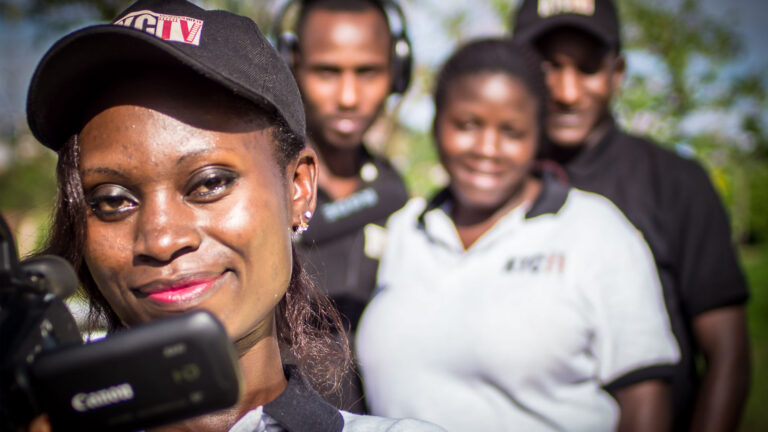
FEDURP and CODOHSAPA consulted various messaging materials developed by the Ministry of Health and Sanitation (MoHS). The contents of these materials were customised to reflect the realities of slums and informal settlements. The messaging materials developed included visuals (posters and handbills) and audio-visuals (videos). This was done in collaboration with FCC and community health workers working in community health centres located in the informal settlements. The videos were done by the KYC TV team. One of the videos was done with the mayor in one of the slums (Susan’s Bay) emphasing the importance of handwashing and social distancing.
- Provision of handwashing facilities:
Five communities were supported with veronica buckets and soap which were located at strategic locations within communities. These provided facilities for handwashing, which helps to stimulate and enhance behaviour change in communities. Given that hand washing is the most basic practice to mitigate the spread of COVID-19, the provision of these items has increased people’s awareness about handwashing practices as an important element to preventing the spread of the virus. These stations are monitored by young community volunteers to enforce the practice for passers-by and to replenish the water and soap.

- Production and provision of face masks:
1,250 face masks were produced by tailors who are members of FEDURP. 250 were directly distributed to community volunteers and 1,000 contributed to the 60,000 mask target set by the FCC to support vulnerable population in slum and informal settlements.
- Community sensitization and propagation of messaging:
Community volunteers drawn from the community-based disaster management committees (CDMCs) and FEDURP key participants engaged in community outreach activities, organising community and one-on-one sensitisation drives and distributing the posters and handbills containing customised messages that respond to the realities of slums and informal settlements.
Mitigation Response
- Working with FCC to reach out vulnerable population with food items during lockdown:
The federation worked with FCC to support a community kitchen targeting three extremely vulnerable communities namely, Cockle Bay (in the west end of Freetown), CKG (central), and Old Wharf (east end) targeting people with disabilities, the elderly, orphans, pregnant girls and female headed households with multiple dependents. This is to mitigate hunger for these categories of people who are limited to sourcing livelihood opportunities. Without such support, they are exposed to reinforced marginalisation and increase their exposure to contracting the virus and/or decreasing the chances of survival if they get exposed to the virus.
- Engagement with authorities to enhance support to informal settlements:
The situation of slums and informal settlements remains largely ignored by state institutions in responding to COVID-19. FEDURP volunteers have been engaging particularly with the Disaster Management Department of the Office of National Security (ONS) in which they responded by providing materials to these localities. Nevertheless, FCC has been quite responsive to the needs of slums and informal settlements. With focus on COVID-19, the engagement has also brought into view environmental disasters as the rains that are about to start, which often leads to massive seasonal and tidal flooding, rock or mud falls, landslides and more. There are speculations that if preparedness actions are not taken now before the rains set in it may beset the preventive measures and escalate the spread of the virus. Hence, the federation is pushing for environmental disaster preparedness. Another issue of concern is the militaristic approach to effecting quarantine actions in slums and informal settlements compared to formal or built up neighbourhoods. This has resulted in resistance and mistrust between communities and law enforcement. FEDURP therefore found it critical to encourage the relevant authorities to adopt more humane and civil methods.
- Development of case monitoring app (Freetown Informal Settlement Covid-19 Data – Fiscovidata)
This app has been initiated to ensure that incidents and issues emerging in slums and informal settlements are captured and reported so that their situation are not sidelined and to serve as the basis to inform key stakeholders about the realities of these localities. This was done in consultation with FCC capturing the perspectives of all parties. It also provides opportunities for the participants to improve data collection skills and sensitivity to the needs and realities of their settlements. (See the link: https://datastudio.google.com/reporting/e5255d5d-6553-49fa-b286-e46c49d296a4)
- Case and incident reporting:
This initiative constituted 126 data collectors spread across the 68 slums and informal settlements in which 48 are attached to the FCC ward-level community engagement structure using the aforementioned app, Fiscovidata, to collect and report cases and other incidents. Two levels of data analysis are done, i) community level data analysis that reflects the 68 settlements; and, ii) ward level in which incidents from these communities and other neighbourhoods within a ward are compiled to reflect the ward for sole purpose of FCC. Collecting and reporting on the cases and related incidents is important to mitigate the effects of COVID-19, as it helps to inform stakeholders of necessary actions that may address the needs of slum dwellers and informal settlers.
- Networking with State and Non-State Agencies
The fight against COVID-19 requires collaborative actions to build synergies and maximize the use of limited resources in the face of this global pandemic. The Ministry of Health and Sanitation (MoHS) has been responsible for designing appropriate IEC materials as well coordinating the provision of health services nationwide, including COVID-related mitigation and curatives. As such, messages we customized were derived from the approved MoHS resource base. At the same time, development and enforcement of protocols, procedures, and practices are undertaken by the Emergency Operational Centre (EOC). This has remained quite centralized, even though attempts are being made to decentralize its operations, making it difficult for CSOs to efficiently interact with the centre.
Collaboration with FCC has continued in order to maximize the provision of services and support. FEDURP/CODOHSAPA undertakes community mobilization and organisation as well as providing necessary data to inform FCC’s actions and service provision. This synergy tends to reinforce the recognition of slum and informal settlements as part of the municipal constituents, which by all indication precludes any foreseeable forced eviction in the course of the current situation.
FEDURP’s engagement with ONS saw additional provision of hand washing facilities in a few settlements and involved discussions on how both partners can begin to work on the actions to mitigate environmental disaster as rainy season is just setting in now.
A consortium including CRS, FCC, FEDURP/CODOHSAPA, CARITAS Freetown and Sierra Leone Red Cross has been constituted to seek funding from EU. By all indications, there is the possibility to win this grant which will target the slum dwellers and informal settlers, and special trade and socio-economic groups such as Traders and Market Women Council, Bike Riders Association, Tricycle (Kekeh) Drivers Union and Motor Drivers Union.
We are also working with ARISE partners to finalise and roll out the concept on our collaboration on the fight against COVID-19. This will focus on the following objectives:
- Improved community capacity to respond and mitigate the spread and contagion of COVID-19 in slums and informal settlements in Freetown;
- Enhance government’s COVID-19 response and mitigation priorities to reflect the needs of slums and informal settlements; and,
- Improve structures and practices for the collection and documentation of experiences and learning of COVID-19 response and mitigation interventions in slums and informal settlements
Challenges
Some of the challenges we have faced include the following:
- The centralized approach poses the challenge of efficiently engaging with Emergency Operational Centre (EOC);
- There are huge needs, particularly in slums and informal settlements, but limited funding to respond adequately;
- Mixed messages has resulted in the emergence of myths and misconceptions in communities and the society generally about the Covid-19 virus;
- Periodic full and partial lockdowns seriously affect the livelihoods of slum dwellers and urban poor communities, as most are daily wage earners living on a hand-to-mouth basis. This is reinforced by the increase in the cost of food stuff caused by the ban on inter-district vehicular movement, which in turn affects movement of local food stuff from the rural areas where local food stuff are grown and at same time affect the marketing stock of the market women sellers.
Lessons Learned
Some of the lessons learned include:
- Our experiences from the Ebola outbreak was a capital for the government and local actors to draw from to design and plan for the fight against COVID-19.
- Ebola attracted a lot of funding from international partners, but the emergency of COVID-19 as a global pandemic attracted less support globally, which is an indication that nations across the globe were busy fighting their own scourge.
- The need for community participation has become even more important, as restriction on movement and enforcement of social distancing precludes others from directly supporting local actions.
- COVID-19 has stimulated ingenuity and creativity, such as the local fabrication of hand washing stations and face mask.
- COVID-19 has registered the urgent need for our government to invest in our health and other essential infrastructures as the ban on international flights has limited all of us (rich and poor, governors and the governed) to use our local health facilities as they have no second option of traveling abroad.
Next Steps
As the Sierra Leone SDI Alliance, we have identified the following as critical next steps:
- Focus sensitisation on myths and misconceptions.
- Data collection and incident reporting continues.
- Continue engagement with partners to seek other funding opportunities.
- FEDURP and volunteers to strengthen community monitoring efforts in collaboration with respective resident local chiefs.
- Continue engagement with state and non-state actors to strengthen synergies and enhance support to slums and informal settlements
Covid-19 in a Mumbai Slum: An interview with Shamim Banu of Rafik nagar


Last week, SPARC India spoke to Shamim Banu Salim Sheikh (age 55), a member of Mahila Milan living in Mumbai’s Rafik nagar slum in Govandi about conditions in her community. The below are her reflections on her community and the impact of the Covid-19 pandemic.

“My name is Shamimbanu. I am the taluka vice president of Samajwadi party. I reside in Rafik nagar – Govandi, Shivaji nagar near Bismillah Masjid dumping ground. My family consists of my husband, two sons and two daughters. One daughter is married. My husband and my sons are working in the fishing transport line. We have one business only.
Life in Rafik Nagar
Rafik nagar is a huge slum with around 40,000 houses. Most of the houses are kuccha (informal), at least 30 to 35% houses are kuccha since they are near the dumping ground. Securities from this area don’t allow these people to build pucca (permanent) houses. But if we go little away from the dumping ground then we see little pucca houses and more deeper in the area, you have ground plus one houses, i.e ground floor is pucca and upstairs they have patra (tin) roof or patra side walls. Most of the people’s occupation here is wastes pickers, fish sellers, vegetable sellers, kadiyas (masons), construction workers and mystry (carpenters).
All kinds of people stay here. Most of the people are Muslims from Uttar Pradesh and Bihar states. Migrant workers in this area were more, now most of them have left their houses and went back to their native lands. The houses are small and 8 to 10 men would stay in one house. The reason they left from here is not food but all their work is stopped [because of the coronavirus lockdown], and they were scared that whatever savings they had would finish staying here without work.
We have a team of ladies who come together and prepare community food daily, all the expenses are done by the Maharashtra Legislative Assembly (MLA) and five other councillors and supply food to different areas such as Guatam nagar, Shivaji nagar, Sathe nagar and Indian oil and also Rafik nagar. Whoever wants food comes here and takes the packet. Many people don’t have a gas cylinder in their house. If we take a cylinder it costs 1000/-. Most of them use chullas (hearth / stove) for cooking food and some get kerosene at 80/- per litre.
We have 24 hours electricity – only people near the dumping ground don’t have individual meters otherwise all the houses have individual meters. Water is also not a problem: we get ample water from last 3 years as our MLA has given us water connection to every house. He has spent crores of rupees to give us this connection. Some lanes have proper drainage lines, but the new houses don’t have drains. Even in rainy season, we don’t have much problem here. The area doesn’t get choked up any time. He has constructed a small kabrastan (cemetery) in our area, otherwise we had to go far away to cremate the body. Only problem we have here is that, because the garbage comes here there is very dirty smell in the area when they burn it. It’s not only garbage that gets burnt but there is a company nearby which throws post-mortem and other stuffs in this dumping ground . Many people have various kinds of lung diseases here. We all use common toilets. The toilets are not sufficient for everybody, some go near the dumping ground before the security comes to take charge.
Covid-19 in Our Community
Corona illness is a surprise to us, but as I said we are living here for years with all kinds of dangerous diseases, this is one kind of disease in our list. If you ever come here and see you will find people going around everywhere without any fear. Nobody from outside such as police, doctors or Brihanmumbai Municipal Corporation (BMC) officers dares to come inside the area. Because they themselves are scared that they will get new diseases if they enter this slum. So most of the time police stays outside near the road side and don’t allow people to go anywhere.
We try and tell other people that they should keep their hands clean, houses clean, don’t sneeze or cough in public places. But all these things are for rich people and not poor people like us. In this area most of the people have at least 7 to 8 members in their houses, how are you going to tell them they should not sit together or keep distance between each other? They will laugh at you and show you their houses first to see how big is their house. It’s two and half months now, nobody from the government side or BMC has come to sanitize our area or give us any information about this disease. We hear the message when we have to call somebody from the phone. They have a tape that tells you what we have to do to stay away from this diseases and sometimes from the TV. But people here are least bothered about all these things. They are waiting, when this lockdown will be over and they will go out for their jobs.
We must be having many positive cases in our area, but nobody has come to check any family. Once our MLA had arranged a camp and sent some doctors to check here by bringing some small machine to see if people have fever, but they said there are no positive cases at least nearby my area. We are not sure how true is that. Because if people don’t listen to what government is saying than how could you test just few people and say that there are no positive cases in this slum. Many migrant workers who were living here have left from here, our MLA arranged buses and train tickets for many people, now almost 30 to 35% of migrant workers have gone.
Many people have lost their jobs. They are not sure whether they will get the same job again, but the fish and vegetable sellers will continue with their jobs. The rest will have to find another job. We are all waiting for the buses and trains to start so that we can go out and start earning. Government didn’t think about people who are on daily wages. It’s good that our MLA gives us all the grains to cook food in our area so at least poor people take meals twice from here.
We had got a contract of preparing some 10,000 to 12,000 masks. We use to get 2 rupees per mask. Many people were doing this work but that is also stopped. In Ramadan month most of them had started vegetable and fruits businesses. Some were selling toys and other stuff so that they were able to earn some money out of it. But now everything is stopped. The waste pickers try and go to pick up waste but the watchman asks them to pay 50 rupees to go out from the area, and since all the shops are closed who will buy their stuff.
People do have ration cards but not all. We get only rice and wheat in the ration shop and nothing else. What are we going to doing with all the rice if there is no daal or masala or oil? How are we going to cook the food? No systems are in place; government does their own manmani (will), whenever they want they do lockdown but we are the sufferers. It seems everything has come to an stand still. “Zindagi mano thumsi gayi hai.” (“Seems like life has paused.”)
Nothing is good about what is happening, we are thanks to Allah (God) that we have a good MLA who is taking care of people in whole of Shivaji nagar. We prepare 4,000 kg of rice daily, dal, chole bjature (chickpea curry with fried bread), once a week chicken biryani and once a week mutton pilaf and feed as many people we can. Our team of ladies come together and pack the food and send it by tempo (small cargo truck) to different areas. This is only good thing.
There is a small general hospital built by MLA which takes care of small cases. They charge 10 rupees if medicine is available then they give us free medicines also. We have been given contact numbers for ambulance so that in emergency we can contact them.”
Tanzania SDI Alliance Response to Covid-19


On behalf of the the Tanzania SDI Alliance, SDI presents the work to fight COVID-19 in Tanzania. The following is an account from the SDI affiliate in Tanzania, with updates on the current work of theTanzania federation and CCI.
***
INTRODUCTION
The Tanzania Urban Poor Federation together with the Centre for Community Initiatives (CCI) have been carrying out awareness campaigns in Dar es Salaam slum communities for the past eight weeks. The aim of the Tanzania SDI Alliance’s COVID-19 awareness campaign is to educate urban poor communities about the realities of this pandemic, from symptoms to prevention measures and more.
As of mid-April, Tanzania had reported 153 cases of Covid-19. The awareness campaign commenced in Dar es salaam because of its vulnerability to rapid spread of Covid-19 resulting from high population densities and its role as the economic centre of Tanzania. Moreover, Dar es Salaam is home to the only hospital with dedicated Covid-19 facilities.
The Tanzania federation in collaboration and CCI started by identifying the community team who will be providing trainings to other community members and communities that will be targeted. This was followed by the training of a team of eight federation members, many of whom are youth, and two CCI staff members. This team was trained by Temeke Municipal Health officials in order to conduct trainings themselves.
Following this training, an awareness campaign on Covid-19 prevention (for example, frequent hand washing) was rolled out in Kurasini informal settlement in Temeke Municipality with the Kurasini ward health officer participating actively in the campaign roll-out. Having planned to roll out this campaign elsewhere, the Tanzania alliance has (as of 27 May 2020) scaled their Covid-19 awareness and prevention work to Dodoma, Dar es Salaam and Zanzibar, reaching eighteen informal settlements and at least 15,000 people.
AWARENESS CAMPAIGN IN KURASINI SETTLEMENT
The first place that the Tanzania Alliance carried out its awareness campaign was in Dar’s Kurasini settlement. This included a training of community health workers by Department of Health officials followed by a community education training for the wider community. Both trainings aimed at creating awareness of Covid 19 symptoms, preventative measures, and actions to take when affected with Covid 19.
The federation / CCI team used a number of methods to try to reach the largest number of people safely. This included use of a megaphone, visiting people house to house while maintaining a 2 meter distance, and use of banners and posters containing educational messaging. In addition to creating awareness, the Tanzania Alliance has made washing buckets, soap and sanitisers available to the Kurasini community.

This initial awareness campaign in Kurasini was very successful, and set the stage for additional campaigns to be carried out in other cities. The partnership created between the municipality and the Tanzania SDI Alliance made it possible for them to work together to reach larger numbers of people, and for the government’s efforts to be aligned with those of the federation.
Despite their overall success, the Tanzania Alliance has faced a number of challenges in scaling up the campaign. They have not been able to afford sufficient quantities of hand washing buckets, sanitisers, or soap to reach the entire population. In addition, they found that many in the communities struggled to take the pandemic seriously and exhibited a passive attitude with regards to the suggested precautions for individuals or in public spaces such as markets. Hopefully the Tanzania Alliance and government will be able to work together to increase awareness effectively.
IMPACTS OF COVID 19 ON TANZANIA’S URBAN POOR
Although Tanzania did not institute a lockdown as many countries have, the day-to-day experience of many urban poor residents has been impacted. With many businesses closing and people working from home, daily wage earners have struggled to make ends meet during this time:
“I am a tailor located in Mtambani settlement in Vingunguti, Dar es salaam. During Ramadan towards Eid celebrations I always earn a lot of money due to the number of clothes that I am supposed to make (approximately 100 orders for Eid), but this year with COVID 19 has been so challenging that its nearly Eid and I haven’t got so much orders so far. I only have this suit (showing the suit) to make before Eid and I don’t see any sign of having more orders, this is a serious economic disaster that I have ever experienced since I have been a tailor’’
‘’As a local food vendor, the COVID 19 has destroyed my business and affects my economic status as I receive very few customers in a day as very few people come to work, imagine before Covid 19 I use to cook 6kilograms of baking flours in a day but currently I only make 2 kilograms in a day, as there are no enough customers at my business areas worrying about COVID 19’’
“I am a mother of three working in 3 star hotel in Dar es salaam, since the ban of the international flight our hotel doesn’t receive any visitors. So the management decided to close the hotel and we are not paid till we open and start working. This has real got me into stress and debts, as I never had enough saving and its Ramadan where I spend a lot of money on food this has been the most challenging time of my life, just praying the Covid 19 ends and I get back to work and start getting back my salary’’
***
Malawi SDI Alliance Response to Covid-19


On behalf of the the Malawi Federation of the Urban & Rural Poor and The Centre for Community Organization & Development (CCODE), SDI presents the work to fight COVID-19 in Malawi.
***
On Thursday, April 2, President of the republic of Malawi confirmed the country’s first three cases of COVID-19. On the same day, the president declared a state of emergency. In view of this directive, schools and universities have been closed since Monday, March 23. Authorities have also banned public gatherings of more than 100 people, which applies to weddings, funerals, religious congregations, rallies, and government meetings. Security forces have been deployed to enforce the restrictions.
In Malawi, 75% of the urban population live in informal settlements (NSO 2018). Conditions in informal settlements are grossly inadequate at the best of times. Many residents live without access to on-site water or sanitation, people live in over-crowded housing, and are facing the constant threat of forced eviction. Hand-washing, disinfecting surfaces, physical distancing and quarantine for those infected – essential elements of COVID19 prevention – are often impossible for residents of these communities. In addition, residents of informal settlements often do not have access to accurate information and, in cases where such information is provided, the information is provided using male-dominated channels.
Furthermore, the measures in place to prevent the spread of COVID-19 have disrupted livelihood activities for many of these communities. As normal economic activity comes to a halt, the vulnerability of low-paid and daily wage workers in the country has intensified to the point that many are struggling to survive. People most at risk of being impoverished by Covid-19 are those who fall between the cracks of most social protection systems: the people living in informal settlements and working in the informal economy.
It is against this background that the Malawi SDI Alliance has been supporting informal settlements in the cities of Blantyre, Lilongwe and Mzuzu. The communities are being supported with daily access to information as provided by the government and entrepreneurship skills in the COVID-19 crisis, as many businesses are folding. The communities are also being provided with COVID-19 prevention equipment such as face masks, hand washing buckets, and hand sanitisers.
Below is an update of the progress that has been made in supporting informal settlements with information on COVID-19.
- All 35 federation groups in Blantyre, Lilongwe and Mzuzu now have hand washing equipment. Cities were prioritised because that’s where the first cases were reported . Federation savings groups continue to meet and conduct their savings, loans and group entrepreneurial activities in compliance with government regulation. Plans are underway for the federation’s tailoring groups to produce masks to be sold at a reduced price to federation members and to scale up these efforts throughout Malawi.
- The Malawi Alliance worked with the Lilongwe District Health Office to spread Covid-19 awareness messages to ten informal settlements in Lilongwe City (population roughly 30,000) using a public address system that can effectively reach large numbers of people. The Alliance hopes to enter into partnership with District Health Offices (DHO) in other cities to carry out similar work in those areas.
- Community leaders from 24 informal settlements in Lilongwe City were capacitated with knowledge and skills on how to disseminate COVID-19 messages to their communities. These capacity building sessions were specifically targeting informal settlements where DHO officers were being chased away. These communities do not believe that COVID-19 is real or that there are confirmed cases in Malawi. Many continue to hang on to unfounded conspiracy theories about the disease, putting themselves and their communities at high risk of contracting and spreading the virus. So far, a total of 480 community leaders from 24 informal settlements in Lilongwe city have participated in these sessions. The Alliance aims to scale up efforts by conducting similar sessions in cities and towns across Malawi.
- Media efforts carried out by the Malawi Know Your City TV team to raise awareness with youth, including: production of six short videos depicting how the COVID-19 pandemic has affected the informal trader, the girl child, and other vulnerable groups in informal settlements; posters on COVID-19 messages produced and shared in various platforms; and dissemination of awareness messages across various social media channels. Federation youth groups are also engaging their fellow youth gathering and other community platforms to disseminate these knowledge materials. The alliance has also collaborated with a famous Musician among the youth population to produce a song on COVID-19 prevention. The Lilongwe District Health Office has agreed to train Federation youth on Theatre for Behaviour change and Development, and will provide support on the production of a music video on COVID-19.
- The Malawi Alliance has partnered with The Mzuzu City Council to support federation leadership in the Northen region with COVID-19 prevention measures. These leaders have been tasked with the role of spreading the COVID-19 messages within their communities.
The Malawi SDI Alliance plans to continue efforts to raise awareness around the COVID-19 pandemic and provide support for the communities they serve. They are actively seeking additional support from donor partners and working with government to reach as many people as they can in Malawi’s informal settlements.
***
South Africa Response to Covid-19
 [caption id="attachment_13089" align="alignnone" width="660"]
 On behalf of the the South African SDI Alliance, SDI presents the work to fight COVID-19 in South Africa. The following is an account from the SDI affiliate in South Africa, with updates on the current work of the South African SDI Alliance. [/caption]
***
Over the past two months, the South African SDI Alliance has taken action in various municipalities where they are active to implement effective preventative measures to slow the spread of Covid-19 in South Africa’s informal settlements. The SA SDI Alliance’s has worked in partnership with civil society actors, development partners, and local and regional government, to jointly develop and implement Covid-19 responses in the City of Cape Town, Swartland Municipality, Stellenbosch Municipality, eThekwini Municipality, and with the National Department of Human Settlements (NUSP). Every week, representatives of the South African SDI Alliance participate in discussions between various civil society organisations and the Department of Human Settlements to develop effective partnerships and strategies to combat Covid-19 in South Africa’s informal settlements.
As of early April 2020, the SA SDI Alliance had already engaged national and provincial government on the development and dissemination of a targeted information campaign that includes the development of materials specifically targeting the realities of informal settlement dwellers and providing practical advice around measures that can be taken to reduce risk of exposure (See example below which has been produced in all local languages). In addition, quick snap data collection has taken place in various informal settlements during the crisis to assess communities’ ability to access clean water, frequency of toilet cleaning and refuse removal.

Following the initial response phase, the SA SDI Alliance decided on seven strategic focus areas:
- Improve internal & external SASDI Alliance communication infrastructure;
- Safeguard physical and psychological well-being of social movement leadership;
- Identify basic service delivery challenges & monitor service delivery in informal settlements;
- Organize structures in informal settlements that can receive and distribute food parcels;
- Behaviour Change Communication Campaign;
- Lobby & advocacy at national, provincial and municipal government level and raising community voice;
- Monitoring, Reflection, Learning & Documentation.
One of the most critical areas identified by the SA SDI Alliance is food security, as many informal settlement residents are struggling to earn an income – and therefore buy food – during the country’s prolonged national lockdown. The Alliance has been working with other social development organisations to access and distribute food parcels to urban poor communities, and has begun to explore urban farming as an effective solution for informal settlement residents. In Cape Town’s Mfuleni settlement, residents have started gardens where they are able to grow fruits and vegetables for their families, and as a potential source of income.
[caption id="attachment_13088" align="alignnone" width="660"] Residents wait for food parcels in Kwa Zulu Natal province[/caption]
[caption id="attachment_13089" align="alignnone" width="660"]
Serving food to the communities[/caption]
[caption id="attachment_13090" align="alignnone" width="660"]
 Food parcels await distribution in North West Province[/caption]
[caption id="attachment_13092" align="alignnone" width="660"]
 Distributing food parcels in North West[/caption]
[caption id="" align="alignleft" width="660"]
 Urban farming in Mfuleni, Cape Town[/caption]
In addition to the work being done to address food security, the SA Alliance has rolled out relief work to build hand washing stations, and make and distribute face masks, hand sanitiser and hand soap to their own federation members and the communities at large. In addition, they have made efforts to educate their members on how to make these at home in order to facilitate better use of these preventative measures.
[caption id="attachment_13094" align="alignnone" width="660"] Making hand sanitiser in North West Province[/caption]

Most importantly, the SA Alliance is continuing to dialogue internally to ensure that the needs of communities on the ground are being heard and that these continue to be communicated to relevant government structures through feedback sessions between the Alliance and local, provincial, and national government structures. As Rose Molokoane, national coordinator of Fedup, said recently, “It is important for them to talk to us, we have raised concerns, we want them to come back to Federations to get what we requested.”
[video width="640" height="352" mp4="https://sdinet.org/wp-content/uploads/2020/05/WhatsApp-Video-2020-05-21-at-14.43.50.mp4"][/video]
Liberia Federation Response to Covid-19


On behalf of the Federation of Liberia Urban Poor Savers and YMCA Liberia – SDI presents the work to fight COVID-19 in Liberia.
Malnutrition and disease means COVID – 19 could be more deadly in Africa than elsewhere in the world. Health systems in Sub-Saharan Africa, including in Liberia, have limited capacity to absorb large numbers of patients made sick by the pandemic. The impacts of COVID-19 will have profound human, social, and economic consequences for millions of urban poor in Liberia. The Federation of Liberia Urban Poor Savers (FOLUPS) and the YMCA are working together on mitigation activities in a number of slums across Liberia’s capital city, Monrovia. These include West Point, Clara Town, Cow Field, Blamo Town, and King Peter communities, with activities targeting approximately 170,000 people, as per a recent community profile conducted. Most of these slum communities have limited access to basic water and sanitation services. These conditions, combined with high population densities, are likely to contribute to the person to person contact rates of COVID-19 and result in exponential rates of infection in these cities.
As of mid-May 2020, health authorities in Liberia reported 229 confirmed cases, 22 death, and 123 recovered. The Ministry of Health’s capacity to provide critical care is still unknown, as severe forms of COVID-19 leads to respiratory failure which requires ventilators, uninterrupted electricity, and oxygen. It is unclear whether Liberia’s government health system has the capacity to provide this level of support, especially for large numbers of people. At the moment, Liberia’s Intensive Care Units (ICU) have limited ventilators, unstable electricity and limited personal protective equipment for health care workers. Because of this limited capacity to absorb the pandemic it is critical that efforts are taken to contain the number of cases and rate of spread of the disease. As such, the overall strategic approach to address Covid-19 will focus on containment and aggressive preventive measures.
In Liberia, as in many countries, government instituted a lockdown in order to contain Covid-19. While this is an effective measure, the impacts of lockdown can be devastating for urban poor communities who rely on daily income for basic needs such as water, electricity and food. Containment and preventive measures require adequate preparation, creativity and innovative ideas in collaboration with these communities to avoid severe impacts to these communities for whom a few days’ lockdown can mean the difference between poverty and starvation.

The Ministry of Youth and Sports has appointed YMCA on the COVID-19 National Youth Task Force. This puts FOLUPS in a better position to receive first-hand information, training and updates on government and civil society interventions and strategy. As the supporting NGO to the Federation of Liberia Urban Poor Savers (FOLUPS), YMCA is collaborating with the Ministry of Health, Cities Alliance and LIFT Liberia to provide initial engagement and awareness support through women-led savings groups, community youth advocates, and peer educators groups. In order to expand the current community level engagement as a bottom-up behavior change process, FOLUPS through the YMCA has sought to expand the ongoing awareness and support services to targeted urban slum communities in Monrovia. These efforts include:
- Collaborate with the Ministry of Health to increase awareness of preventative measures required to contain the spread of COVID-19. This includes identifying and preparing communities for measures to decrease risks, and taking action to protect vulnerable groups, such as older people and those with underlying health conditions;
- Distribute flyers, hand washing buckets, disinfectants, sanitizers, soap and chlorine at public facilities and major locations;
- Engage in advocacy activities with government at settlement and city level for the early dissemination of information to affected communities in order to minimize threats of evictions and counterproductive closures of essential informal services during periods of lockdown or protracted national emergency. This includes ensuring that the fundamental rights of affected and target population groups are safeguarded, that they have access to testing and healthcare services, and that they are included in national strategies to receive information and assistance from government. Additionally, COVID-19 awareness activities will aim to prevent, anticipate and address risks of violence, discrimination, marginalization and xenophobia towards people of concern.
YMCA and FOLUPS will work as the coordinating body to engage in the co-development and delivery of the above project activities. Existing collaborating partnerships and working relationships with government officials and community structures will determine the extent to which YMCA will be able to operate freely and effectively. Capacity building will be provided by MOH and YMCA where required, in order to smoothly implement this project activities and transition to the level of community ownership for safety prevention/containment of COVID-19.
Please keep following SDI as we highlight the initiatives of SDI affiliates across Africa, Asia & Latin America in the fight against COVID-19 to support the most vulnerable throughout this pandemic.
Kenya Community Health Volunteers Reflect on Covid-19


VIDEO: Community Health Worker Reflects on Covid-19 in Mukuru, Kenya
In this KYC-TV Kenya production , Alice Wanini, a community health volunteer (CHV) in Mukuru Kwa Reuben and member of Muungano wa Wanavijiji, describes the challenges her team faces as they attempt to educate and screen residents for Covid-19.
Alice describes how difficult it is to encourage preventative measures such as social distancing and frequent hand washing in overcrowded slums such as Mukuru, where 10 sqm shacks house families of ten or more and long lines at hand washing stations leave people frustrated. Adding to this is the rampant misinformation about the virus and a lack of adequate personal protection equipment (PPE) for the health workers.
Across the slums where SDI works, federations are working with communities to build hand washing stations, supply food packages, educate residents about how to stay safe, and collect slum data in order to partner with government to provide effective solutions.
Follow KYC-TV on Facebook for regular media coverage of SDI federations’ responses to Covid-19 on the ground, and SDI’s Facebook page for updates from the federations.
Responses to COVID 19: Uganda Federation & ACTogether Uganda


Cities and Infrastructure for Growth (CIG) programme in Uganda, in collaboration with Cities Alliance, AcTogether and PLAVU, have partnered to support vulnerable communities in Nakawa market and Kinawataka and Kasokoso areas that are facing challenges arising from the Covid-19 pandemic. For more on this work, click here.
***
On behalf of the the National Slum Dweller Federation of Uganda (NSDFU) and ACTogether Uganda, SDI presents the work to fight COVID-19 in Uganda. The following is an account from the SDI affiliate in Uganda, with updates on the current work of the Uganda federation and ACTogether.
Under the best of conditions slum dwellers live from hand to mouth. With outbreak of the Covid-19 pandemic in Uganda, the national government has, through the Ministry of Health (MoH), issued a series of guidelines to curb its spread throughout the country. This includes a freeze on much of the economic activity slum dwellers rely on for their incomes. Even though these guidelines are vital in curbing the spread of the virus, their implementation is expected to have an adverse effect on the millions of Ugandans living in slums. For weeks, many will have to survive without income and will likely be unable to sustain themselves or their families.
Slum dwellers are in a catch-22: their already vulnerable position is made worse even before the virus reaches their community. If not addressed, this desperate situation will likely lead to a rise in lawlessness, violence and crime. The Uganda SDI Alliance, comprised of the National Slum Dweller Federation of Uganda (NSDFU) and ACTogether Uganda, has put together a set of proposed interventions to support the communities of the urban poor where they are active. Below is a detailed description of the proposed interventions:

Support Health Centres in Informal Settlements (Target: 13 Health Centres)
Select health centres located in slum settlements and serving the population there will be supported with equipment and tools, enabling frontline medical workers to execute their duties safely. These include: face masks, examination and surgical gloves, disinfectant, hand sanitiser, and hand-washing soap.
The Health centres to be supported are; Kisugu (Makindye), Kitebi (Makindye), Kisenyi (Kampala Central), Kiswa (Nakawa), Kawala (Kawempe), Nabweru (Kawempe), Komamboga (Kawempe), in Kampala; Wakiso Health Centre (Wakiso Town Council; and DANIDA (Masese), Kibugambata (Masese), Kimaka, Mpumudde and Walukuba in Jinja.
Support to Sanitation Units in Informal Settlements (Target: 6 Sanitation Units)
Access to clean water and safe, hygienic sanitation facilities is a major challenge for slum dwellers globally, resulting in health risks such as diarrhea and dehydration that pose threats to millions daily. With the onset of the Covid-19 pandemic, yet another risk has been added to the list with the virus passing via contaminated surfaces and handwashing being one of the best preventative measures to avoid infection.
Over the years, the Uganda SDI Alliance has set up water and sanitation Units in a number of informal settlements across Kampala, Jinja and beyond. These have been instrumental in not only extending affordable water and sanitation to slum communities but also providing communities with meeting space. The sanitation units are located in markets and densely populated settlements with each serving between 200 and 300 people daily. Therefore, it is essential that they are well-equipped to control the spread of Covid-19, along with a number of other waterborne diseases that threaten millions of lives daily. Each sanitation will be equipped with an external hand washing tank, liquid hand-washing soap, disinfectants, sanitisers, and face-masks and gloves for the caretaker.

Information, Communication and Education Materials
Essential in the effort to curb the spread of the corona virus is access to credible information on how individuals can protect themselves and their families from getting infected. To this end, information, education and communication materials have been developed from the general messages issued by Ministry of Health and customised to respond to the conditions of informal settlements, such as the use of shared facilities like water points and toilets. This is vital to counter misinformation about the symptoms, spread, and prevention of the virus. The messages will be pictorial and placed at strategic locations throughout the informal settlement in order to reach as many people as possible.
Household Support (Target: 5000 Vulnerable Households)
Households are heavily dependent on the informal sector for both their incomes and to access basic needs like food, housing, clothes and more. The strict implementation of well intentioned public health guidelines such as the 14-day ban on public transportation and non-food market-trade (both major sources of income for slum residents) pose a devastating threat to these populations, even before they have been exposed to or infected by Covid-19. In light of this, the Uganda SDI Alliance has proposed a support package to assist vulnerable households to access at least 30 days worth of basic needs. This will be made possible through a cash grant of a minimum of $50 via cash-transfer using mobile money services.
***
Please keep following SDI as we highlight the initiatives of SDI affiliates across Africa, Asia & Latin America in the fight against COVID-19 to support the most vulnerable throughout this pandemic.