How the Youth are Leading the Way in Tackling COVID-19

This article was originally published by ICCCAD. Click here for the original post.
In Hatcliffe extension, an informal settlement located in the northern part of Harare, the capital of Zimbabwe, a group of young people are leading the fight against the pandemic. They are building awareness, adapting their businesses to promote hygiene and encouraging fellow young people to contribute to community well-being. Artwell Nyirenda reports.
***
Hatcliffe extension was once a holding camp for urban migrants coming from different parts of Harare. Young people between the age of 15 and 30 constitute a higher percentage of the community’s population. Social and economic challenges are prevalent in the area, as the young often get involved in illegal activities for survival. The majority of Hatcliffe’s residents work in construction and informal trading, and few are formally employed.
Continuous expansion of the area has further exacerbated the challenges in accessing services, particularly water and sanitation. Communal boreholes are the only source of water, as tap water is not available. The community is struggling to meet the growing demand for water with a limited number of boreholes, many of which are dysfunctional, resulting in long queues for water collection.
News of the COVID-19 pandemic and its consequent safety protocols has added to the community’s existing fragilities. Waiting in a queue to collect water at communal boreholes is a daily reality for the residents of the Hatcliffe extension – increasing the risk of virus transmission. Until now, no positive cases have been found in the area. However, soon after hearing about COVID-19, everyone has been terrified to risk their lives while scrambling for scarce water. With the onset of the lockdown, naturally the demand for water has significantly increased and large crowds have gathered near the boreholes.
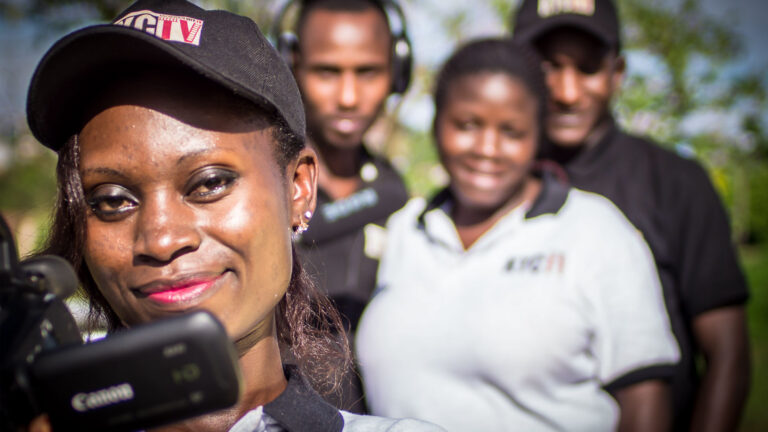
In Hatcliffe extension, the youth have always been at the forefront when it came to crisis management. Lonica Kenneth is a young female resident in the area, and a member of the Zimbabwe Young Peoples’ Federation (ZYPF), and its sub-group, Metro Focus Detergents Filming Group. ZYPF mobilises young people to influence positive change in their communities through documenting and sharing their lived experiences with relevant local authorities and other stakeholders.
The Metro Focus Detergents Filming Group is under the Safe and Inclusive Cities project, a youth-led project funded by Plan International, and consists of 20 members, including Lonica. Saving is encouraged within the group, and the members have been practising saving 10 bond notes (approximately USD 0.10) per week. They also make and sell liquid soaps, detergents, liquid gas and different arts and crafts. “The Safe and Inclusive Cities project has been an eye opener, as I have been made aware of opportunities to generate income, and participate in my community. I have realised I can make detergents that will help my family and community,” shares Lonica.

With her own savings, Lonica began a detergent business in June 2019, producing and distributing liquid soap within her community. However, the lockdown has caused her business to suffer and Lonica has had to redesign her production strategy. “My business has declined since the lockdown as I was unable to purchase raw materials for production. But I also realised that there is a growing demand for soaps and sanitisers during this pandemic, and I really wanted to help my community members during this crucial time” says Lonica.
Along with the other members, Lonica identified an opportunity to boost their businesses and support their community during the crisis. She approached Safe and Inclusive Cities to finance her business. “Thanks to their support, I was able to produce sufficient liquid soaps. They helped me to buy the raw materials required for production,” Lonica adds. With increased sales, she is now saving 20 bond notes per week. Because of the high levels of poverty in her community, she sold the products at a very low price so that people can afford them. “We are also distributing hand washing buckets, sanitisers and soaps to community members who are most impacted,” Lonica further points out.
In addition to their businesses, Lonica and her group has also been involved in raising awareness of COVID-19 preventative measures . “My group has managed to distribute hand washing soaps near community boreholes to promote hygiene. We also influenced community leaders to regularly disinfect and monitor the water points to ensure safety. These public spaces have improved. Chaos is avoided as people adhere to protocols set by the leadership” she argues. The community youth members have also asked relevant government ministries for further training so they can disseminate information more accurately.
Hatcliffe extension residents are fully cooperating in monitoring the water points and advocating for increased youth engagement. “First thing in the morning before anyone comes, I set out the drum, and the bucket with water and soap. Everyone must wash their hands before using the borehole handle. I also use sanitiser to disinfect the borehole handle, to ensure it is clean for everyone to use,” says Steven Nyamapfeka, a local leader in Hatcliffe.
“We are requesting outreach programmes on COVID-19 issues, as we don’t have enough information. If the virus spreads in this community, we will struggle to survive because we are not practising social distancing. More youth can be engaged to disseminate vital information,” shares Phillip Matamande, a member of the community. Residents have highlighted the need for masks and other protective gear, and the implementation of social distancing. They have also requested the Ministry of Health to increase the supply of chlorinated water.
Despite numerous hurdles, Lonica is hopeful that if the youth continue to work together, they will be able to overcome the challenges brought on by the COVID-19 crisis. “I am happy that I am able to play a role during this difficult time, and inspire young girls to lead initiatives for the betterment of our community. Together we can tackle the COVID-19 pandemic!” says Lonika.
Interviewers’ perspective
As we are witnessing during COVID-19, young people from around the world are being innovative and leading initiatives within their communities to tackle the global crisis. Lonica, and others like her, are taking steps to support their communities through active participation. They have been influencing and communicating with leaders in understanding the dynamics of their communities. It is important that the youth realise their potential and the crucial roles they can play within their communities and lead the way for a better, brighter future.
About the interviewer
Artwell Nyirenda is a program officer at Dialogue on Shelter for the Homeless People in Zimbabwe. He is working with young people in slum settlements in documenting the daily experiences in their communities for advocacy purposes.
About the interviewees
Lonica Kenneth lives in Hatcliffe extension and actively participates in community development platforms and programs. Through her work, she has inspired many young people who have joined her in transforming their communities.
Steven Nyamapfeka, is a local elderly man living in the Hatcliff extension for several years. He is also the Secretary of the Water Committee of Hatcliff.
Phillip Matamande is a local community leader and vice chairperson of the Water Committee of Hatcliffe.
SDI at CBA14: Claiming Space for Communities


From 21 – 24 September, a delegation of SDI slum dweller leaders and support professionals will participate in the 14th International Conference on Community-based Adaptation to Climate Change (CBA14) – “From local solutions to global action.” The conference brings together practitioners, grassroots representatives, local and national government planners, policymakers and donors working at all levels and scales to discuss how we can drive ambition for a climate-resilient future.
SDI federations and other grassroots groups use innovative approaches to address climate change in their communities, yet their unique experiences, needs, and priorities continue to be overlooked — or they are seen as the consumers or beneficiaries of other stakeholders’ planning and development, rather than important partners in the planning and development of their own communities, cities, and futures. SDI believes – and our work at all levels reflects – that effective interventions must involve representative organisations of these communities as stakeholders that lead the design, planning, implementation, evaluation and learning from the changes that are needed so urgently.
We hope that those of you planning to attend CBA14 will join SDI at some of the events listed below, where you will be sure to find community representatives speaking directly to their own needs, priorities, strategies and solutions.
CBA14 Opening Plenary | 21 September, 13:00 CET : In this opening session, the LDC Chair – Bhutan, will welcome participants to the CBA14th Virtual conference. We will use this opportunity to take stock of progress on the Global Commission on Adaptation’s Locally-Led Action track – first introduced at CBA13, asking the CBA community to help shape future milestones for locally led action. These milestones will frame discussions at CBA14 and set the stage for an engaging, interactive conference.
COVID-19 and Grassroots Responses from the Frontline| 22 September, 08:00 CET: The dialogue style session will provide an interactive platform for grassroot speakers/leaders to exchange lived experiences of responding to an immediate crisis such as COVID-19 given existing capabilities, resources and knowledge. It will create a learning opportunity to identify the patterns of community actions; navigate the challenges faced and determine ways of scaling up such locally-led responses to build a future that is more resilient to shocks and uncertainty. Through capturing their response and drawing lessons from their practices, grassroots organisations and social networks can enhance community resilience in the face of future disruptions, disasters and emergencies such as those driven by climate change. Session is capped at 35. Sign up here.
Listening to Grassroots Voices / Voices from the Ground | 22 September, 13:00 CET: This session will showcase grassroots leaders’ experiences and insights gained over years of organising to build community resilience and influence policy. Urban and rural grassroots leaders will describe how they have transferred and scaled up their efforts, claiming resources and recognition from local, national, regional and global institutions. They will share effective organising skills for addressing climate change issues through community based adaptation, including key challenges and successes in resilience-building work. Leaders will showcase the power of community data collection and mapping to negotiate with local level stakeholders to strengthen local plans and service delivery of programs. Finally, leaders will highlight the critical role of collaborative partnership to champion community-based solutions to climate change will be another key point of discussion. Session is capped at 35. Sign up here.
Preparing the next generation of youth leaders to accelerate Climate Adaptation in cities | 22 September, 16:30 CET: Climate change science requires the assessment of complex nexus issues at the intersection of natural, built and human environments. Resilience planning requires collaboration across disciplines, political boundaries and sectors to address gaps and respond to emerging and current risks from climate change. There is considerable need to support knowledge development and capacity building at all levels from science to practice in order to support scaled action on urban resilience, while addressing the divide in the educational system itself. Universities are uniquely positioned to mobilize talent, develop knowledge and experience across disciplines and continental divides. Partnerships between universities, community organizations, city governments and the private sector can drive inclusive and resilient urban development. Session is capped at 35. Sign up here.
Impacting Policies – perspectives, trends, challenges and success factors | 23 September, 08:00 CET: Grassroots movement building and leadership in community based adaptations have played a significant role in shaping policy debates on climate change adaptation. Despite this, barriers remain in the decentralisation of power and decision making, flow of financial resources, and policy support towards community based adaptation efforts. This session will bring together grassroots leaders and policy makers, calling attention to the influence of social movements on global policies, highlighting the current policy trends, shifts in local and national budgets, accomplishments, and roadblocks experienced in attempting to bring more policy incentives and financial resources to urban and rural grassroots communities. Session is capped at 35. Sign up here.
Putting Money Where It Matters | 24 September, 08:00 CET: Financing for climate adaptation and disaster risk reduction (DRR) is not getting where it matters, neither to the countries nor communities that need it most. This session first presents findings from new research showing donor funding for adaptation and DRR financing has not targeted the most climate vulnerable countries, and when funding does reach the countries that need it most, local actors are currently unlikely to access it. The session then looks forward, offering an opportunity to collaborate around advocating for greater adaptation financing and co-develop practical principles for better climate adaptation and DRR financing with the CBA community – so that it is more effectively helping the most vulnerable countries and communities. Session is capped at 35. Sign up here.
KYC.TV Online Training: Lessons Taught and Lessons Learnt

Towards a Massive Open Online Course (MOOC) for and by youth in slums
Photo credit: Nigeria Media Team
With in person learning exchanges put on hold due to Covid-19 lockdowns, and in response to a demand from participants for training on social impact media, filmmaking and storytelling for change, KYC.TV hosted a number of well attended online learning exchanges between March and September 2020. Each training was hosted on Zoom and simultaneously livestreamed on Facebook to increase accessibility and reach.
The first session, held in April, was a stock taking exercise to get participant input and better understand what the needs and demands for training were. As the coronavirus pandemic spread to more SDI affiliated countries, federations were confronted with fake news about various aspects of the pandemic. Before long, it became clear how dangerous and destructive these fake news reports were – misrepresenting the disease and increasing the risk of infection. In response, KYC.TV hosted its second online training session to help participants identify and analyse suspected fake news posts.
As the borders closed and hard lockdowns were enforced in one country after another, participants began requesting updates from their peers in order to better understand their own situation and get a sense of what their futures could look like. This third KYC.TV session was very insightful and helped build pan-African solidarity amongst the youth participants.

As the youth began to adjust to the “new normal” of living in various stages of lockdown, we attempted to bring “regular programming” back to the online training curriculum – turning our focus to storytelling methodologies that would continue to build the participants’ creative capacities. In response to a call for more formal training on documentary storytelling, KYC.TV’s fourth online training session was the first in a series of short courses in small and larger groups focused on new and innovative approaches to this accessible and impactful style. The second session in the documentary masterclass series focussed on story structure and how to move events forward in a film in a coherent and structured way that tells a story, has an emotional impact, and serves as a catalyst for change.
Considering creative and resilient response to the economic impacts of lockdown became critical over this time. In the next session, KYC.TV provided a platform for young entrepreneurs from Kenya, Zimbabwe, Zambia, Nigeria and other countries across Africa to talk shop and encourage their peers to start their own businesses or professionalise their service offering.
As the programme picked up momentum and new participants joined, we felt it important to provide a special session for everyone to re-introduce themselves, building unity and relationships amongst the participants. Simultaneous translation of English to French in each session also attempted to bridge any barriers between participants. In an effort to alleviate the burden of translation, the team decided to offer some sessions in French. But one of the lessons emerging from this first phase of online trainings is that effective simultaneous translation is key. Going forward, there are plans to ensure that this is done in a more formal, professionalised way – ensuring that all participants are able to contribute and participate equally.
Our next session took place in the wake of the upheaval and indignation that swept across the world following George Floyd’s murder by US police. We took this opportunity to explore themes of morality, ethics and reporting, and discussed the influence and impact of citizen journalism on society at large and challenged the participants to consider how they can use their own storytelling to catalyse change.

In our last four sessions, we brought in special guests to present on a variety of storytelling tools and skills relevant to the participating youth. Special guests ranged from fellow federation youth to professionals from the film/media industry. Sessions seemed to really come alive with a co-presenter that was from the federation, while special guests from the industry drew an audience and helped inspire the participants to professionalize themselves. First, we spoke to Richard Bockarie from Sierra Leone, who described how they designed a mobile app for data collection and offered tips to participants about how to make their own mobile apps. In the Shooting for the Edit masterclass, we built on the previous masterclass training, exploring the different types of shots that should be captured on a shoot and how to use these in the final edit. Our next masterclass focused on cinematography, featuring special guest Leo Purman, a young cinematographer making waves in Los Angeles and New York. He offered practical tips and tricks for developing skills as a cinematographer and how to approach production to get the best results. The last masterclass, “Getting to Grips with Lightroom,” was co-hosted by KYCTV participant Sam Okechukwu from Nigeria, a rising star in the Lagos photography scene who excels at mobile phone photography and Lightroom manipulation.

Photo credit: Zambia KYC TV team
Major takeaways from this first phase of online training include the insights into how effectively peer peer training is, and the impact of featuring special guests from the industry. Going forward we will identify different tutors from federation media teams to prepare and co-present the content and continue to invite special guests. However, special guests need to answer specific questions from the participants and the participants themselves should have some say in who is invited to the MOOC.
A number of participants requested certifications. While this is an important psychological reward, on investigation we found potential employers or investors are actually less impressed with a certificate of participation than with a well worded and insightful letter of recommendation. Certificates simply state that the participant was on a course, while a letter of recommendation is far more personal, providing insight into the character and capability of the participants. As reward and motivation, we will issue letters of recommendation to participants who show work with distinction.

Photo credit: Mukuru Youth Initiative
We all also realised that it is important to adhere to the principle of learning by doing as outlined in the SDI theory of change. Retention of knowledge is very low if it is not linked to action. The MOOC will be designed as a program of action and deliverables from each student will link directly back to their individual learning goal that impacts on their own built environment. The thrust of the MOOC will be co-creation, and this learning cannot be theory based: we are looking to learn as much from participants as we are to teach them.
It is encouraging to see how eager participants are to learn, and how easily they were able to pick up the skills taught and use them to create relevant media. In the next phase of our online training curriculum we are hoping to scale up and diversify the training. There is huge demand for practical, task orientated knowledge production around creating social impact on ground in informal settlements. As the pressures of climate emergency and increasing inequality bite these skills will be hard tested. Time is of the essence, we need to prepare and face resilience.
News Release: Cities Alliance supports SDI affiliates to address Covid-19 crisis


SDI is excited to announce the below partnership with Cities Alliance, supporting SDI-affiliated federations in their work to fight COVID-19. This programme gives SDI, a long-standing member of The Cities Alliance, the opportunity to work closely with CA on this critical project, aligning the missions of our two organisations to respond to this important and unprecedented cause.
The Cities Alliance programme builds on the ongoing work of SDI-affiliated federations who, through a Rapid Needs Assessment (RNA), received emergency funding from SDI. This funding has supported affiliates to respond quickly to the effects of the COVID-19 in their communities, closing gaps not adequately addressed by government responses.
Over the course of our many years as members of The Cities Alliance we have endeavoured to ensure that SDI’s contribution seeks always to bring the voices and agency of slum dwellers to the centre stage. We are confident that this partnership will continue this effort and will ensure that the dynamism and innovative spirit inherent in SDI’s federations creates meaningful, lasting, and widespread impact in the cities where we work and in the global urban development agenda.
UPDATE: Cities Alliance published this update to the below press release on 30 July 2020.
COVID-19 RESPONSE: ENHANCING THE RESILIENCE OF SLUM COMMUNITIES TO OVERCOME THE CRISIS
Cape Town, Brussels, 27 July 2020 – Cities Alliance is launching a new programme to support the global efforts in response to the Covid-19 pandemic. Funded by the Swedish International Development Cooperation Agency, Sida, the purpose of the project is twofold: strengthen the resilience of communities in informal settlements and support the sustainability of civil society organizations, in cooperation with Slum Dwellers International – SDI; and reinforce the capacities of informal communities to respond to the current outbreak and better prepare for future crises.
The pandemic is having disastrous effects on families in informal settlements that are home to nearly a billion people. These communities have to contend with insecure property rights, low-quality housing, poor sanitation, and limited access to basic services, including health care. Common responses and general health regulations intended to limit the spread of COVID-related infections are a challenge for many slum dwellers. Humanitarian responses do not always reach them. Lockdowns and containment measures cause tremendous losses to livelihoods for families that already have limited or no access to social safety nets.
The new initiative is intended to support the needs of informal communities in 21 countries across Africa, Asia, and Latin America. Activities will be implemented primarily through existing community-based systems and networks.
“The current crisis has shown the vital need to scale up efforts of organised community networks to effectively tackle the pandemic, implement meaningful recovery plans and provide solutions in the long-run,” – William Cobbett, Director of Cities Alliance.
Against this background, and in line with its global partnership identity, Cities Alliance will award direct grants to local NGOs in support to federations of urban poor within the SDI network in Benin, Botswana, Ghana, Kenya, Liberia, Malawi, Namibia, Nigeria, Sierra Leone, Senegal, South Africa, Swaziland, Tanzania, Uganda, Zambia, Zimbabwe, Brazil, India, and the Philippines. The grants will be managed by Cities Alliance, while SDI will provide technical support to its affiliates.
“Slum dwellers federations, community groups, street vendors, and waste pickers associations are the frontline actors in the COVID response. We must sustain the civil society fabric in the settlements to solve the crisis. This programme is a great opportunity to do so,” – Joseph Muturi, Chair of the SDI Management Committee.
The second component of the project combines the implementation of COVID-19 prevention and protection measures with initiatives to reduce the social and economic impacts of the epidemic. The activities will be carried out under the common United Nations framework for COVID-19 response, in collaboration with networks of Civil Based Organisations, including slum dwellers and informal workers’ groups in Bangladesh, Guatemala, Liberia, and Uganda.
The activities comprise the distribution of personal protective equipment and hygiene materials, the provision of water and sanitation facilities and the delivery of community awareness and outreach campaigns in slums, together with advocacy, learning and knowledge exchange at regional and global level, engaging Cities Alliance members.
The EUR 3 million initiative will be implemented over a period of 12 months.
UPDATE: Cities Alliance published this update to the below press release on 30 July 2020.
New narratives for a ‘new normal’


This post originally featured on the IIED blog.
By Sheela Patel and Suranjana Gupta
Sheela Patel and Suranjana Gupta report that women at the grassroots are generating practical responses to the coronavirus pandemic. Their effectiveness in this crisis highlights the importance of including grassroots women in climate change planning.
Megan Rowling of the Thomson Reuters Foundation deserves at least half the credit for this piece. In a recent webinar on how grassroots groups are responding to the coronavirus, she called us out for using the ‘same old tired narratives’ presenting women as either ‘vulnerable’ or as ‘active agents’, leading us to reflect on why we use this language and to unpack some of the ideas behind these words.
Having worked with many grassroots women’s groups hit by major disasters, the Huairou Commission has seen repeatedly how organised grassroots women have dealt with disasters to get communities back on their feet. For instance:
- In the most remote parts of Honduras, where no assistance reached communities for days after Hurricane Mitch, indigenous women fed their families bread made of an indigenous root that survived the floodwaters. The same group went on to create seed banks to revive indigenous crops and agricultural tool banks to restore farming.
- In Turkey, earthquake-hit women monitored relief distribution and negotiated to improve sanitation and food in relief camps. They went on to organise women’s cooperatives that now run a country-wide network of women and children’s centres.
- In India, grassroots women in earthquake-affected areas became communication assistants to the government, going door-to-door disseminating information on the housing reconstruction programme, and reported back to government on implementation problems.
- In the Philippines, grassroots groups hit by Typhoon Haiyan initially monitored relief distribution in partnership with the national government and later created housing tool banks jointly managed with local government.
For nearly two decades now, Huairou Commission has supported hundreds of grassroots leaders from many countries – including Honduras, Jamaica, Turkey, India, Uganda, Zambia, Indonesia and Philippines – to travel within and outside their countries sharing practices, mentoring and advising their peers on reducing impacts of disaster and climate change.
What’s more, such exchanges have attracted the attention of local and national government agencies, getting them to recognise and legitimise grassroots women’s organisations.
At policy forums (particularly those focused on reducing disaster impacts), despite leadership roles played by grassroots women, they were conspicuously absent and persistently described as a ‘vulnerable group’, alongside children, the elderly and the disabled.
Paradoxically, women are caregivers to the other three groups. Like women, each of the other three groups offers valuable insights to address crises.
Despite the problems with bundling the four groups together, it has helped humanitarian efforts to considerably step up their responses to the special needs of these groups. But their narratives around vulnerability and responses to them essentially remain short term. They rarely examine the processes that impoverish and weaken the capacities of communities to withstand the onslaught of disasters in the first place. And the predominant narrative remains one in which women are cast as a vulnerable group, placing grassroots women-led scalable solutions in policymakers’ blind spot.
Promoting networks, partnerships and recognition
Social movements like the Huairou Commission, Slum Dwellers International (SDI) and WIEGO have consistently challenged this perspective. Years of investment in grassroots women’s movements have steadily built on grassroots initiatives – refining their practices, scaling them up through peer exchanges and government engagements – persuading governments to listen, learn and partner with grassroots organisations.
Can the COVID-19 crisis be an opportunity to mainstream such partnerships? Can the new normal we envisage turn grassroots-government partnerships into the ‘rule’ rather than the exception to it?
Grassroots movements play a critical role in collectivising grassroots groups through peer exchanges. Exchanges allow grassroots women to share practical knowledge, tell stories and build solidarity and even demonstrate how their leadership is recognised by local government.
This process of aggregation gradually elevates accidental initiatives, turning them into innovations which then coalesce to become scalable solutions. The consolidation of each solution lays the foundation for the next set of explorations.
Where there are responsive administrators or politicians, grassroots-government engagements can create an upsurge of collaborative action, pulling together grassroots and state resources to make concrete improvements in the lives of the poor, dramatically changing how women are perceived.
This kind of transformation, however, takes time. It can’t be accomplished through three-year projects. Resilience investments need to be long term. They have to produce a diversity of solutions to counter multi-generational deprivation and negligence that endangers the lives, livelihoods and wellbeing of economically and socially marginalised communities.
It is therefore vital to sustain community networks and maintain their visibility as drivers of development. As movements and networks gain public recognition, they are able to attract an array of allies, expanding their reach to ensure that new investments produce lasting changes in the everyday lives of poor communities.
How grassroots women are delivering pandemic responses

Grassroots organisations’ responses to the COVID-19 pandemic are building on years of organising, learning and collective problem-solving. When governments announced lockdowns, grassroots women acted swiftly, putting to work their relationships with each other and with government; and drawing on collective resources built over time.
- In the Philippines, grassroots leaders reached out to their networks in 24 rural barangays (districts) to disseminate information to educate communities on COVID-19. In informal settlements in the national capital, women-led water cooperatives used their savings to buy food for distribution.
- In Nepal, women’s cooperatives coordinated with local governments and municipalities to distribute relief and community resilience funds managed by women’s cooperatives were drawn upon to give livelihoods restoration loans.
- In India, women’s federations worked with village councils to distribute relief. They surveyed villages to identify those most in need of assistance and have already supported more than two thousand households to claim government entitlements. As early as March 2020, predicting food shortages, grassroots women encouraged their peers to plant vegetables. Three months later, vegetables from kitchen gardens are ensuring that families have nutritious food.
- In SDI federations in several countries, including India, Kenya, South Africa Nigeria, Malawi and Zimbabwe, explored many possibilities based on stories of mask-making, soapmaking, quarantine management and food distribution – exchanged by their peers.
Are grassroots women driving these initiatives also victims of the crisis? Are they vulnerable to discrimination or exclusion?
Of course they are. But as movements focused on empowering grassroots women, we choose to emphasise grassroots women’s leadership as the foundation upon which their collective power is built.
When women are classified as ‘vulnerable’ they tend to become disempowered voiceless entities, excluded from decision-making. When we see grassroots women as drivers of change, we turn the spotlight on their innovations and contributions. And we can clearly see the value of involving them in public planning and decision-making.
So whether it is managing the COVID-19 crisis today or forging new pathways to adapt to the changing climate, shifting the narrative to focus on grassroots women’s agency is already a crucial step in the right direction of constructing new narratives for a new normal.
***
Sheela Patel is the founder and director of SPARC India and former chair of the SDI Board. Suranjana Gupta is advisor on community resilience at the Huairou Commission.
Responding to Covid 19: Update from the Botswana SDI Alliance

4 June 2020
BACKGROUND
Botswana is one of many other African countries that are facing the challenge of the Covid-19 pandemic and it is one of the first African countries to register a Covid-19 case. The pandemic has caused borders with the neighbouring countries to be temporarily closed as an effort to control the spread of the disease. It is undeniable that the disease is highly contagious and has caused economic challenge, especially to the low-income earning communities, and the normal way of life has been disrupted.
The government of Botswana declared a State of Emergency from 02nd April 2020 to last for six months, and also declared a full lockdown to run for two months. Currently the government is easing lockdown rules with caution. When the full lockdown =was declared most low-income earning communities who live from day to day sales and other daily wage jobs were caught unprepared, with no surplus of resources or supplies.
At the time this was written, Botswana had recorded only a few Covid-19 cases with most of people recovering except for one who was an elderly woman and sickly.
IMPACT
The Trust for Community Initiatives/Botswana Homeless and Poor Peoples Federation met with the Francistown City Council and the greater Francistown Covid-19 Response Team to come up with strategies to disseminate information and help to assess the impact the pandemic is causing within the communities. As it is mentioned before, the measures that were imposed on the nation at large had a significant impact, as low-income communities struggle to stay afloat without their regular livelihoods.
Even though the country had registered few Covid-19 cases, the effects or the outcome of the pandemic left people without food and other necessities. Those mostly affected beside the locals were the foreign nationals. Most foreign nationals depend on the employment given to them by the locals or nationals and lock down severely affected their work and source of income.

KNOW YOUR CITY DATA COLLECTION RESULTS
The KYC profiling exercise that was carried out in Francistown identified families without water and toilets that were affected by lock down. Because of the lockdown rules, these families could not ask other members of the community to use their toilets – eliminating the only access to clean sanitation facilities. It is issues such as one mentioned above which poses threats to the control and defeat of the Covid-19
In Botswana as it stands it is not the Covid-19 infection that is the main problem, it is the indirect results of the Covid-19 that is the challenge as people cannot do what they need to do in order to feed their families.
RESPONSE TO THE CHALLENGE
Strategies implemented as follows;
The Trust For Community Initiatives/Botswana Homeless and Poor People’s Federation partnered with the Francistown City Council and the Diaspora Volunteers living in Francistown to combat challenges that came with the Covid-19.
120 households were budgeted for through the donation from SDI. Households were identified through assessment of those who were mostly affected during the lockdown, however the number of the people on ground kept growing. With the partnership established between the Federation and the Diaspora Volunteers we were able to sustain 230 households with food hampers and non-food items such as bathing and washing soap, sanitary items, just to mention a few. And some of the items to cover 50 households were donated to the Francistown City Council to contribute towards the city’s Food Bank which was meant to cater for only locals as a way to strengthen our partnership with the City Council. Items donated include formula for newborn babies, sanitary items, and food items.
12 families were assisted with 12 temporary toilets during this extreme lockdown period; these are some of the families that were identified during the Know Your City campaign to be without water and toilets. Some of those who were identified were able to install water and toilets after a consultative meeting with them.
Areas that were covered during the period were 18 and are as follows:
Aerodrome, Areas S, Area A, Blocks, Blue Town, Coloured, Donga, Gerald, Kgaphamadi, Maipafela, Monarch, New Stance, Ntshe, Phase 6, Selepa, Sommerset East, and West, as well as Riverside.
These are low-income areas were most of the federation members reside and foreign nationals find themselves staying.
PARTNERSHIPS
It was through the City Council that we were able to identify the Diaspora Volunteers living in Francistown. Partnership was established and it is through this partnership that were able to assist 230 households.
This partnership is not only functional during the Covid-19, it is planned to continue beyond the Covid-19 emergency period. The Diaspora Volunteers has pledged to assist the federation in the projects we will find common ground in.
Meetings with the City’s Mayor and Clerk have been scheduled for August 2020 with the hope that the COVID 19 will not be as it is now. The meeting is aimed to strengthen and work on the issues identified, particularly focusing on water and sanitation in the areas where the KYC profiling was conducted. It will also focus on strategies to empower NGO and funding. The Mayor indicated that his office is open and that he intends to build strong working partnership with communities. He said that the office of the mayor was not operating the way it should in terms of community engagements and it is his intention to make sure that community representation is felt. In as much as Covid-19 is a bad thing, it has opened his eyes to so many things that needs to be done focusing on inclusivity and leaving no one behind.
COMMUNITY ENGAGEMENTS
The federation played a critical role in assessing, distributing, and disseminating information on the Covid-19 prevention. Some leaders of the federation are part of the District Covid-19 Response Teams. Their role is to advise and caution the community on severity of the pandemic as well as work with health and social workers.
The following are practices made to curb the Covid-19 infections, and this comes as an instruction and advice from the health sector:
- Emphasis on exercising social distancing
- Every office and shops register people for contact tracing
- Wearing of mask in public places
- Use of sanitizers or soap and water to clean and keep hands clean at all times.
Find posted pics on TFCI Facebook page.
Impact of Covid-19 on Nigeria’s Informal Settlements


An update from the Nigeria SDI Alliance, comprised of Justice & Empowerment Initiatives – Nigeria (JEI), the Nigerian Slum/Informal Settlement Federation (the Federation), and the Physically Challenged Empowerment Initiative (PCEI).
***
On 1 April 2020, Justice & Empowerment Initiatives – Nigeria (JEI), the Nigerian Slum/Informal Settlement Federation (the Federation), and the Physically Challenged Empowerment Initiative (PCEI) launched a quantitative survey and a qualitative storytelling campaign both designed to understand the impact of the COVID19 pandemic on informal settlements and vulnerable urban poor populations i n Lagos. With over half of Lagos’s 23 million residents living in informal settlements and slum communities, i t i s essential that policies and interventions aimed at curtailing the spread of the COVID-19 and mitigating its effect on livelihoods be informed by data that reflects the real l ived experiences of the urban poor. This dual-pronged effort aims to support more effective policy-making and public health interventions in real time. This report captures findings from research to date and real voices from across Lagos.


Community Awareness and Prevention Measures
Accurate information and awareness about COVID-19 is key to preventing its spread. In March 2020, the Federation and PCEI launched a community awareness campaign through peer-to-peer, door-to-door education and distribution of fliers and facemasks, as well as demonstration hand-washing stations and hand sanitizer production. The survey aims to assess the reach of this and other awareness campaigns as well as the prevalence of prevention measures.

Across the 144 slums and informal settlements surveyed, the Federation was the primary source of information about COVID19, followed by the government, and then other community groups and NGOs. Many communities reported no awareness campaigns had reached them. Physical infrastructure like public hand-washing stations remain very limited in communities.

Lockdown, Stay at Home & Testing
Two of the most effective government policies to control and curb the spread of COVID-19, across countries, have been lockdown and proactive, widespread testing. The Federal and Lagos State Governments have both taken steps to replicate these approaches during the first months of the outbreak in Nigeria. The survey aims to assess the effectiveness and reach of these policies in informal settlements and for the urban poor in Lagos.

Encouragingly, a relatively high percentage of communities reported that all or most people were staying at home during the strict lockdown that was in place from 1 April – 4 May 2020. These numbers have steadily dropped as lockdown measures have been eased and general attitudes towards compliance have relaxed — a fact that is in stark contrast with the exponential growth in cases over the same period based on public data from the Nigerian Centre for Disease Control (NCDC).
A strict lockdown followed by gradual easing is a strategy that has been used in some countries to increase preparedness of isolation centers, health facilities, and testing capacity. Unfortunately, access to testing remains extremely limited for the urban poor populations surveyed. Across communities, 83% of respondents reported that no one in the community had tried to get tested for COVID-19; 11% reported people had attempted but encountered challenges; only 6% reported someone in the community had been tested successfully. Anecdotal evidence suggests several reasons for these extremely low rates of testing: (1) Inability or unwillingness to identify COVID-19 symptoms; (2) fear of going for testing or helping an unwell person to go for testing; and (3) unavailability of localized testing in LGAs where the testing facilities are not yet active/accessible. The solution of proactive government door-to-door screening or testing campaigns had been announced in Lagos on 10 April 2020; however, as of date, only 7% of respondents report that the Lagos State Government door-to-door screening has reached their community.
Impact of the Pandemic on Lives & Livelihoods
As the government imposed stay-at-home measures, shuttered non-essential businesses, and limited public transportation options, residents of informal settlements – already locked in a daily struggle to put food on the table – faced price hikes and widespread loss of income. Across communities, 78% reported people are unable to meet basic needs. Meanwhile, the vast majority of urban poor communities (85%) reported government-provided “palliatives” intended for the vulnerable had not reached them.

“Something wey we dey buy 11,000, dem dey call am 22,000… they go try to kill us with hunger before sickness go come kill us…”
Corona Diaries of the Urban Poor; Stories from the Front Lines
Alongside the survey, JEI, the Federation, and PCEI have undertaken a community-driven storytelling campaign that has brought together a diverse array of perspectives from across informal settlements in Lagos – comprising over 50 stories thus far from over 30 communities – creating a body of narrative evidence to further-inform the picture painted in the data. Stories of hunger. Stories of insecurity and nighttime vigilante duty. Stories of a suspected COVID-19 case unable to access testing or get evacuated despite the efforts of neighbors and community health workers and an old man dying quietly in his beds.
 These stories have spanned a diverse array of topics – often interweaving more than one person’s experience – that together situate the unfolding pandemic within the context of urban poverty in Lagos, and help to tell the “human side” of the charts and data points referenced in this report
You can explore the full collection of stories from across Lagos at: www.justempower.org/coronadiaries


Key Lessons Drawn from Survey Data & Narrative Accounts to Date
- As the Lagos active-caseload of coronavirus has steadily increased, adherence to social-distancing directives has decreased among informal settlement residents – peaking in the second week of April 2020 with 94% of communities reporting all or most of their residents are staying at home, and since declining to 11%. The fact that this trend began even before the official easing of lockdown measures suggests that desperation for food and basic necessities began to force urban poor populations to venture out even when there was a risk of arrest or prosecution as well as a risk of exposure to the virus With the easing of lockdown measures starting on 4 May 2020, this trend has worsened. Anecdotally, across the city we have witnessed reduced rates of compliance with mask wearing requirements, avoidance of larger social gatherings, etc. These trends should be cause for great alarm from a public health standpoint, combined with the limited access to testing and case reporting.
LESSON: Absent government mandated and supported lockdown measures, stay at home will not be a reality for urban poor.
- The limited rates of access to testing speaks to the extent to which official numbers of cases reported by the NCDC likely underrepresent reality on the With only 6% of communities reporting that anyone in the community has been tested for the virus, there is no basis for isolation and treatment of persons affected or other precautions to be put in place. The low number of reported cases from across communities surveyed – with only 6 reported cases and 1 suspected COVID19-linked death – reflects more on testing than on actual prevalence of the virus. Anecdotally, we have identified several deaths in informal settlements where COVID-19 symptoms were present prior to death but no testing was done to ascertain the cause. Starting from June 2020, we are adapting our survey approach to better understand the barriers to testing and also launching a pilot door-to-door screening in urban poor communities to try to link suspected cases with available testing facilities.
LESSON: Absent major outreach (such as door-to-door screening), rates of testing in urban poor communities will remain low.
- Should the government consider reimposition of lockdown measures as the upwards trend in infections continues, lessons must be learned from the April 2020 Our data points to key problems that require careful planning to avoid:
- Limitations imposed on business and movement lead to price-hikes on foodstuffs in informal While some price-increases may be opportunistic, supply constraints caused by movement restrictions appears a secondary cause.
- Dissemination of food aid and other assistance must leverage existing social networks – e.g. grassroots networks such as the Federation and PCEI – in order to reach the necessary scale and reach the most vulnerable residents of
- Insecurity threatens to undermine future “lockdown” directives if unaccompanied by effective government support and increased community-government partnership to increase security on ground. The government must also declare legal and paralegal services providers “essential workers” to enable access to justice for the urban poor during
LESSON: Future lockdown measures should be carefully tailored and co-designed by government, private sector, civil society, and communities to prevent insecurity, avoid disruption of food supplies, and ensure assistance reaches the most vulnerable.
***
ABOUT US: Justice & Empowerment Initiatives – Nigeria (JEI) is a non-profit, non-governmental organization working to empower poor and marginalized communities to innovate their own justice and development solutions. The Nigerian Slum / Informal Settlement Federation is a movement of the urban poor for dignity and development with membership from hundreds of communities in Lagos and Rivers States and expanding to other cities across the country. The Physically Challenged Empowerment Initiative is a grassroots movement of urban poor people living with disabilities.
Since before the beginning of the COVID-19 pandemic in Lagos, we have together led the charge on community health education, distribution of fliers in five languages and facemasks, as well as distribution of food assistance to nearly 30,000 urban poor households affected by lockdown with generous support from the Indian Community of Lagos, in addition to the efforts reported here.
The survey and storytelling efforts discussed in this report are simultaneously being replicated in Port Harcourt, Nigeria, and Cotonou, Republic of Benin. Reports on the findings of those reports will be published separately and available at www.justempower.org.
Ghana SDI Alliance Community Response to Covid-19
An update from the Ghana SDI Alliance, comprised of Ghana Federation of the Urban Poor (GHAFUP) and People’s Dialogue on Human Settlements – Ghana.
***
Introduction
Following the confirmation of positive Covid-19 cases in Ghana, the Alliance quickened plans to establish the Community-Led Response and Management of the Coronavirus Disease-19 (CLeRMoC-19) response teams in slums, mostly in the Greater Accra Region of Ghana where a high number of positive cases were recorded.
CLeRMoC-19 Mitigation Responses
 The Ghana Alliance’s response to the pandemic was purely community led and involved establishing community coordinating committees, community volunteers, community coordinating centres, pre-triggering meetings with community leaders, municipal and metropolitan health officers, supply of PPEs and community sensitisation activities.
The initiative covered mostly Zongos, inner-cities and slums in the Greater Accra Region, with the aim of creating community level response structures to compliment national level efforts to calm to pandemic.
Supplies such as Veronica buckets, face masks, hand gloves, hand sanitisers, sanitary wipes, hand wash stands and other P PEs were given out in the communities. Cooked and non-cooked food were shared on daily basis, especially to persons with disabilities in the communities. Community sensitisation on behaviour change education campaigns were carried out as well to ensure residents become aware of the situation and prepare towards any effect.
Prevention responses
 The rapid spread of the virus revealed that case management activities were not sufficient to control the disease, and that social mobilisation and community engagement were essential to all aspects of the coronavirus response. Prevention responses in the communities included: proper hand washing with soap under running water, wearing of face mask, avoiding crowded spots, self-quarantine, isolation of infected persons, early reporting of symptoms, and establishing hand washing kits at hotspots in the target communities.
Our prevention responses took cognisance of the high densities of populations in the Zongos, inner-cities and slums, which do not have adequate health or other infrastructures to support community resilience against Covid-19. For example, the settlement of Old Fadama is home to over 120,000 people, Sabon Zongo has over 6,500 residents, Osu Klottey is heavily occupied with over 80,000 people, and Amui Dzor in Ashaiman is equally densely populated settlement. Though resources were limited, CLeRMoC-19 intervention responses reduced the vulnerability of the target communities to the pandemic by bringing preventive support services closer to the people.
Outcome of Activities Implemented
One most important results of the CLeRMoC-19 are the great engagement of the community in activities resulting in the identification and preparation of measures to decrease risks and protect vulnerable groups, including older people and those with underlying health conditions.
Secondly, CLeRMoC-19 served a critical role in securing the continuity of the supply chain for essential commodities and services in the communities. The intervention advocated and ensured that the fundamental rights of vulnerable groups are safeguarded, that they have access to testing and health-care services, and that they are included in national programmes to receive information and assistance. It further prevented, anticipated and addressed risks of violence, discrimination, marginalisation and xenophobia towards people of concern by enhancing awareness and understanding of the COVID-19 pandemic at community level, ensuring responsibility and management.
Generally, CLeRMoC-19 has demonstrated to be a modality for the communities to take ownership of their safety by creating and sustaining their own response and management strategies against Covid-19.
Results and impact of CLeRMoC-19

- The initiative established Corona Virus Disease coordinating centres in Zongos, Inner-Cities and Slums (ZINCS) plus monitoring surveillance groups in some markets and support persons with disability (PwDs).
- CLeRMoC-19 identified and selected responsible persons from within ZINCS as Covid-19 coordinating committees and volunteers to partner with environmental health officers of the assemblies inside their communities.
- CLeRMoC-19 provided the communities with the means to conduct their own appraisal and analysis, their safety regarding the disease, and the consequences if nothing is done.
- The community-led initiative instilled a feeling of urgency in engaging in community actions that will prevent the community experiencing infections.
- To complement national efforts, CLeRMoC-19 supported the National COVID 19 team in the implementation of the identified solutions and actions adopted.
- CLeRMoC-19 also supported Community Health Nurses and Environmental Health Officers to embark on sustained and intense hygiene promotion campaigns at the community level.
- CLeRMoC-19 has been the most prominent and popular provider of hand washing materials at community level, creating centres at vantage places using local technology such as tippy taps, veronica buckets etc.
- Other PPEs provided under the initiative include face masks, hand gloves, sanitary wipes, medical overall and medical goggles for front line workers.
- Provided education and training on prevention
- Scaled up using social support system and provision of essentials such as food and water to reach out to the most vulnerable such as Persons with Disability and Kayaye
- The community-led response team provided onsite education and training on prevention of COVID-19 to residents. But broadly, the intervention sought to achieve the following:
- Provide PPEs for community use
- Encourage the youth to develop community level hand washing kits
- Ensure early community detection of symptoms and seeking early treatment to health services
- Ensure social distancing and other protocols are observed in the target communities
- Avoiding any body contact and body fluids by community members
- Ensure constant hand washing with soap under running water in the target communities
- Community compliance to contact tracing and quarantine protocols
Major Highlights
 Community entry and pre-triggering meetings – CLeRMoC-19 initially started with community entry meetings lead by PD in collaboration with the federation in all the target communities. The meetings enabled the communities to mobilise support through public announcements using gong-gong, the religious groups, tribal chiefs, transport associations, food vendors, scrap dealers and facility managers (toilet/bath house). Six community entry and preparatory meetings – one in each target community were organised.
Partnerships and Collaborations
 The Ghana Alliance collaborated effectively with local and international partners to carry out the activities. Metropolitan/Municipal Assemblies provided Environmental Health Officers to train community coordinating committees and volunteers to carry out community education. International NGO OXFAM donated PPEs for supply to the communities. Some religious institutions based in South Africa but with branches in Ghana also donated food items and PPEs to our course. Other individuals in their own small ways donated sanitisers to the Alliance for distribution to communities.
The Alliance is currently exploring further partnership with UN Habitat, WIEGO, National Board for Small Scale Industries (NBSSI) and others in the Covid-19 fight.
Conclusion
In conclusion, the Community-Led Response and Management of Covid-19 ensured that material supplies such as face masks, hand gloves, medical overall, tissues, tip-taps, veronica buckets, soap and hand sanitisers were provided in Zongos, inner-cities, slums, markets and other vulnerable groups as a prevention against the spread of Coronavirus.
Additionally, implementation of community-led campaigns on hygiene promotion, logistical support to environmental health officers, and community collaboration have been successful. The campaign built community knowledge, encouraged involvement, responsibility and a sustainable process on hand washing, use of sanitisers, social distancing and instilled confidence in community members to stand against COVID-19 pandemic.
Mitigating the Impact of Covid-19 on Informal Settlements: An update from the Uganda SDI Alliance

The following is an account from the National Slum Dweller Federation of Uganda (NSDFU) and ACTogether Uganda, with updates on the current work of the Uganda federation and ACTogether.
***
Introduction
ACTogether Uganda is an independent Ugandan organisation affiliated to Slum Dwellers International (SDI). Since its establishment in 2006, ACTogether Uganda continues to support the community savings groups that constitute the National Slum Dwellers Federation of Uganda. ACTogether Uganda facilitates processes that develop organisational capacity at the local level and promote pro-poor policy and practice in Uganda’s urban development arena. In partnership with organised urban poor communities, ACTogether Uganda strives to increase access to secure tenure, adequate shelter, basic services, information and many of the other building blocks required for healthy communities.
ACTogether Uganda aspires to create fair and inclusive cities in Uganda and strives to ensure that Ugandan communities of urban poor will unite, be empowered and have the capacity to voice, promote, and effectively negotiate their collective interests and priorities.
Background
The outbreak of COVID-19 has moved governments the world over to implement stringent measures to control its spread. These are a test to the social economic stature of many developing countries, including Uganda. The scourge of the pandemic has worsened the social-economic and political well-being of society, with urban poor settlements (slums) worst hit. The pandemic has had immediate and long-term effects yet to unravel, as it strains the already ailing health system, weakens established child protection mechanisms, shrinks civic space, undermines education systems and generally derails progress registered towards social-economic empowerment of the urban poor.
This has further strained informal settlement families, especially young mothers and child headed families that may not be able to afford basic needs such as food or access general medical care including sanitation supplies. In addition, the effects of the ban and lock-downs have greatly affected young women who rely on small and medium size businesses for a daily income to support themselves and their families.
To this end, Slum Dwellers International through National Slum Dwellers Federation of Uganda (NSDFU), ACTogether Uganda and partners Cities and Infrastructure for Growth (CIG) and Cities Alliance for the Kampala Jinja Express Highway- No One Worse Off project and Plan International Uganda for the Safe and Inclusive Cities project have sought to mitigate the effects of the pandemic on Uganda’s urban poor communities, focusing largely on improving access to sanitation.
NSDFU and AcTogether, with support from its partners, have joined hands with municipal and divisional task forces in Jinja, Wakiso, Mbarara and Kira Municipal council and Nakawa, Makindye, Kawempe, Lubaga and Kampala central Kampala Capital City Authority Division councils to support a number of health facilities during this tragic moment, in the hopes that improved access to clean, hygienic sanitation facilities will avert the spread of the virus in informal settlements. The table below gives a summary of health centres, sanitation units and IEC materials produced.
| Category | Number |
| Health Centres | 15 |
| Sanitation Units | 16 |
| Information, Education and Communication materials | 250 |
Support to health centres and sanitation units;
The support rendered to the Uganda Alliance was geared towards supporting the sanitation units and health centers in Kampala, Lubaga, Kawempe, Makindye, Jinja, Wakiso, Kira, Nakawa, and Mbarara. The support to health centres comprised of N95 respirator face masks, surgical gloves, examination gloves, liquid soap, and Dettol, whilst the support to sanitation units included: Sanitation units liquid soap, bar soap, outdoor hand washing stand, toilet paper, Dettol, and face masks and gloves for the caretakers.

Support to village teams and settlement forum committees
Person al Protective Equipment was also given to the Community/ Village Health Teams involved in sensitization and surveillance. This comprised N95 Respirator Face masks, Examination gloves, Hand Sanitizer (pocket-size), Gum boots, Mega-Phones and Coordination Airtime.
Settlement forum committee members were also provided with airtime for a month to enhance awareness creation in the community.

Awareness creation support
Support for awareness creation was given in the form of information, communication and education (IEC) materials, a van with public address system, community awareness coordination airtime and posters. The posters had locally transmitted pictorial messages customised to the guidelines of the Ministry of Health.
Support to young women and young men
A total number of 30 vulnerable young men and women were supported with money amounting to 100,000shs (+/- USD 25) each to procure food items for their families.

Conclusion
The support offered by the different partners in form of personal protective equipment, information, education and communication posters and support to community teams to create awareness has played a pivotal role in mitigating the spread of COVID-19 in the different informal settlements in Uganda.
Special thanks to all the partners that joined hands with the urban poor communities for such a time as this.
Community Based Organisations are Key to Covid-19 Response


In this article, which originally appeared on the Sanitation & Water for All website, one of SDI’s co-founders and former chair of the SDI Board, Sheela Patel, highlights some of the notable responses to the Covid-19 pandemic – and resulting lockdowns – by SDI-affiliated federations of the urban poor.
***
To prevent the spread of COVID-19, the two major guidelines are practicing social distancing and washing your hands with soap or use sanitizers. This directive could come across as an additional precautionary step in the lives of many. However, for several communities (especially those living in informal settlements) in the developing countries, these directives are challenging to follow.
We spoke to Shamim Banu Salim Sheikh, a member of Mahila Milan (a self-organized, decentralized collective of female) living in Mumbai slum about her community and the impact of the Covid-19 pandemic, “we try and tell other people that they should keep their hands clean, houses clean, don’t sneeze or cough in public places. But all these things are for rich people and not poor people like us. In this area most of the people have at least 7 to 8 members in their houses, how are you going to tell them they should not sit together or keep distance between each other?” Through a video message, Alice Wanini, a community health volunteer (CHV) in Mukuru Kwa Reuben slum in Nairobi, told SDI how difficult it is to encourage preventative measures such as social distancing and frequent handwashing in overcrowded slums, where 10 sqm shacks house families of ten or more and long lines at handwashing stations leave people frustrated.
This is the reality for almost 1 billion people living in informal settlements –between 30-70% of inhabitants in some cities–pandemics exacerbate the existing vulnerabilities, such as inequalities in access to water, sanitation and hygiene services, loss of livelihood for daily-wage earners, precarity of underlying conditions such as respiratory ailments, water-borne diseases, life-style diseases associated with poor nutrition and substance abuse. As COVID-19 cases spiked around the world, stringent lockdown measures were put in places, thereby making community leaders or community based organizations as the first responders. In Sierra Leone, Federation of the Urban and Rural Poor (FEDURP) and their support NGO, the Centre for Dialogue on Human Settlements and Poverty Alleviation (CODOHSAPA) has been involved in the fight against COVID-19 in their localities within Freetown Municipality, which is the epicenter of the pandemic. The prevention and mitigation response undertaken by the FEDURP are as follows:
- Development of case monitoring app (Freetown Informal Settlement Covid-19 Data – Fiscovidata) and mobilization of community volunteers to focus on the case and incident reporting,
- Development of sensitization messaging materials such as posters, handbills, and videos: FEDURP consulted various messaging materials developed by the Ministry of Health and Sanitation. The contents of these materials were then customized to reflect the realities of slums and informal settlements. Engagement in community sensitization, through direct community outreach and using various social media platforms to share videos and radio discussion,
- Provision of veronica buckets (for hand washing) and face masks,
- Working closely with settlement-based local chiefs to enforce government regulations and practices,
- Engagement with state and local authorities to enhance government response to needs of informal settlements: Working with Freetown City Council to support a community kitchen targeting three extremely vulnerable communities targeting people with disabilities, the elderly, orphans, pregnant girls and female- headed households with multiple dependents.
In Malawi, 75% of the urban population live in informal settlements (National Statistical Office, 2018). The Malawi SDI Alliance has made the following progress in supporting informal settlements with information on COVID-19:
- All 35 federation groups in Blantyre, Lilongwe and Mzuzu now have hand washing equipment. Cities were prioritized because that’s where the first cases were reported. Federation savings groups continue to meet and conduct their savings, loans and group entrepreneurial activities in compliance with government regulation.
- The Malawi Alliance worked with the Lilongwe District Health Office to spread Covid-19 awareness messages to 10 informal settlements in Lilongwe City (population roughly 30,000) using a public address system that can effectively reach large numbers of people.
- Community leaders from 24 informal settlements in Lilongwe City were capacitated with knowledge and skills on how to disseminate COVID-19 messages to their communities.
- Media efforts carried out by Malawi Know Your City TV team to raise awareness with youth, including the production of 6 short videos depicting how COVID-19 has affected the informal trader, the girl child, and other vulnerable groups in informal settlements.
Through this overarching narrative on community action during pandemics, I want to highlight that lockdown means local adaptation–community members and leaders are the first respondents. Yet, their contribution remains invisible and unspoken. These community leaders are most trusted and what they say is taken seriously by the people. Unfortunately, the government do not include their ideas, suggestions or solutions in planning and response. Unless there is a two-way trust between providers and affected communities, and the voices of the most marginalized are not heard, the crucial support and assistance in lockdown will not happen.
I cannot stress enough, when the nation-state puts people in lockdown, there is an urgent need to ensure that they have access to food items and basic care. People are ENTITLED to these basic services, showing “beneficiary” labelled photos of people receiving food is not acceptable. Informal settlements are not receiving the aggressive support that they need, especially, in bringing the livelihoods for informal dwellers and removal of past deficits like poor water and sanitation.
The SWA global partnership has a unique role in this crisis and for creating a post-COVID world, first, by mobilizing its partners, especially governments to take an urgent and much-needed action to provide water and sanitation services in both urban and rural areas. Secondly, using its convening power to strengthen in-country inclusive partnerships to enhance liaison between government and all the relevant key stakeholders, especially the community based organisations (CBOs). Not just during this crisis situation, but also ensuring that the voices of CBOs are also reflected in the advocacy plans of national CSO networks. We all need to keep reminding each other that public health emergencies, such as COVID-19 and gradually building disaster of climate change now demand that we BUILD BACK BETTER.