Joint Communique Against Forced Evictions Affecting the Urban Poor


Read the Joint Communique Against Forced Evictions Affecting the Urban Poor.
Last week the West Africa Regional Hub released a joint communique addressing the recent spate of forced evictions in Sierra Leone, Ghana, and Nigeria. The communique condemns the use of counter-productive demolitions and forced evictions against the urban poor and calls on governments, development partners, and regional organisations to join hands with organised communities of the urban poor to take concrete measures to prevent these practices. Read the communique here and keep an eye out for more news from last week’s West Africa Regional Hub meeting in Ghana.
Addressing Evictions Before Push Comes to Shove

A Commentary On A Recent Spate Of Evictions To Affect Federation Groups In West And Southern Africa.
In the last fortnight the SDI Secretariat has received reports from a number of our affiliates about large-scale evictions taking place in settlements in which the SDI network has a presence. Current estimates are that over 40,000 people have been evicted in Badia East, Lagos (Nigeria), Crab Town, Freetown (Sierra Leone), Old Fadama, Accra (Ghana), and Caledonia Farm, Harare (Zimbabwe).
In their desperation to find a way to stop the destruction of Crab Town, the SDI affiliate in Sierra Leone reached out to the network. A lively correspondence has ensued. It is a revealing and enlightening communication between slum dwellers and support professionals that reminds us that the SDI network has its roots in a struggle against evictions and that over thirty years later struggles for land and security of tenure still lie at the heart of the movement.
We invite you to read the full correspondence, included below, and to contribute to the discussion. SDI will continue to support community efforts to get ahead of the bulldozers and invites its partners to intensify efforts to find workable solutions.
Subject: MASSIVE EVICTION AND DEMOLITION OF CRAB TOWN SLUM (ABERDEEN)
On Sep 7, 2015, at 6:36 PM, Samuel Sesay, SDI affiliate in Sierra Leone wrote:
Dear All,
It is sad to inform you that one popular slum in Freetown situation at Aberdeen Beach axis has been absolutely demolished and about 9,000 slum dwellers made homeless in the middle of the heavy down pour of rain in West Africa. The entire exercise started on Saturday 5th Sept. 2015 and the demolition work is still going on. The entire deal was driven by the Ministry of Tourism with the intention of taking away all the coastal slums and make them attractive for tourism. The government intend to continue in this until they get rid of all coastal slums in Freetown. This has created a very serious alarm. Fedurp and Codohsapa went on the ground and bull dossers, caterpillars and vibrant youth were hired for the exercise.
Sorry we couldn’t provide pictorial evidence because the entire area was heavily covered with military and police presence and picture and videoing was not allowed, if you are caught, then you will be charged to court for various offences. So, that is the situation we are faced with right now and the exercise is still on going. So that is that the SDI family.
Bye
Samuel Sheka Sesay,
Programme Coordinator
Centre Of Dialogue On Human Settlement And Poverty Alleviation (CODOHSAPA).
–
REPLY From: Joe Muturi, National Leader Kenya Federation
Subject: Re: MASSIVE EVICTION AND DEMOLITION OF CRAB TOWN SLUM (ABERDEEN)
Date: 11 September 2015 at 11:52:57 AM SAST
Dear Samuel,
On one of my visits to SL, you took us to a part of kroobay where the families where evicted and I remember telling you that you should never take visitors on field visits to showcase your failures. This is exactly what I meant. If you appeal for sympathy after evictions happen then they will continue to happen. You must do something to make sure you raise the price of evicting a community.
As I say this I want you to know that my and all of SDI’s thoughts are with you and we feel you. We know how cruel it is and we also know how difficult it is to deal with these situations.
The immediate problem is that when a community is evicted and they do not stay on the land, they end up losing because they are already hard hit and cannot afford to re-invade the land. And when they leave the settlement everyone ends up looking for a place to go by themselves and it is very difficult to bring them together again.
Nigeria, has had an experience of going to court and getting compensation for the evicted families. So I am copying in Megan who can share on the Badia East experience. I am also copying in Jane, who could share a Kenyan legal precedent where the courts granted compensation for evicted families in a settlement called city carton.
These cases are however exceptions made possible by the involvement of the world bank in Nigeria, and in Kenya we had new laws and the judge was previously muungano’s lawyer. It is easier if you had done an enumeration but I think you had only a profile. And therefore this is the info you will need to fight for the settlement. These cases are long and hard and if there is a legal NGO in SL you could try getting them to take up the case.
Whatever else you do make sure that this eviction does not go away quietly. You must make sure that it is in the media and that there is a petition to government, delivered with people power and some oomph. Demonstrate or do whatever you have to make sure everyone knows that there are consequences. And all settlements in SL need to see you as the movement that fights for them.
This is easier said than done, because you are always trying to build a relationship with government. In Kenya we say we work like a rat, “we bite and blow”. You fight and appease at the same time. You fight over one settlement with ministry of tourism and you build a project in another settlement with another ministry. You should never allow an eviction to happen without a noise.
SDI can help in making a noise if you help us document the eviction and keep us updated on what you are doing. The secretariat will post on its website and all of us will highlight it wherever we are, So keep sharing with us on a daily basis.
Lastly, since you know the evictions for coastal slums will continue. You need to take preventative steps. One way is to create a coastal slums federation – a daughter federation of the big federation. A federation that is just focused on building advocacy and proposals for the coastal slums. If I remember well there are plenty of coastal slums, mo wharf, kroobay, Susan’s bay, colbolt etc. when doing this remember you must mix the positive and negative. Do advocacy and the building local solutions for the communities.
Regards
Muturi.
–
REPLY From: Megan Chapman SDI affiliate in Nigeria
Subject: Re: MASSIVE EVICTION AND DEMOLITION OF CRAB TOWN SLUM (ABERDEEN)
Date: 14 September 2015 at 10:10:57 PM SAST
Dear all,
Very sorry for the slow reply, Samuel, and very sorry to hear of the demolitions and displacement in Freetown. How are the people coping? Can you provide any further details about the background to the evictions — was there any prior statement of intent to demolish by the Ministry of Tourism? Was there any notice? Any prior attempts at engagement between the affected community/communities and the government? Any action in court? Any protest or action since? Media attention?
Indeed, Nigeria has plenty of experience with forced eviction — large scale and ruthless — and, sadly, little experience of success in getting compensation or justice through the courts. Decades of losing in court and continued demolitions is what led us to seek partnership with SDI so as to try new methods — namely mass mobilization and proactive engagement — aimed at changing the politics towards bringing an end to forced evictions in Nigeria (both by raising the costs, as Muturi explained, and practically illustrating win-win alternatives).
We have tried many different approaches to dealing with forced evictions through litigation and advocacy. Generally, it is always best to start working preventively before the worst happens. Trying to get compensation, resettlement, etc, after the fact is an up-hill battle. We have, literally, dozens of demolition/eviction cases before Nigerian courts, the National Human Rights Commission (NHRC), and regional human rights courts — the most successful ones are those where the community is able to continue to stay united and mobilized, bring a lot of media attention, and pursue various political and legal angles at once.
Of all these cases, we have only had ONE instance of after-the-fact compensation — the Badia East 2013 case that Muturi has mentioned. Indeed, there was no opportunity for prior engagement in that case, since the rumors of possible demolition came less than 48 hours before the demolition and the Lagos State Government denied its intention to demolish just the day before they came in and demolished 267 structures affected 9,000+ people.
After the demolition, we followed many angles very very quickly. The community protested two days after the demolition. We filed a case in court seeking an injunction against demolition of the rest of the community. We petitioned the NHRC, which came to investigate a few days after. We got a ton of media attention, including New York Times, Huffington Post, and other international news. And — most importantly — we petitioned the World Bank, which was simultaneously funding an infrastructure upgrading project in Badia East and argued that the WB had a responsibility to the intended beneficiaries of its project.
The last angle was the one that ultimately led to a modicum of relief for the people. World Bank’s involvement was the game changer because we were able to make a compelling legal and political case (with risk of public embarrassment) that the Lagos State Government should have followed World Bank safeguard policies on involuntary resettlement to come up with a “resettlement action plan” (RAP). Ultimately, our continued pressure on World Bank and World Bank’s continued pressure on the Lagos State Government led to a retroactive RAP that involved modest financial and livelihoods assistance amounting to $2mill, which went to landlords (without title documents) and tenants alike — a first in Nigerian history.
That said, the process was messy and imperfect. All of us wish the risk had been identified beforehand and the community had started preparing years in advance. Based on this experience (and dozens of others with even less successful outcomes), the Nigerian Federation is now mobilizing communities at risk of eviction to organize, build strength through savings, profiling, legal awareness, strategic alliances, and proactive solutions.
Happy to chat more on Skype or phone, including discussing the specifics of potential legal claims and/or looking at the political landscape to think about strategic advocacy options. For legal assistance, perhaps you could reach out to Timap for Justice (we can put you in touch if you do not already have contacts)? Just let us know how we can help.
In solidarity,
Megan
Megan S. Chapman
Co-Founder / Co-Director
Justice & Empowerment Initiatives – Nigeria
—
SDI’S COMMENT
[caption id="attachment_10554" align="alignnone" width="578"] Residents of Bogobogoni village in Kibarani, Changamwe watch from a distance as buldozers demolish their houses as police gaurded the demolition of the houses without a court order to pave way for a private developer. Over two thousand people were left homeless. Photo by Gideon Maundu.[/caption]
This is nothing new for us. Violence, displacement, and legal disempowerment perpetrated by entrenched political and market interests are systematic realities in the lives of slum dwellers the world over. In all of these cases it is clear that the desperate efforts of poor people to cling onto miserable pieces of land end up clashing with vested interests of people with money and power. Local politicians and businessmen resorted to violent means to assert their claims to the spoils of development that should be going to those who often end up being its victims – informal settlement dwellers themselves.
[caption id="attachment_10553" align="alignnone" width="602"] A demolition scene at Mitumba Slums near Wilson Airport Nairobi as several Houses were demolished on November 19,2011 , in the ongoing government exercise to clear settlements said to have been illegally constructed on a land belonging to Kenya Airports Authority (KAA)..,government bulldozers rolled into the Slum ,Two Primary Schools and SDA Church were demolished . William Oeri (Nairobi)[/caption]
But before we go any further we need to get some facts straight – starting with some facts about poor people and about cities.
Reality number 1. People are leaving the rural areas for good reasons. Changes in how land is farmed and owned and increasingly tied to global markets are leaving more rural people in crippling debt, without land, work, money or any hope of surviving. At the same time, increasing numbers of natural disasters are destroying rural livelihoods and impoverishing more and more households. With TV, cheap mobile phones and easy communications, people in the most remote villages now know what cities have to offer, and their choice to migrate is usually a well-informed one.
Reality number 2. In cities they find job opportunities as well as markets for their own informal businesses, making and selling cheap goods and services. And the money they can make in cities can usually be enough to support themselves and their households, as well as send money home to relatives still in the rural villages. In cities they have better access to schools, health care, culture and opportunities for a future no village could ever offer.
Reality number 3. Cities need large supplies of cheap labour. This is imperative for various city-based economic activities in many different sectors such as industry, construction, the public sector and the informal sector. This cheap labour toils in the factories, staffs the crews that build houses, bridges, roads, and shopping centres. They sweep the streets, carry away the city’s garbage, prune its trees and maintain its sewers. They are the housemaids, the taxi drivers, the cleaners, the delivery boys, the clerks. And where would our cities be without the markets and the street vendors, selling prepared foods, fruits, vegetables, clothes, shoes, and so on?
Reality number 4. These important inhabitants of our cities often have no choice but to live in slums. Land prices in cities have skyrocketed and the poor find themselves increasingly priced out of any formal land or housing market. In most cities in Africa and Asia, planners and governments, at all levels, have been unable to cope with this influx of poor people and with the natural growth of urban poor populations. It is hard to find cases where governments have been able to intervene successfully in these markets with programmes to help meet the land and housing needs of their poor populations.
Reality number 5. Slums are solutions to housing problems. Policy makers, city managers, urban planners and many citizens tend to see the growth of slums in their cities as unsightly and lawless blights that should be cleared away or at least hidden in out-of-the-way corners of the city. Nobody would argue that a crowded, dirty, unplanned settlement is anybody’s idea of an ideal living situation, with its poor quality housing, its bad infrastructure (or no infrastructure at all) and its insecure land tenure. But if you go beneath their admittedly grim outer layer and take a deeper look at what is really going on in slum communities, you will often find them to be places of support and hope and growth and not places of despair at all. In fact, these makeshift settlements evolve quickly into vital and complex life-support systems for the poor, which can help meet a variety of their needs and give them a base for lifting themselves out of poverty. They may fall short when it comes to design, status, comfort and resale value but they generally tick a number of boxes that are critically important for the urban poor, such as location (proximity to jobs, income opportunities, transport hubs, schools), space for home-based economic activities, community support systems in the form of networks of friends, neighbours or kinsfolk, and affordability.
[caption id="attachment_10557" align="alignnone" width="605"] A demolition scene at Mitumba Slums near Wilson Airport Nairobi as several Houses were demolished on November 19,2011 , in the ongoing government exercise to clear settlements said to have been illegally constructed on a land belonging to Kenya Airports Authority (KAA)..,government bulldozers rolled into the Slum ,Two Primary Schools and SDA Church were demolished . William Oeri (Nairobi)[/caption]
Given these simple facts one would imagine that city leaders would recognize poor people as valuable contributors to the smooth functioning of our cities and slums as the foundation stone for good urban development. But this is often not the case. In fact as the tragic events in Caledonia Farm, Badia East, Old Fadama and Crab Town demonstrate many city governments make decisions that force poor people out of their homes and off their land. One has to ask the question: “Why?”
Those who are responsible for evictions or choose to justify them often present them as the process by which people who have illegally occupied a piece of land belonging to someone else are removed from that land by due process of law. In this view, the squatters are the criminals and the property owners are the victims. This does not capture the human reality of an eviction, which is always painful, violent and impoverishing for the evictees. And it also does not capture the unjust systems of land use and property ownership in many countries that allow a few to enjoy great property wealth and leave many with little or nothing at all.
There are cases, it must be noted, where evictions cannot be avoided, and this may apply to some of the current crises. But even when health hazards or environmental risks make evictions necessary, suitable alternatives, negotiated with the affected communities, need to be provided. It is not in the interest of the city authorities and the better off to treat poor citizens like leaves swept into a corner only to be blown far and wide by the winds of desperation and necessity. Once evicted the urban poor do not disappear. They do not rush off to the rural areas. They find other parcels of land in the city to settle on once again.
Conventional wisdom tells us that the courts, the constitution, and flimsy barricades are the only recourse for those who face evictions. But it is because of the very power relations described above that we know (not just theoretically, but from bitter experience) that laws, pyrrhic victories in courts, and unfocused public demonstrations do not and will not turn the tables — will not restrain those with power and resources whose intention it is to grab the spoils of development. This does not mean that SDI disregards constitutional rights, litigation, and the courts. However, we know that these are reactive or defensive tools, often applied after evictions have already happened.
There has been a gradual evolution in how community organizations handle evictions. For decades their main tools, as mentioned above, were organizing to bravely and often quixotically resist settlement specific evictions through demonstrations, marches and barricades and by filing court cases to stop demolitions. But during the violence, fear and dislocation of an eviction it is hard to think clearly and negotiate alternatives. Once a crisis erupts, the tools available to communities reduce sharply. So the question for poor communities has got to be how to create a more pro-active, longer-term process to resolve these eviction conflicts. Instead of waiting for the eviction squads to come and then trying to stop them, what if communities could find space to focus on the longer-term goal of securing tenure and gradually building houses long before the evictions happen? Litigation and confrontation are always a last resort, but more and more community organizations have developed, refined and scaled up a number of long-term strategies to stop evictions and change their relationships with their city governments, and these strategies are now starting to bear fruit.
In a seminal document prepared for Cities Alliance, our colleague Tom Kerr summarized the experiences of slum dwellers in SDI and its sister organization the Asian Coalition for Housing Rights and came up with 5 tools or strategies that communities have used to negotiate alternatives to eviction.
Strategy Number 1 – Ever expanding networks.
Karl Marx pretty much summed up the state of affairs more than 150 years ago when he declared that the poor are weak because they are not united and they are not united because they are weak. In Europe and the United States at that time the primary terrain of conflict was the industrial factory. While their dwellings were just as squalid, unplanned, overcrowded and insecure as the shantytowns and slums of today, the overwhelming majority of the urban poor worked in these factories. There was not much of an informal sector and so the urban poor and the working class were pretty much synonymous. They were also more easily able to organize since they were concentrated in close working proximity. They were able to come together and secure the occasional victories. But as Marx pointed out “the real fruit of their battle (lay), not in the immediate result”, but in their ever-expanding union.
The urban poor are now defined as much by their physical vulnerability and their living conditions (if not more so) as they are by their direct exploitation as wage labourers. Nevertheless the first and most critical strategy remains the same – to build a movement – that is to federate illegal slum communities at the city, national and international level. With that strength comes unity and with that unity comes strength. Local, national and global solidarity is the number one macro strategy to force negotiations for decent alternatives to evictions. No household or community alone can negotiate with the city for alternatives when organized and well resourced vested interests are pushing for projects that lead to wholesale dislocation. Only when the urban poor negotiate together, in organizations which have the collective force of big numbers, does it work. To make change, there needs to be a “critical mass” of people breaking down resistance to change, and dissolving the barriers between poor people and decision making about the allocation and distribution of resources. Community networks also create platforms for horizontal learning, mutual support and sharing of ideas between poor communities, in different parts of the city, different parts of the country and different parts of the globe.
Strategy Number 2 – Women Centred Community Savings.
Collective saving binds people together, teaches them to manage their collective resources and helps them take control of their own development. Savings make room for poor people to develop self-reliance and self-awareness and to make decisions together through a collective mechanism. When small savings groups link into larger networks or Federations, these networks give community members access to greater financial resources and enhanced clout when negotiating for their basic needs, and enables the poor to deal with the larger, structural issues related to their problems — especially eviction and access to urban land.
Strategy Number 3 – Community Enumeration and Mapping
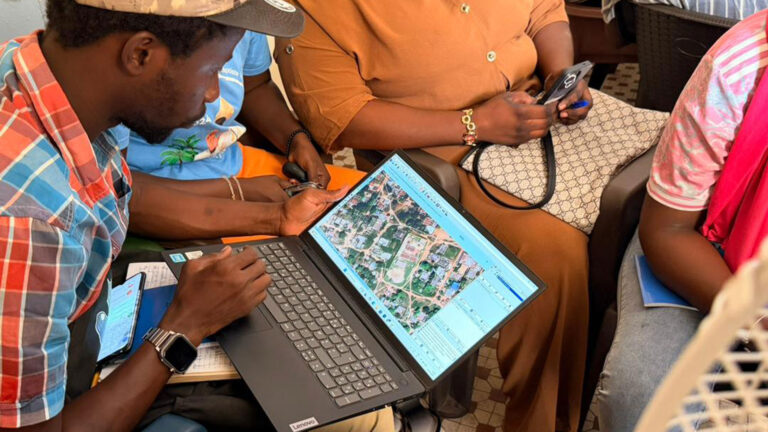
SDI linked federations of the urban poor have very consciously undertaken a strategy of self-enumeration and self-surveying. Federations constantly gather reliable and complete data about households and families in their own communities. Then they codify these techniques into a series of practical tips for their members and have thus created a revolutionary system of information gathering and management that forms the very basis of a real governmentality from below. All SDI federations are now deeply aware of the radical power that this kind of knowledge gives them in their dealings with local and central state organizations – especially when it comes to trying to prevent evictions. In every country and city there is a host of local, state-level and local entities with a mandate to eradicate, rehabilitate or ameliorate slums. But none of them know exactly who the slum-dwellers are, where they live or how they are to be identified. All slum policies have an abstract slum population as their target and no knowledge of its concrete, human components. Since these populations are by definition social, legally and spatially marginal, invisible citizens as it were, they are by definition uncounted and uncountable except in the most general terms. By rendering them statistically visible, the Alliance controls a central piece of any actual policy process dealing with upgrading, relocation and resettlement.
Strategy Number 4 – Participatory Preparation of Alternative Plans
When poor communities are backed up against the wall and demand their rights through protest or defend what they have through resistance they are putting the authorities in a position where they only have two options: to acknowledge what people are demanding or to reject it. Such a situation is often a dead-end for communities – as the evictees in Accra, Freetown, Harare and Lagos will testify. But things can be very different when there is an opportunity for community organisations to design strategies and plans which demonstrate that their situation can be improved and on that basis begin a dialogue with the authorities. Demonstrable and testable alternative ideas backed up with large numbers of people is a strong way for community organisations to establish their credentials as development partners and therefore by association as citizens with defendable rights.
Strategy Number 5 – Urban Poor Funds
Urban Poor Funds or similar community managed development finance facilities are institutions that have been set up in many SDI countries to respond to different local needs, capacities and political contexts. They all build on the financial and organisational assets that are generated by community savings. As a result money is pulled through the system by people’s real needs, not pushed though by the development agendas of other actors. They become the basis for deal-brokering, for leveraging significant resources from within the network and beyond and putting these resources behind alternative plans to evictions that have emerged from participatory planning and are backed up by knowledge derived from mapping and surveying. This in turn is backed up by large numbers of organized, united and informed slum dwellers – not only from the affected settlement – who are no longer victims but empowered people capable of having a decisive say in their own development destinies.
SDI has chosen to put its efforts and energies into these long-term eviction prevention planning strategies – instead of being defensive, waiting for eviction to come and then scurrying to find a way that “they” should not evict “us” too easily. At the end of the day it is all about ordinary slum dwellers organizing themselves community-by-community, coming together at the city level, at the national level, and at the international level. SDI choses to link communities together so that they can equip one another with knowledge, unity and organisation, starting processes of change, working out and proposing alternatives, making governments understand that when there are evictions, everybody loses, barring a handful well connected individuals.
Our colleague Jane Weru a renowned human rights lawyer from Kenya once summed this up with these insights:
“I am sure you must be asking yourselves who we are as Shack Dwellers International. You see people from all over – brown, white, black coming together and I am sure the question as to what brings these people together must be floating in your minds. I was thinking about that question.
First thing that came to mind is that essentially the people in Shack Dwellers International, in the support organizations, and the Federations are mainly people who are discontented. Discontented with the current status quo. From India to Kenya to South Africa we are people who are very unhappy about evictions. People who felt very strongly that it was wrong for communities, whole families to live on the streets of Bombay or to live on the garbage dumps of Manila. We felt very strongly about that. So we the people within Shack Dwellers International are people who are, in a sense, the discontents of our societies.
I think also we the people within Shack Dwellers International are people who have a vision. We are the dreamers to a certain degree. We believe that this world can be better and we believe that working together we can make a difference. So essentially we are pragmatic. And you can see our pragmatism in the approaches we have. This pragmatism has led us to develop social movements. Not only in our countries but across the borders.
We have a vision of an alternative world that we want to see in existence. And that vision is based on our current discontent with what we see in our cities. This vision is backed up by our practices. Backed up by our customs and our ways of doing things. We have enumerations, savings, house models and these are practices and customs that lead to the development of this alternative society that we believe in.
And how is this? How do these mundane customs and practices like savings and enumerations bring change in our society?
I think these practices and customs help develop a new culture amongst us. What is this new culture? I think the culture that we’ve developed within our community is a culture of care and nurturing, because in our saving schemes we interact at a very high level. We save on a daily basis. On a daily basis people move from house to house collecting money and like we say within the Shack Dwellers International network – collecting information, collecting problems and seeing how as a community we can begin to resolve those problems. Using the different resources we have at that communal level we begin to address the problem of the women who does not have food in her house for that day, who is able to come to that community organisation that has developed within that settlement and say: “today I was not able to get work, can you give me a bit from my savings. So I can buy food today. And if I don’t have a bit from my savings, can this community give me a bit of money for today so I can put food on my table.” So we develop these communities of care and sharing, right from the ground. That is the culture we develop.”
[caption id="attachment_10558" align="alignnone" width="387"] Scene of inferno on Saturday night at Mukuru-Hazina Slum in South B, Nairobi. More than 100 houses were reduced to ashes rendering more than 400 people homeless while an informal school and electric posts were not spared. Area chief Solomon L. Muranguri said the fire was caused by a stove. Photo/SAMMY KIMATU (31.07.2011)[/caption]
—
Below is a selection of images of evictions and demolitions that have taken place in the past few years in Kenya and Ghana.
[gallery link="file" ids="10568,10569,10570,10571,10572,10573,10574,10575,10576,10577,10578,10579,10580,10581,10582,10583,10584,10585,10586,10587,10588,10590,10589,10591,10593,10594,10595,10597,10600,10601,10602,10603,10604,10605,10606,10607"]Ebola Response from the Sierra Leone Alliance


By Samuel Sesay, CODOHSAPA
The current Ebola outbreak in West Africa is the most severe outbreak of the disease in history and has now resulted in over 4,960 deaths and 13,268 cases as of November (WHO, Nov. 2014) across the 6 affected countries (Sierra Leone, Liberia, Guinea, Mali, Spain, United States of America). In Sierra Leone, the second hardest hit country, there have been 4,862 cases and 1,130 deaths (WHO, Nov. 2014). The country of Sierra Leone declared a state of public health emergency on 30 July 2014 and plans to continue enforcing three-day lockdown from time to time as part of government effort to reduce the spread of the virus.
The outbreak is affecting development activities, humanitarian programmes, and the healthcare infrastructure throughout the country. It is also inhibiting local and international investments in Sierra Leone. There is a continued lack of trust in external and Government interventions aimed at reducing the transmission of Ebola. The Sierra Leone Federation of Urban and Rural Poor (FEDURP S/L) and their support NGO, Centre of Dialogue on Human Settlement and Poverty Alleviation (CODOHSAPA), are vital to supporting the Government and other agencies to reduce and ultimately prevent the spread of this outbreak given their position and trust within slum communities across Freetown and other cities. FEDURP has suffered 2 fatalities in the city of Makeni where 2 FEDURP members died of the Ebola virus. One of the fatalities was the first collector from when the Federation process was introduced in Mankeni.

FEDURP Core Team preparing for Ebola sensitisation trainings
Given the continuing impact of Ebola on communities in Freetown and other cities, FEDURP and CODOHSAPA developed an emergency response project together with consultation from other development partners.
105 FEDURP and non-FEDURP community volunteers have been identified and trained, and together they form the Welfare Community Disaster Management Committee on Ebola (WCDMC). These volunteers teamed up with other community stakeholders to establish a community coordinating team (CCT) with the responsibility to enlist community support and cooperation in responding to Ebola.

Margaret Bayoh, a trained and qualified nurse and head of the FEDURP Welfare Committee demonstrates proper hand washing techniques in Makeni
These volunteers and CODOHSAPA programme staff received training conducted by the Ministry of Health and Sanitation on Ebola response pillars (social mobilisation, community sensitisation, surveillance, case management, psychosocial support, and contact tracing) developed by the Government of Sierra Leone through the Emergency Operation Centre (EOC), now the National Ebola Response Committee (NERC).

FEDURP and WCDMC volunteers accompanied by officials of the Ministry of Health showcasing the use of personal protective gears such as gloves, facial mask

FEDURP S/L National Chairperson, Yirah O. Conteh, handing over sensitisation equipment to community volunteers to be use in Ebola education
We have customised (with FEDURP, CODOHSAPA, and SDI logos) and produced our own IEC materials from the Ministry of Health and Sanitation. These IEC materials are currently being distributed in all areas of Freetown and Makeni as part of our sensitisation exercise in hand washing, avoiding body contact, and safe burial practices.

Veronica hand washing buckets, chlorine, soap, and sanitizers have be provided and strategically placed in key places within target communities and managed by the volunteers.
From the initial target of 37 slum communities in Freetown to roll out this project, 16 slum communities have been reached. The remaining communities are either sealed off (hotspots of Ebola) or are packed with security personnel due to houses being quarantined. In these quarantined or sealed areas only health workers and food distribution team are allowed.
In Makeni, the Federation was hit the hardest when a few FEDURP members lost their lives and some were in quarantine. Currently, Makeni is still under lock down. Therefore, a one-day training session was done and distribution of hand washing materials was given to the communities.

A volunteer demonstrating hand washing during the training in Makeni
The volunteers or peer-educators of WCDMC meet weekly to update CODOHSAPA and the FEDURP core team on the community status and response to the Ebola outbreak in each community. In few new communities, the FEDURP core team has been able to establish new groups during the sensitization trainings.
Developing a citywide slum register: Freetown Settlement Profiling Learning Exchange

By Anni Beukes, SDI Secretariat
A citywide register of informal settlements is a comprehensive list of all informal settlements in a city detailing population, area and access to basic services. While the value of a citywide register of slum/informal settlements may be desired and appreciated, developing such a register is no easy feat. Governments in the global South or at least their registers of these settlements can attest to this. Often government registers exclude unrecognized settlements and are compiled from incomplete data from national censuses. As a consequence their policy options and designs are often not adequate in addressing the particular planning needs for urban poor settlements. When communities of the urban poor participate in the developing these registers, they contribute more than just data to their cities to inform development.
The Sierra Leone Alliance and their fellow West African counterparts from Nigeria, Ghana, Burkina Faso, Liberia, and Togo gathered in Freetown in June (6-13, 2014) to begin discussions around the importance and process of developing citywide slum registers.
Launched in 2011, the Federation of the Urban and Rural Poor (FEDURP-SL) and their support NGO CODAHSAPA have been working towards developing a voice for the urban poor in Sierra Leone. For the federation the goals driving the development of a citywide slum settlement profile of Freetown are clear. Slum dwellers are yet to to be included as a constituency in the national census of Sierra Leone. The last census conducted in Sierra Leone was done in 2004 and currently the government is preparing a 2014 census. Members of both FEDURP and CODOHSAPA had partaken in a month long workshop with Statistics Sierra Leone (SSL), the main body responsible for statistical activities in the country, and were eager to put their skills learned around mapping and GIS into practice in the community. This will go a long way into the recognition of slum dwellers as a productive and contributing part of urban society in Sierra Leone. These same sentiments resonated with the other West African federations.
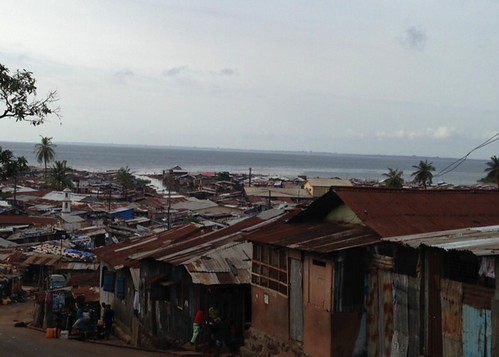
Based on their experience, the Sierra Leone federation was able to prepare a register of slum/informal settlements in the city of Freetown prior to the learning exchange. Listing the names of settlements in a single table and estimating their resident populations is something that comes easy and quickly to slum dwellers as they live and traverse these spaces on a daily basis. The federation identified and listed a total of 61 slum settlements along the coastline and hillsides of Freetown. During the learning exchange, 5 of these settlements were profiled and mapped and the data contributed to SDI’s global settlement profile data platform.
Learning by doing, means going back to basics. Drying up felt-tip markers and a failing electricity connection literally drove the participants of the learning exchange to their knees on the mud floor of the Kroo Bay community centre on the first day of the exchange. As profiling teams first started to outline their community maps of Kroo Bay, Moa Wharf, Oloshoro, Portee-Rokupr and Colbot in their A5 exercise books and then carefully with only one marker per team transferred the much discussed and debated ‘final map’ onto the presentation sheet, the resourcefulness, endurance and creativity of slum/informal settlement dwellers as it permeated through the histories of the five settlements identified to be profiled settled into this exercise and the collection and capturing of the data later. Kroo Bay, where the native Kroos mixed with the British settled ship crews from Liberia, much like the settlement profile of SDI, speaks to the coming together of diverse interests around necessity and a common objective. Portee Rokupr traces part of its history back to female wood sellers who would come to trade their wood and find water here. Moa Wharf, where rumour has it, one may still get some of the best fish in Freetown from, was and remains till today the home of fishermen who moor their long boats here after bringing their harvest from the sea. Oloshoro is the place where a drowning Nigerian fisherman found land and Colbot has a long history of reclaiming land from the sea, a ‘landlord’ as tough as many known to slum dwellers around the world.
While these maps will eventually be digitized and available for easy dissemination via mobile technologies, the importance of the community map, how it is drawn, presented and debated, forms the spirit of a community-led citywide slum/informal settlement register.

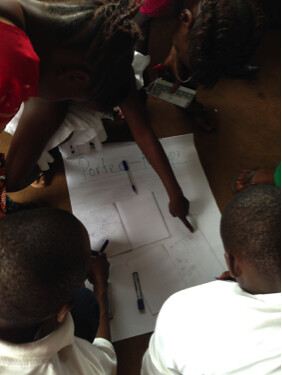
The standard settlement profiling tool developed by the SDI federations with its almost 300 questions focused on developing both a quantitative and qualitative picture of slum/informal settlements bears testament to the endurance of slum dwellers. The profile is a collaborative effort, borne from almost 30 years of learning by doing by federations from Asia, Africa and Latin America. What sets SDI data collection practices apart, is that the data collection process is part of a deeply social process of organizing, identifying and mobilizing around a simple dictum which may translate as: this is who we are, where we are and how we are here. The depth of knowledge our community-led profiles generate, are only possible because the process of collection is deeply community located. Profile teams must be from the local community. Mature federation leaders “download” their knowledge, capacity and experience in data collection and mobilization to community members. Then by means of the learning-by-doing immersion within their own community space, members then practice the learning of these skills, which include ‘demystifying’ GPS data collection and understanding the link between the map and the survey questionnaire.
Developing a citywide register by means of SDIs profiling methodology goes beyond just the technical aspects of data collection. The process is deeply social and political and thus as a consequence, so are the arguments that emerge from the data collected. The data becomes the basis of, and the process opens up the dialogue around upgrading and improvement of living conditions at the community level between residents of these settlements and at the city level between residents and their officials. This resonates with one of the slogans of the Sierra Leone federation: take the slum from the people, not the people from the slum. Building on the learning gained during the profiling exchange the federations in Togo and Nigeria have started putting the skills they learned in Sierra Leone to practice.
Regional Learning from the West Africa Hub Meeting in Sierra Leone


By Mara Forbes, SDI Secretariat
Thousands of people living in informal settlements lack security of tenure placing them at high risk for forced evictions. In the past few months many SDI affiliates in West Africa have faced evictions – Badia East settlement in Lagos, Nigeria, Adjei Kojo settlement in TEMA municipality in Accra, Ghana, and Kroo Bay in Freetown, Sierra Leone. Most of the SDI affiliates in the West African region began in response to the need to organize communities to stave off eviction threats. In 2003, the SDI methodologies for fighting eviction through community-based data collection were introduced to community members in Old Fadama, the largest slum in Accra. The community was able to organize itself and conduct an enumeration that indicated that over 79,000 people lived in the slum, a number that had been grossly underestimated by government. The federation used enumeration findings to negotiate with government to find alternatives to eviction. The Federation has gained recognition and legitimacy as an organized network of poor communities that work with local government towards pro-poor development strategies. The response in Old Fadama can not only help other settlements in Accra and the rest of Ghana but can also serve as a learning experience to other newer affiliates in the region.
From the 10-14 of February this year, SDI delegates from West Africa – Ghana, Sierra Leone, Liberia, Togo, Nigeria, and Burkina Faso met in Freetown to for their regional hub meeting. The hub meetings provide a platform for regional affiliates to create and strengthen links across the region, to share and learn from each other, as well as support newer affiliate countries in developing their own local processes. West Africa, the youngest of the SDI regions, is still developing how to best strategically use this space to strengthen and support the region. This meeting focused not only on deepening the SDI rituals that are crucial for federation development, but also key issues facing the region such as forced evictions. Delegates of the meeting were able to see first hand the challenges Sierra Leone is facing. Not far from where the meeting was convened is Kroo Bay, a settlement that has faced multiple evictions over the years and was the site of a recent eviction.
Kroo Bay is one of Freetown’s waterfront slums. Slums such as Kroo Bay are situated on land in which the occupants have engaged in the process of land reclamation by slowly adding soil and sand to build up and create new land on the coast. Although this is done with the slum dwellers own resources and time, government frequently claims ownership of this land. According to Freetown City Council (FCC), Kroo Bay is prime land and Government has the mandate to take back the land at any given time. A section of Kroo Bay settlement is built along the boundary of the most prestigious schools in Freetown, The Prince of Wales Secondary School for Boys. This is a school in which many previous officials or those with influence have attended. On Saturday, 25th January 2014 the Alumni Association of Prince of Wales used its influence to hire police, military and other individuals to vandalize and demolish the houses in this area. The action was undertaken on the assumption that this strip of land belongs to the school. However residents assert their claim to this land through the land reclamation process and that their presence has protected the school from flooding and rising sea levels.


As part of the hub meeting delegates participated in a field visit to Kroo Bay. During this time delegates were able to talk to community members and gain a better understanding of the challenges they face. Following these engagements, discussions at the hub focused on how best to move from a reactive response to evictions to proactive strategies that engage local government.
Sierra Leone, as host of the regional meeting, was able to use this platform as a means to strategically capitalize on its engagement with government. In December 2011 the Sierra Leone affiliate began negotiations with local government over the provision of a piece of land for a community-led housing demonstration project to benefit the slum dwellers of Kroo Bay. A series of engagement sessions were held and site visits were conducted. Given the high demand for land within the city centre, government through the Ministry of Lands could not identify a piece of land within the city center and ended up allocating a piece of land (2.5 acres) in Grafton community for the project. After multiple attempts to engage with local government over this piece of land the process had stalled. By hosting the hub meeting the Sierra Leone Federation of Urban and Rural Poor (FEDURP) and its support NGO, Centre of Dialogue on Human Settlement and Poverty Alleviation (CODOHSAPA) were able to demonstrate to local government the power and strength of a network of organized slum dwellers, not only just in Sierra Leone, but also across West Africa.
The Deputy Minister of Lands, Country Planning, and Environment, Hon. Ahmed Kanu, paid a courtesy visit to the hub meeting where he expressed a recommitment to the project on behalf of government and the Ministry of Lands. He expressed his delight to be part of the movement and shared how it fits into the country’s “Agenda for Change” program that aims to alleviate poverty, in which affordable housing is a key output. Additionally to show his support a meeting was held the following day to discuss the piece of land as well as an ongoing partnership with FEDURP and CODOHSAPA. A smaller team from the hub attended the meeting with the Deputy Minister and two surveyors to solidify the commitment from the Ministry. At this time the affiliate presented the Ministry with a communiqué calling on the Municipality to support pro-poor policies and practices by working with the federation as well as fulfill its promise and materialize its commitment by providing a piece of land for an affordable housing project. Media personnel were also present and captured the engagement, which ran on the evening news as well as in the local papers.

This momentum has opened doors to the Ministry and they now need to deepen and strengthen the relationship through continual engagement, not only around the piece of land but to strategically include the Ministry as a partner in other projects. Having an ally in the Ministry can allow the federation to scale its activities and projects from a settlement level to a citywide level.
Conversations are currently being held in Sierra Leone to think through how to strategically use this piece of land to promote a pro-poor urban development agenda. How this piece of land and housing demonstration project can be used not only to push the their agenda but to also be a precedent setting project that allows the federation and government to invest in similar upgrading projects across the city as well as in other cities.
Through platforms like the hub, communities are able to share challenges and lessons learned to develop strategies that are responsive to their own local context. More established affiliates such as Ghana and their experience of engaging government around alternatives to evictions can be a tool to others who are still developing their own strategies. Crucial to this meeting was understanding how communities must evolve from short term reactive responses (providing relief after eviction) to a long term proactive strategies to engage and negotiate with government prior to evictions and develop pro-poor inclusive alternatives.
Announcing the SDI 2011/12 Annual Report


SDI is happy to annouce our 2011/12 Annual Report, a reflection of where SDI has grown to over the past 25 years. This includes a discussion of SDI’s practices for change, a report on the SDI Secretariat, the building of internal reporting and documentation systems, and SDI’s international advocacy and increasing presence on the global stage. The report concludes with a discussion of SDI’s approach to key urban issues affecting the lives of the urban poor across the developing south, including water and sanitation, climate change, natural disasters, incremental habitat, enumerations and mapping of slum settlements, and financing slum upgrading.
For the complete document, click here.
In Focus: Exclusion & Informality


By Ariana K. MacPherson, SDI Secretariat
We talk a lot about exclusion and inclusion. The urban poor are excluded from the city. Therefore, we are trying to build inclusive cities – cities where the urban poor are at the center of their own development process, and that of the city as a whole. In South Africa, the Informal Settlement Network is spearheading a “Right to the City” campaign, bringing a new approach to improving the ties betweeen socio-spatial justice and citizenship on the one hand, and improved living conditions on the other. They are doing this by advancing the people-centred, community-driven approach known so well across the SDI network, and by taking that to scale through concrete, continued engagements with city government.
We talk about these things a lot. We write a lot about them. I have read and written about urban poverty, informality and exculsion for years. But that is not what made me decide to study urban planning or to relocate from my home in New York City back to Cape Town. And that is not what keeps me coming back to my desk every day, to read and write more about these issues. In fact, I had never really thought about these issues until I saw them. Perhaps this is why learning exchanges, where a group of slum dwellers and city officials leaves their hometown to meet their counterparts on the other side of the province, country or planet, are some of the most significant of SDI’s social technologies. It is not until we humans see and speak to each other that we begin to make real these abstract theories and ideas. It is only then that we begin to feel the gravity of the situation, and of working towards a solution.
We talk a lot about slums, about urban poverty and exclusion, about living in a one-room shack with your entire extended family without clean water or electricity or a toilet. We talk about these things. But do we ever see them?

Childhood, Freetown, Sierra Leone

Collecting water, and paying a price, Free Town, Sierra Leone

Finding a place to call home, Old Fadama, Accra, Ghana

“If they demolish my house, I have no where to go.” | Old Fadama, Accra, Ghana

Walking home with water, Nairobi, Kenya

The pavement dwellers of Byculla, with modern high-rises in the background, Mumbai, India

Playground, Dharavi, Mumbai, India

Afternoon in Burundi, Cape Town, South Africa

A room to call home, Old Fadama, Accra, Ghana

Along the canal, Dharavi, Mumbai, India
Sierra Leonean federation launches

By Benjamin Bradlow, SDI secretariat
After three years of mobilizing savings groups, fighting evictions, and building links with government, the Sierra Leone Federation of the Urban and Rural Poor (FEDURP-SL) officially launched on 16 February. The ceremony was attended by approximately 400 members of the Federation from four cities: Freetown, Bo, Makeni, and Kenema.
The launching ceremony, which was attended by the Minister of Land, Minister of Local Government, Deputy Minister of Justice, representatives of the mayor of Freetown, and Bowenson Philips, the Chief Administrator of Freetown.
The Federation now numbers about 1, 500 in total, with most of the membership based in Freetown. The ceremony was chaired by the Chief Administrator of the City of Freetown, Bowenson Philips. Federation members spoke about the value of the Federation and the Fordibambai Trust Fund — the Sierra Leone Federation’s urban poor fund — to attract funding for the projects of the poor.
A representative of the mayor also spoke regarding the issue of the settlement of Kroo Bay in Freetown, which has faced many eviction threats in the last five years. He noted that the mayor recognizes the Community Steering Group, the informal leadership organization of the large, historic settlement, and that the solutions for the flooding, overcrowding and land use issues in Kroo Bay lie in the hands of the residents of Kroo Bay. This is a far cry from our experience with representatives of the Mayor last year, when we were told that the Mayor reserved the right to evict the residents basically at will.
The next day, on 17 February, the Federation held its first national strategic meeting. In attendances were representatives from about 30-40 communities in the four cities. Some of the savings schemes in places like Kroo Bay and Dworzack (both in Freetown) were three years old. Some of the savings schemes from cities like Bo, Makeni, and Kenema, were only a few months or weeks old.
To begin with, the Federation reported on existing successes and challenges. Successes include the fact that regular meetings are taking place, local authorities are interested in the work of the Federation, and interest is being paid on the loans that have been issued within the groups and settlement-level networks. Challenges include some issues with poor loan management, and distrust of the Federation due to prior history that communities have with NGOs.
The Federation is planning to develop stronger settlement-level network structures, as well as to consolidate this at the city and national level. It is hoped that stronger leadership structures and ownership of strategic vision will help the Federation to solve some of these challenges, and establish successful precedents to be shared through exchanges.
The roots of the Fordibambai Trust Fund lie in the experience of exchanges undertaken by the Federation, particularly to the East African countries. These exchanges have clearly been a powerful experience, even though only a few members have actually gone on the trips. Federation songs mention by name every country to which the Federation has visited (Kenya, Uganda, Tanzania, Brazil), and they know the slogans from each country’s respective federation. Each member will have to make a monthly contribution to the Fordibambai Trust Fund. Regular loaning is to be strengthened through the creation of a guarantor for each loan, and a loan management committee within each settlement-level network.
The Federation also discussed the role of the settlement-level networks. They are to pursue activities such as profiling and enumeration, loan committees, mobilization, and savings.
Sierra Leone is probably the second strongest SDI-affiliated initiative in the W African region after Ghana. The launching of the Federation and its overall growth is leading the hub to believe that it is ready to assert more autonomy from the support of the E African hub. The W African hub plans to hold its first separate hub meeting later this year, which will also include initiatives from Liberia and Nigeria.
Felicia Amanor, a leader of the Ghanaian Federation and one of the original mobilizers of the Federation in Sierra Leone, gave powerful challenges to the Federation during the strategic meeting. She suggested that the Federation is not growing fast enough. Further to this, she encouraged a greater spirit of voluntarism within the Federation. It was important, she said, to see the Federation as a process and much more than the sum of its projects. Therefore, the outlook must be not just for the current membership, but also for the whole community, the whole country, and even the whole W African region.
“Strong and full of energy”: an update from the Filipino exchange to Sierra Leone

Pictured above: Sonia Fadrigo (center) talks with members of the Sierra Leone Federation of the Urban and Rural Poor in Kroo Bay, Freetown.
Editor’s note: From 22 to 26 September, the Filipino federation visited Freetown, Sierra Leone, to work with the seaside slum communities there on strategies for alleviating the effects of natural disasters such as flooding, as well as to secure tenure. Sonia Fadrigo, who was part of the Filipino delegation, sent a quick update to the SDI family, which is reproduced below. A report, published by IIED, on the Filipino strategies for dealing with natural disaster can be found here.
By Sonia Fadrigo, Homeless People’s Federation Philippines
Dear All,
Our visit to Freetown was very good, not to mention the 20 hours flying time and some problems in the connecting flight. We stayed there for 5 days and were able to visit communities where savings program was already in place. The communities were very strong and full of energy, they were pointing to us the flooding marks and how they were badly affected. The communities were aware that there is an ongoing plan for the government for them to be relocated, some of the communities like the Susans Bay and Marbellas Bay was not habitable and considered as high risk areas. In the case of Kroo Bay, we saw that as potential for upgrading as well as reblocking and explore other schemes for land ownership (land sharing) can be applied.
We were able to show them the videos from the Philippines and the situation that is similar to theirs, including the climate (wet and dry) typhoons,rains and floodings. They appreciate it and were able to ask questions. We had a very good interaction with the Freetown City Council, City Administrator, the Planning officer and some Disaster committee members and Lands officer. And we recommended for some exchange visit to the Philippines and learn the process of relocation as well as disaster intervention.
I will make a detailed report with pictures highlighting our recommendations as we have already discussed these with Francis and the team. For a quick intervention, we would suggest for an exchange visit to the Philippines for the following reasons:
- To strengthen the savings mobilization that relates to disaster and relocation.
- Local governments to learn what are the challenges in the issue of relocation vs. upgrading
- Communities participation in all issues of shelter and disaster.
- Communities to learn to engage and build federations and networking.
We recommend a multi representation that includes, YMCA, federation leaders, local government (city administrator, mayor, city councilor).
On the other note, our concern was the expensive cost of exchange visits to the Philippines, base on our latest incurred airfare expenses when we go there. If there are similar experiences in other SDI country/affiliates it will be fine.
I am very positive on the scaling up of memberships of the federation in Freetown as the issue that confronts them becomes visible now and need to be dealt by the communities together with the government. They only need guidance and examples to be in the right track if possible. Our short visit was just to see from the outside, and we know that there are still a lot of hidden issues
that we didnt see and feel that needs to be sort out.
This is all for now and thank you very much for YMCA team for a very good accommodation and hospitality.
In behalf of the Philippines Team,
Sonia