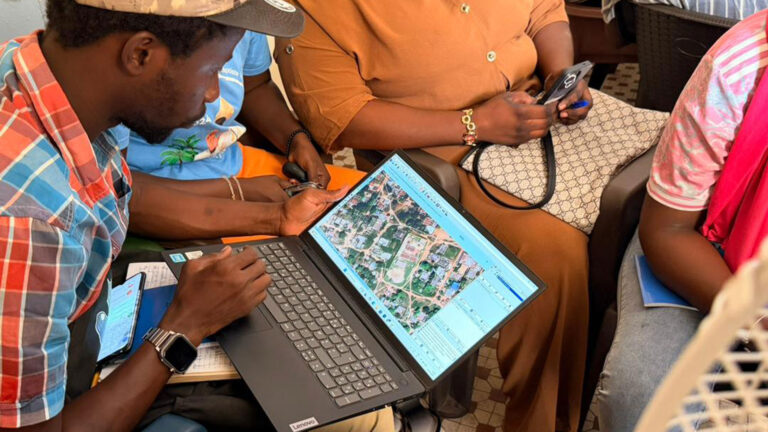
The rain no longer comes at the usual time: Otjinene farmers and the drought
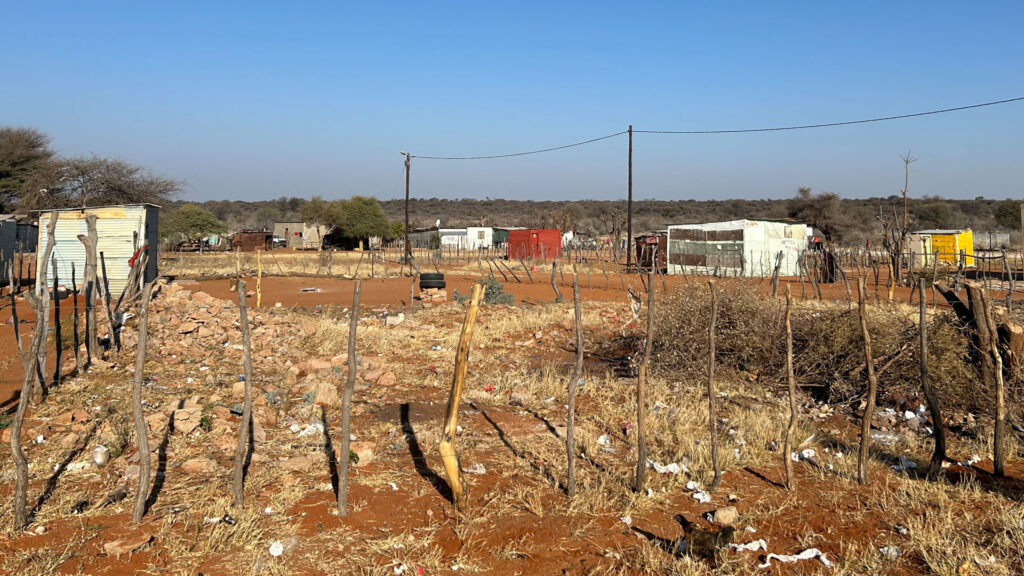
By Yolanda van Rooyen, Ngunoue Toromba and Himeezembi Mbaha of the Climate Action Reporters crew, KYC.TV NamibiaClimate change is one of the biggest challenges facing communities in the Otjinene Constituency in the Omaheke Region. Changing weather patterns, long droughts and unpredictable rainfall are affecting farming, livestock, wildlife and the livelihoods of many families.
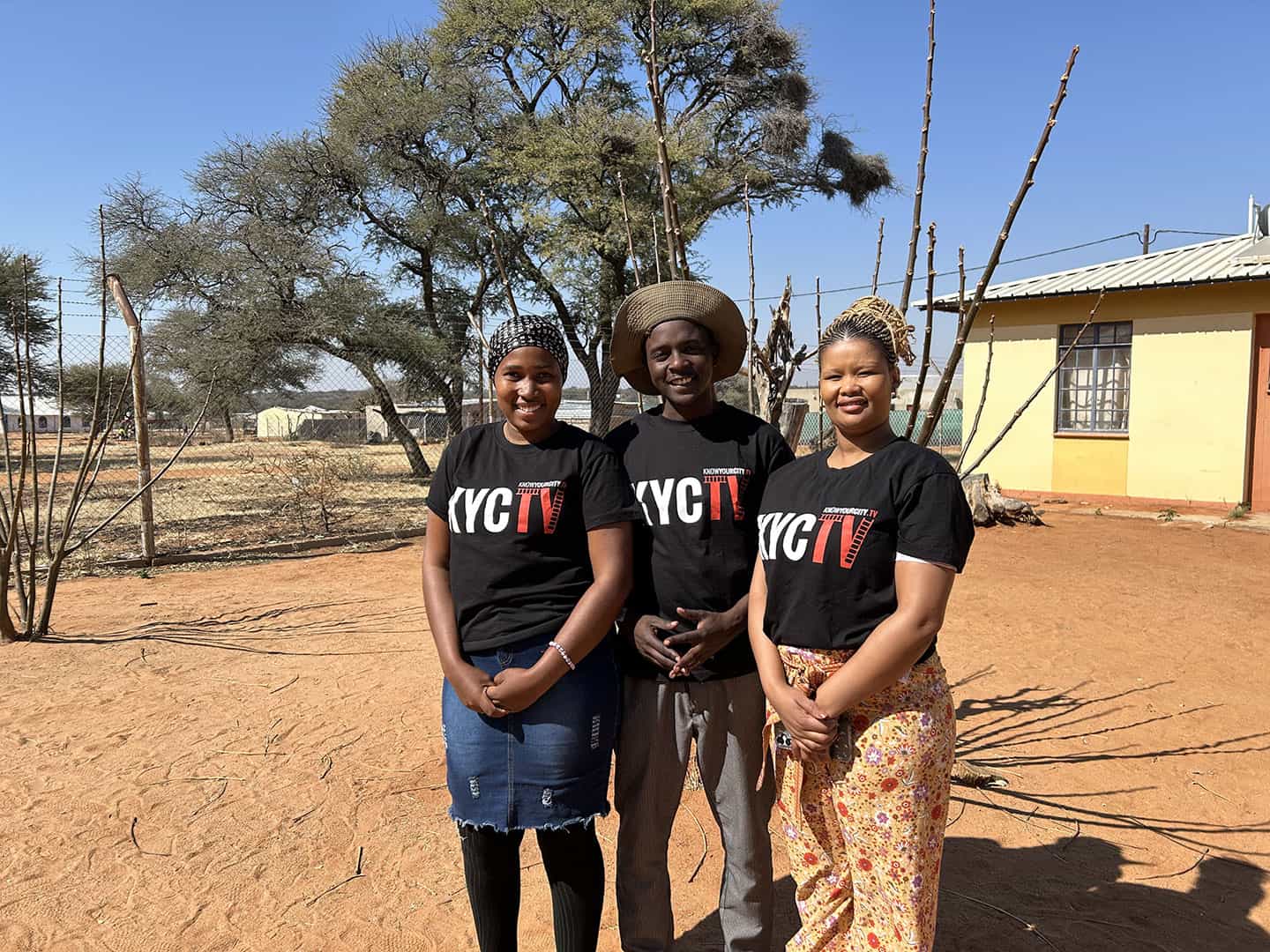
We are three KYC.TV youth members. We wanted to find out how drought is affecting farming in Otjinene, so we spoke to the local councillor, farmer Uakasuva Kaputjaza and to community member Simson Vekondja Jamuine. We planned our fieldwork by preparing interview questions and assigning roles among ourselves, such as interviewer, note taker, photographer and voice recorder.
According to the 2023 Namibia Population and Housing Census, the Otjinene Constituency has 12,415 people living across 93 villages. Livestock farming is the main way people earn a living here. The constituency has the largest cattle population of any rural constituency in Omaheke, with 99,127 cattle recorded in the 2014 livestock census. These figures show how much is at stake when there is a drought.
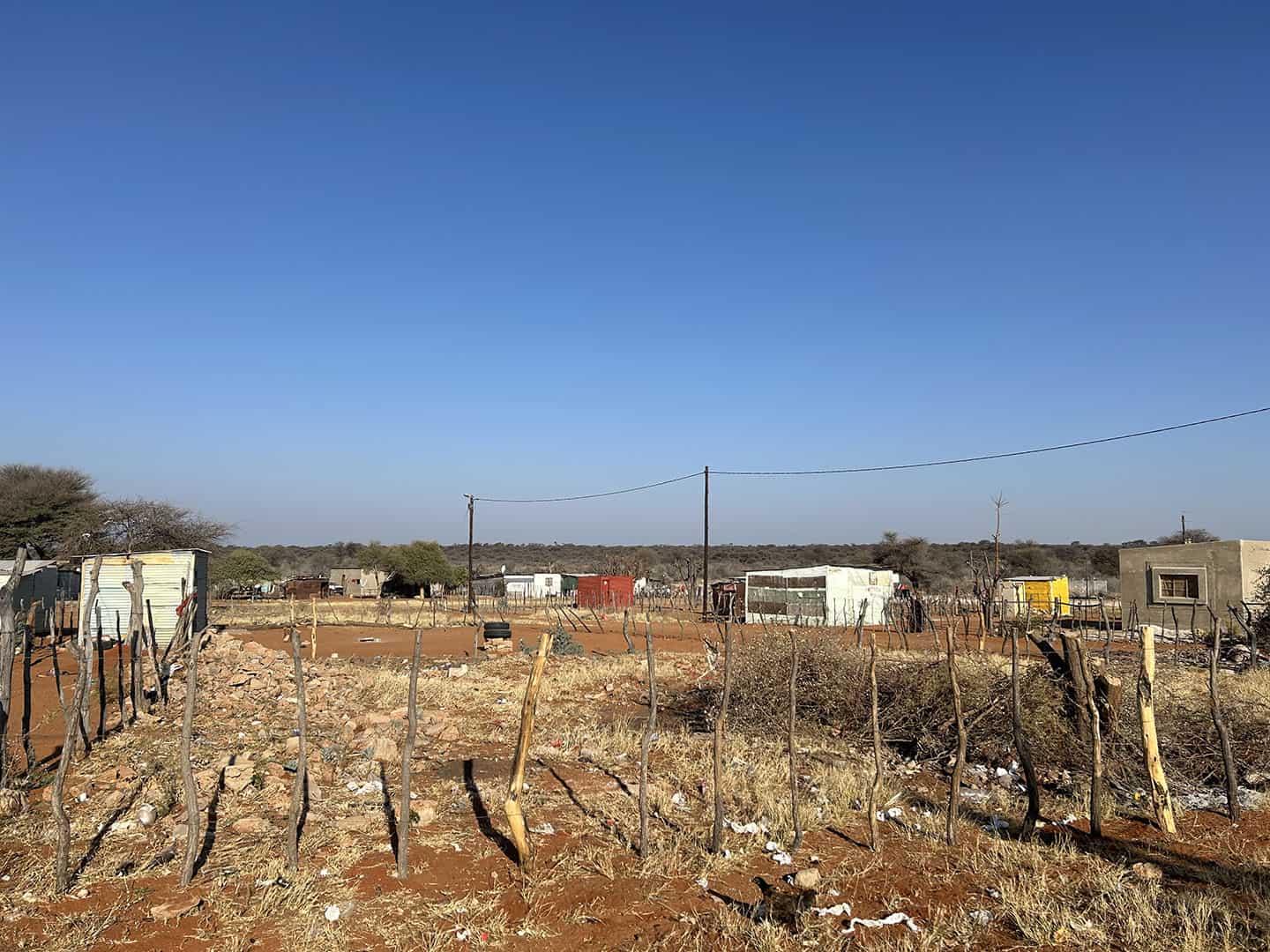
In an interview with the councillor, he states that many families continue to experience food shortages because of recurring droughts. “Many children and vulnerable families do not have enough food because climate change has affected our area,” the councillor says. He explains that poor rainfall has reduced crop production and grazing land, making it difficult for farmers to feed their livestock. Although the government provides drought relief, some farmers experience delays in receiving assistance because of administrative processes, he says. “Farmers should adapt by storing animal feed and planting drought-resistant crops,” he advises.
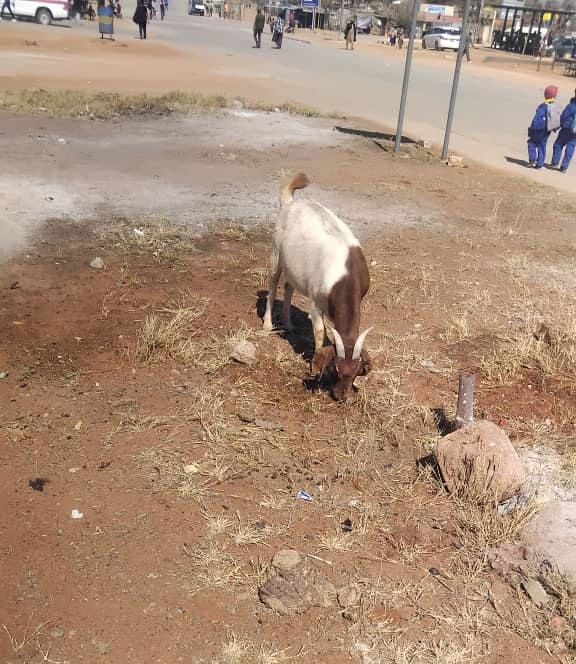
In an interview with farmer Uakasuva Kaputjaza, he describes how drought affects different types of livestock. “Goats survive better because they can eat bushes and leaves, but cattle suffer more during drought,” Kaputjaza says. He explains that recent rainfall has improved grazing conditions and livestock health. “We have received good rainfall in the past few months and our animals are healthier because there is enough grazing,” he adds. Kaputjaza encourages farmers to prepare for future droughts by storing food, planting crops that can be used as livestock feed and managing their grazing areas wisely.
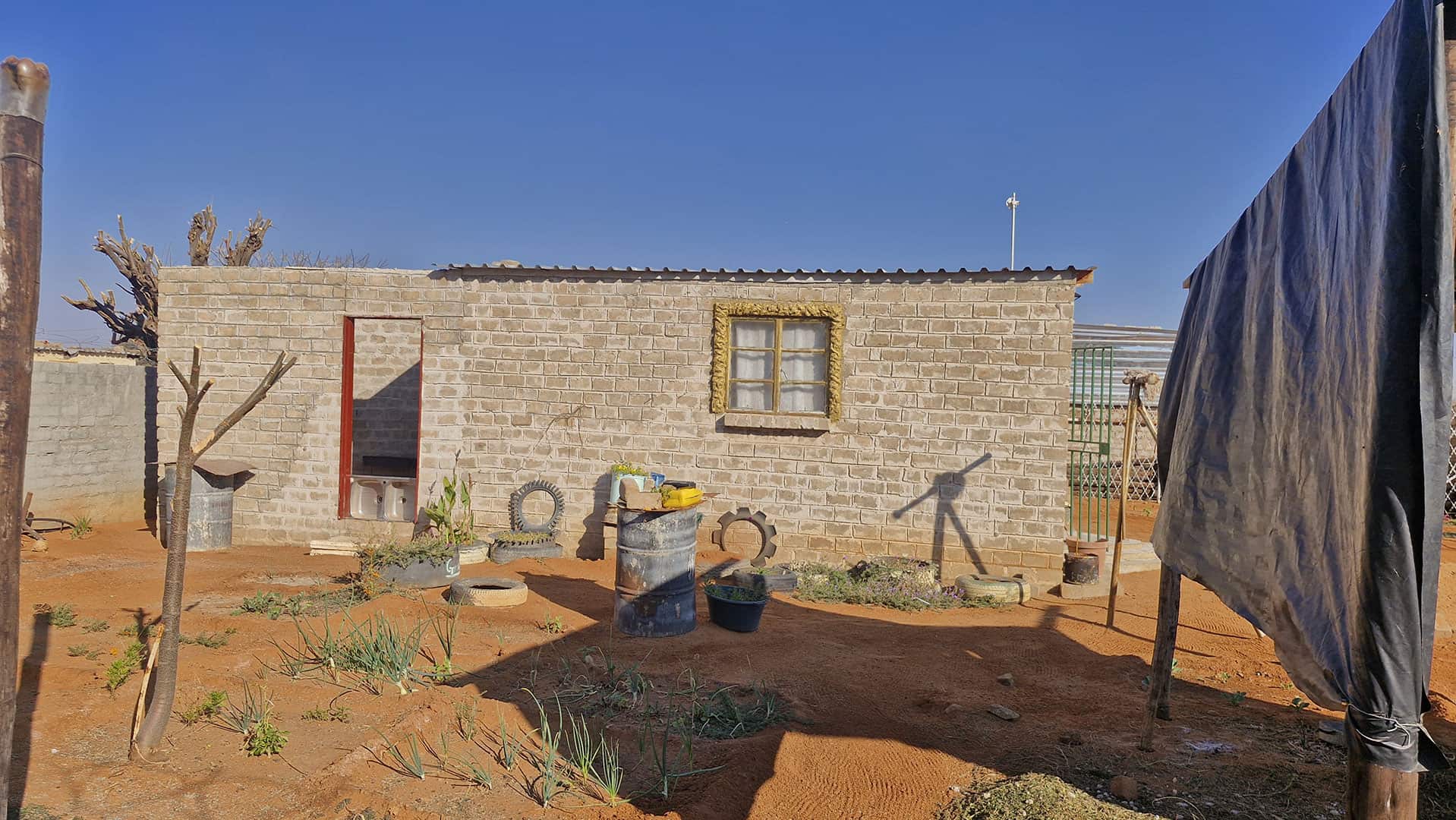
Simson Vekondja Jamuine says climate change is affecting both people and wildlife. “Sometimes the rain does not come and animals in the forest also suffer because of water shortages,” he says. He warns that drought forces wild animals to move long distances in search of food and water. “Some animals die while looking for food because there is not enough to eat.”
Jamuine believes that reducing the effects of climate change requires cooperation between the government and the community. “The government may assist up to 50%, but communities also need to contribute the other 50% by preparing for drought and taking responsibility for their own farming,” he says. Although this year brought better rainfall, he warns that weather patterns have changed. “This year we received enough rain, but the rain is no longer coming at the usual time,” Jamuine explains. He encourages farmers to store food, preserve crops and make full use of the government support programmes before drought strikes again.
Tree cutting, firewood and survival in Otjinene
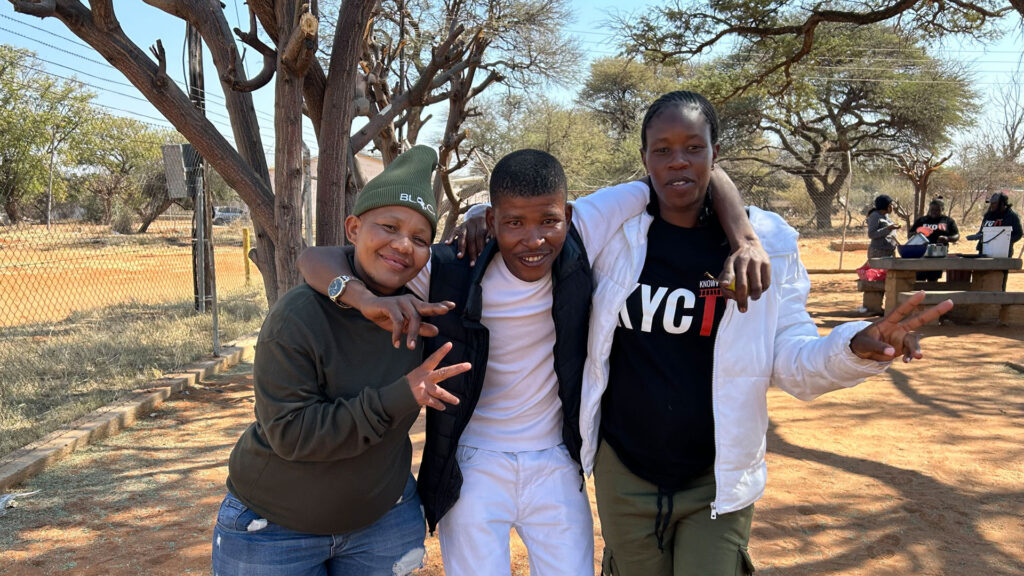
By Samantha Hendricks, Thomas Rooinasie and Veueza Kaunatjike of the Big Three crew, KYC.TV NamibiaIn Otjinene, tree cutting has become a major issue for the community and the environment. Trees are cleared to open up pasture for cattle and other livestock. They are also cut for firewood and many families here sell that firewood to survive.
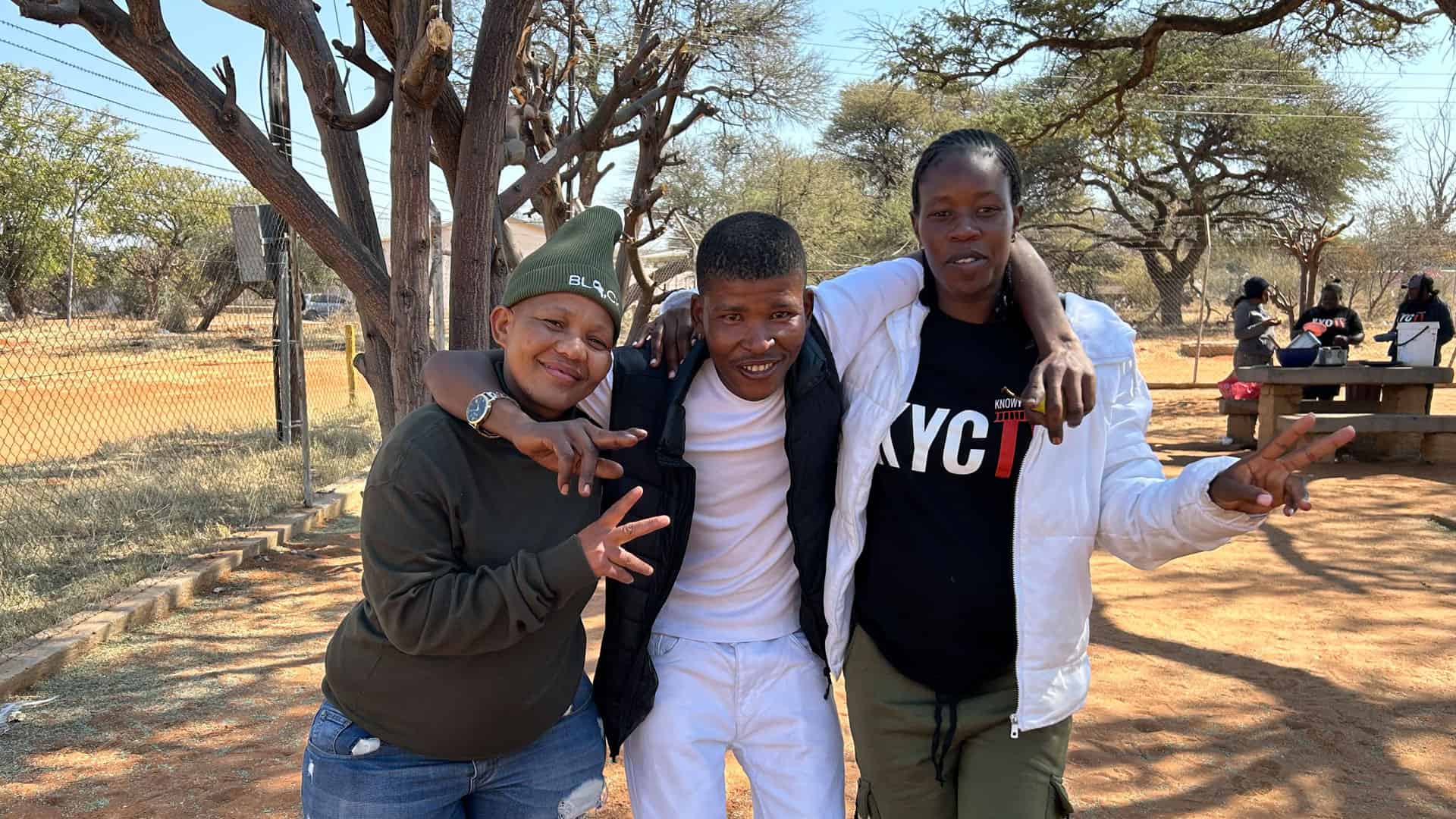
We are three KYC.TV youth members. We visited the Ozohambo settlement in Otjinene to interview people about tree cutting, together with SDI intern Pietro Sandro Chiri Zapata. In total, we interviewed five people, but only three agreed to be recorded.
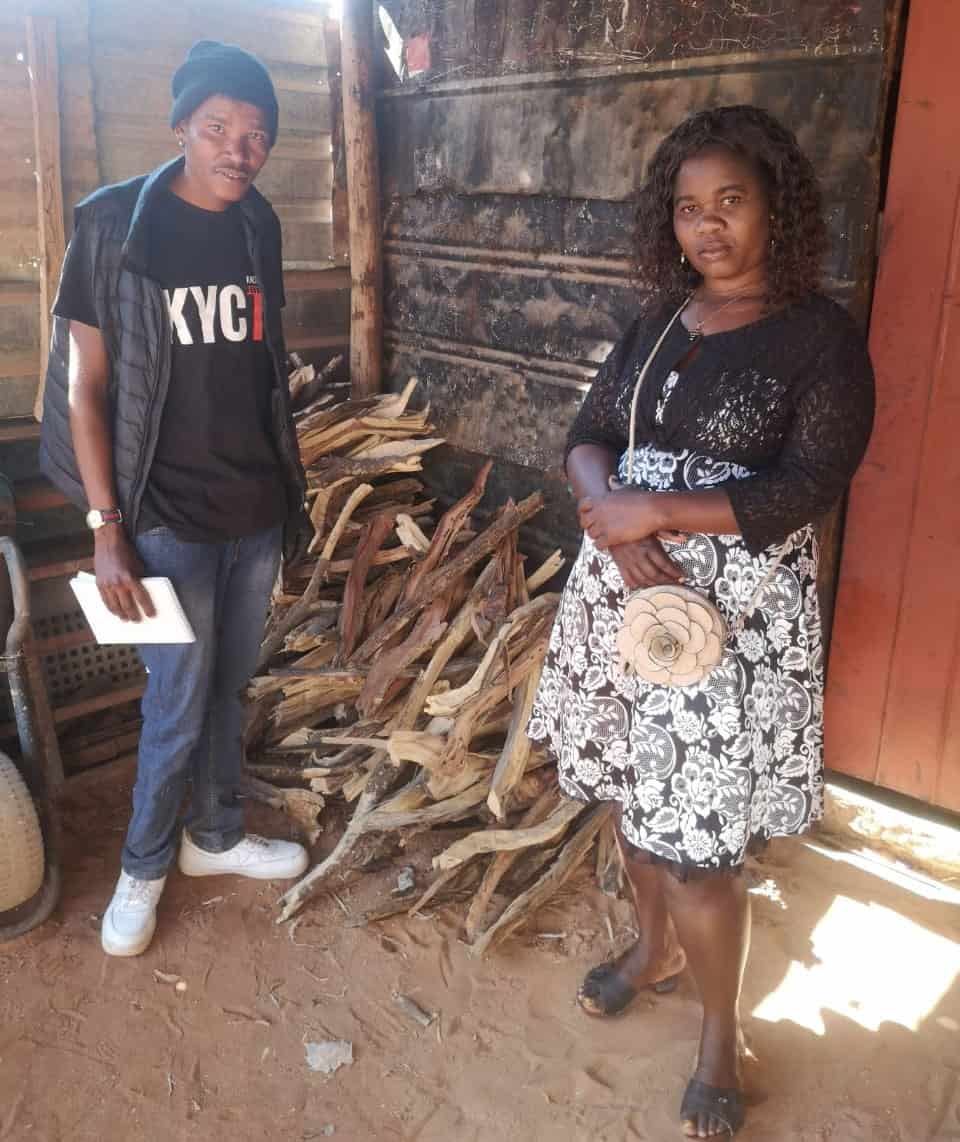
Silvia Mujoro is 50 years old and makes her living selling firewood. She buys it from local people who bring it in by donkey cart, for between N$150 and N$200. What she earns feeds her children and she also helps others in the community who have no income of their own. Her difficulty is supply. Some weeks her suppliers bring a lot of wood, other weeks very little and that makes it hard to run a steady business. She has asked the councillor for donkey carts, so that she can collect and carry the wood herself instead of buying it from others.
Uasaneka Hengari is 39. She has sold firewood since 2010, because she had no other income. At first she collected the wood herself and carried it home on her head. Later she began buying from people with donkey carts. She also sells basic household goods such as sugar and tea bags. Her goal is to improve her family’s living conditions. Her challenge is that she cannot cut the wood herself. She has to pay someone else to do it, and that takes a share of what she earns.
Unotjarikatjiri, 43 years old, says that he simply goes into the forest to cut trees without experiencing any problems. He only cuts trees when buyers ask him to and he uses the income to support his children and feed his family. He requested that the councillor provide him with an axe. He says he is a member of the team building SDI Namibia federation houses.
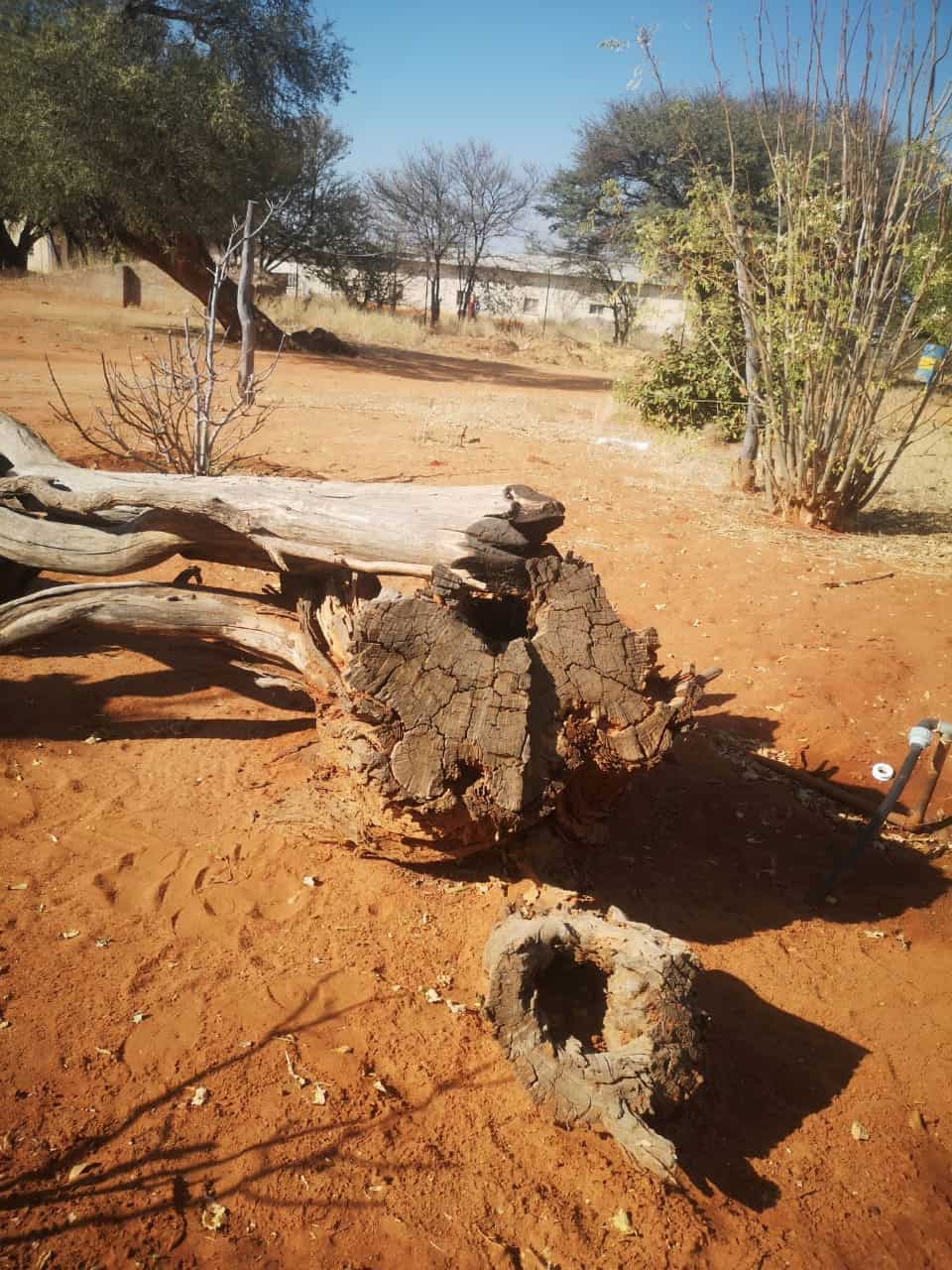
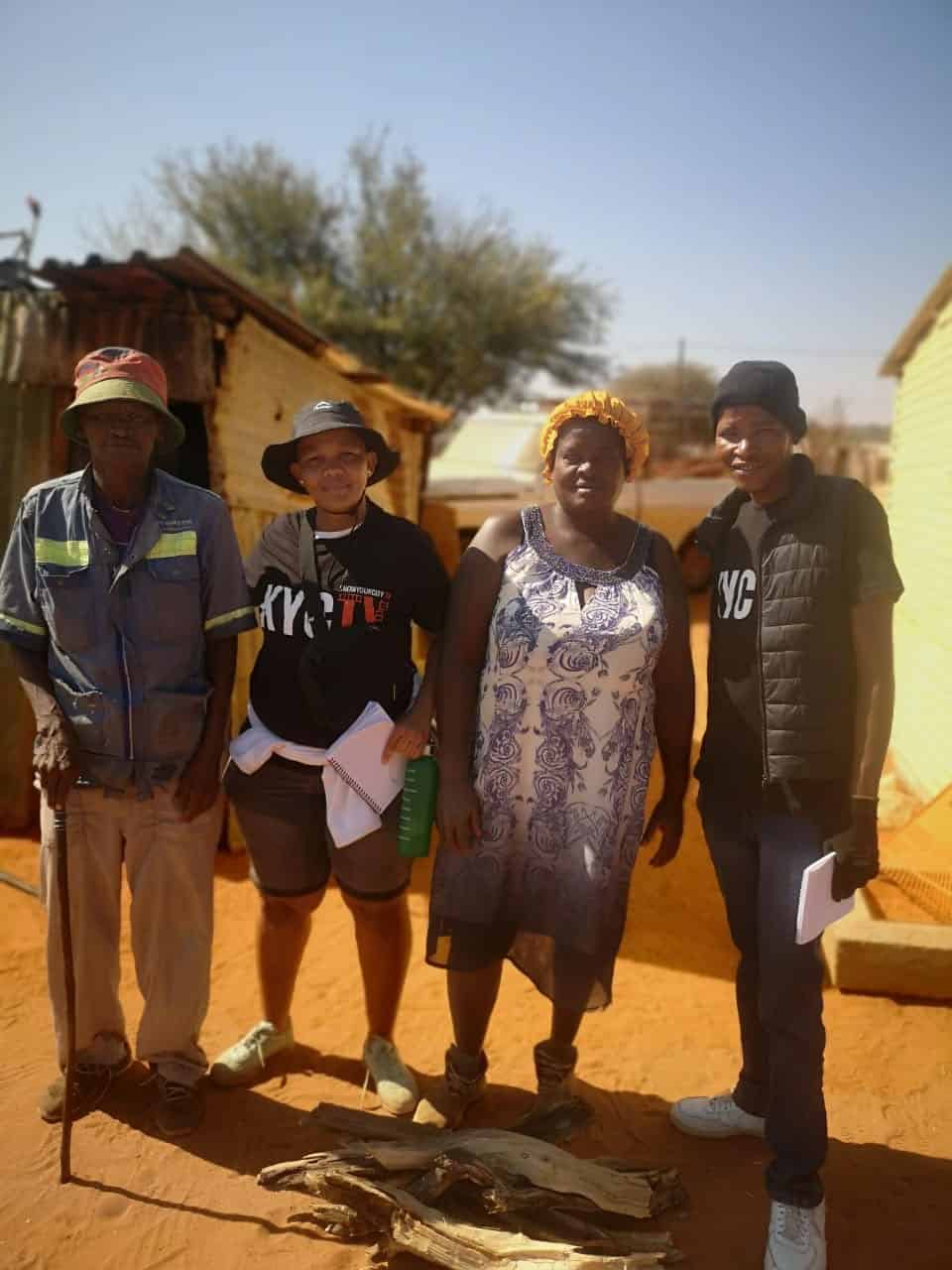
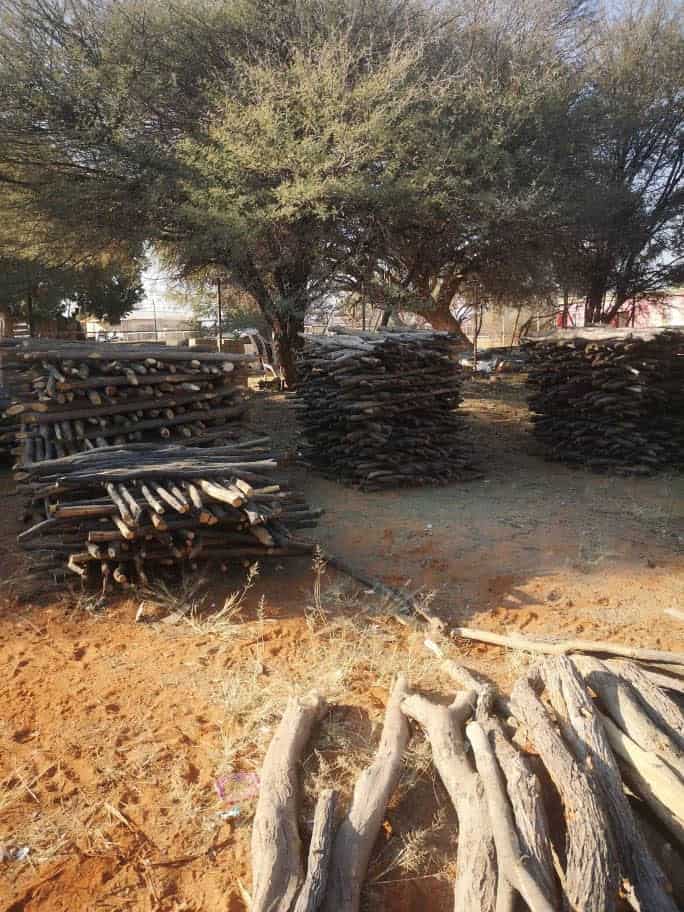
The stories show that tree cutting represents an economic lifeline for the urban poor in Otjinene. But trees are an essential part of our ecosystems, more so in times of drought, extreme heat and other climate change phenomena. Trees are essential for life because they provide oxygen, protect wildlife and help keep the environment healthy. As a team, we believe the municipality should reduce unnecessary tree cutting and plant more trees to protect our environment, while at the same time helping these families with alternative economic opportunities to protect their livelihoods. Nobody in Ozohambo should have to choose between feeding their children and protecting the forest.
“When I collect these bottles, I am also cleaning my town”
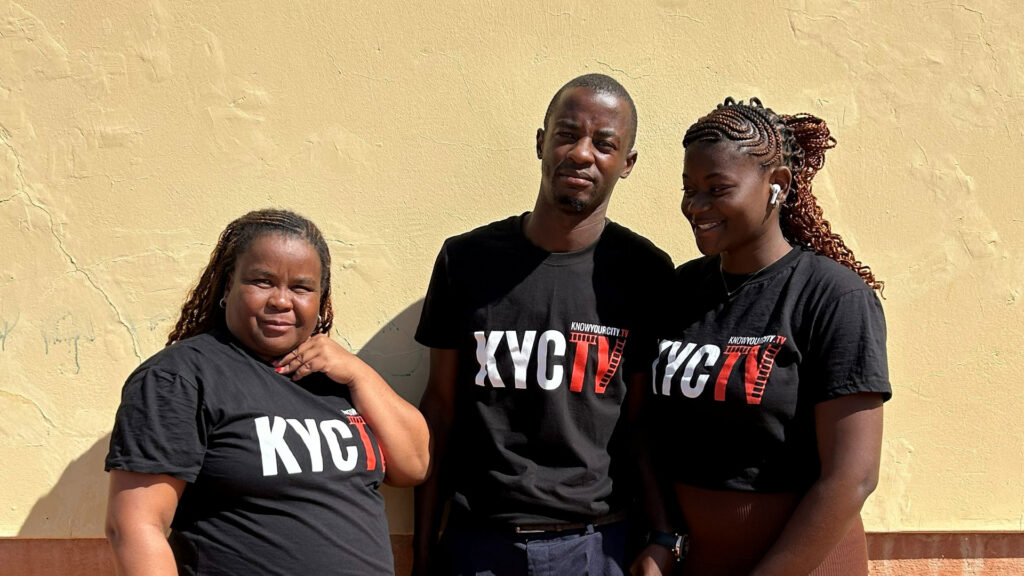
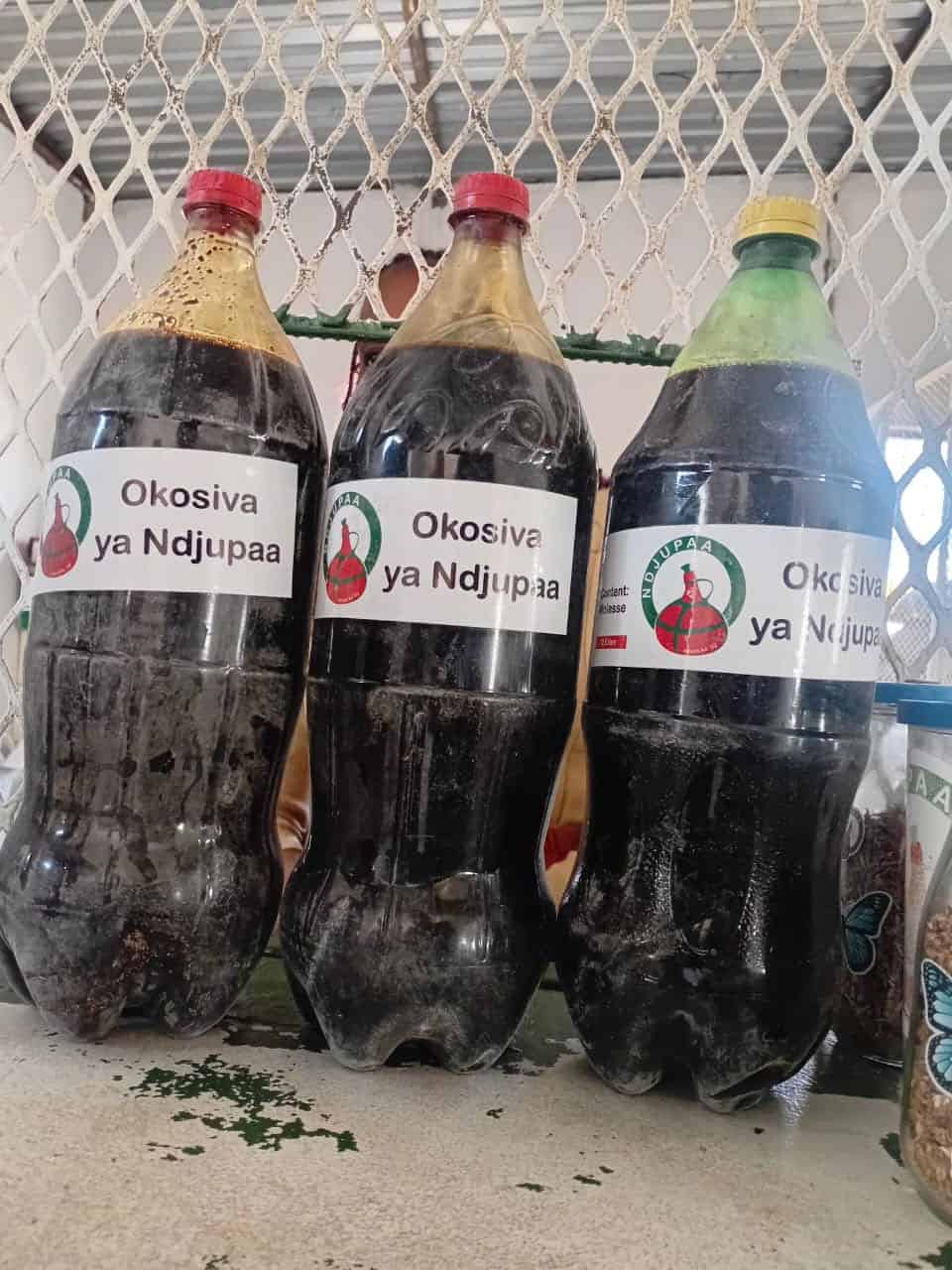
By Iselda Mbuende, Kenahama Marenga and Albertus Tjombe of the Team Transformer crew, KYC.TV NamibiaAccording to Otjinene Village Council officials, the past six years have been particularly challenging to the people of the community with regard to inadequate waste management. Waste dumping results in land pollution and air pollution, which negatively affects the community members’ health and wellbeing. We are three KYC.TV youth members highly concerned with this issue and we have come to gather information and interview those most affected. Overall, we have identified that recycling is a popular activity among the youth in Otjinene as a way to combat the inefficient waste collection, as well as to make a living given the current high unemployment rate.Ms. Kandorozu, Otjiherero is 30 years old. She collects plastic containers and bottles of cool drinks on the ground and washes them in order to fill them up with oros, the local fruit beverage. She said “I started collecting these bottle containers since 2014 and washing them for my oros business. I walk the streets or sometimes walk to the supermarket to find more containers. When I am collecting these plastic containers I am also cleaning my town and minimizing waste on the ground in order for me and the community not to get sick. Sometimes, climate change can really disturb [the business]. One day is windy and you cannot walk around to collect the containers. Also, heatwaves burn the bottles to a point that they lose quality.” She thinks the municipality office should place more public dustbins on streets, so that community members do not dump plastic containers on the ground, but rather put them in the public dustbins. That would make it easier for recyclers to find the bottles.
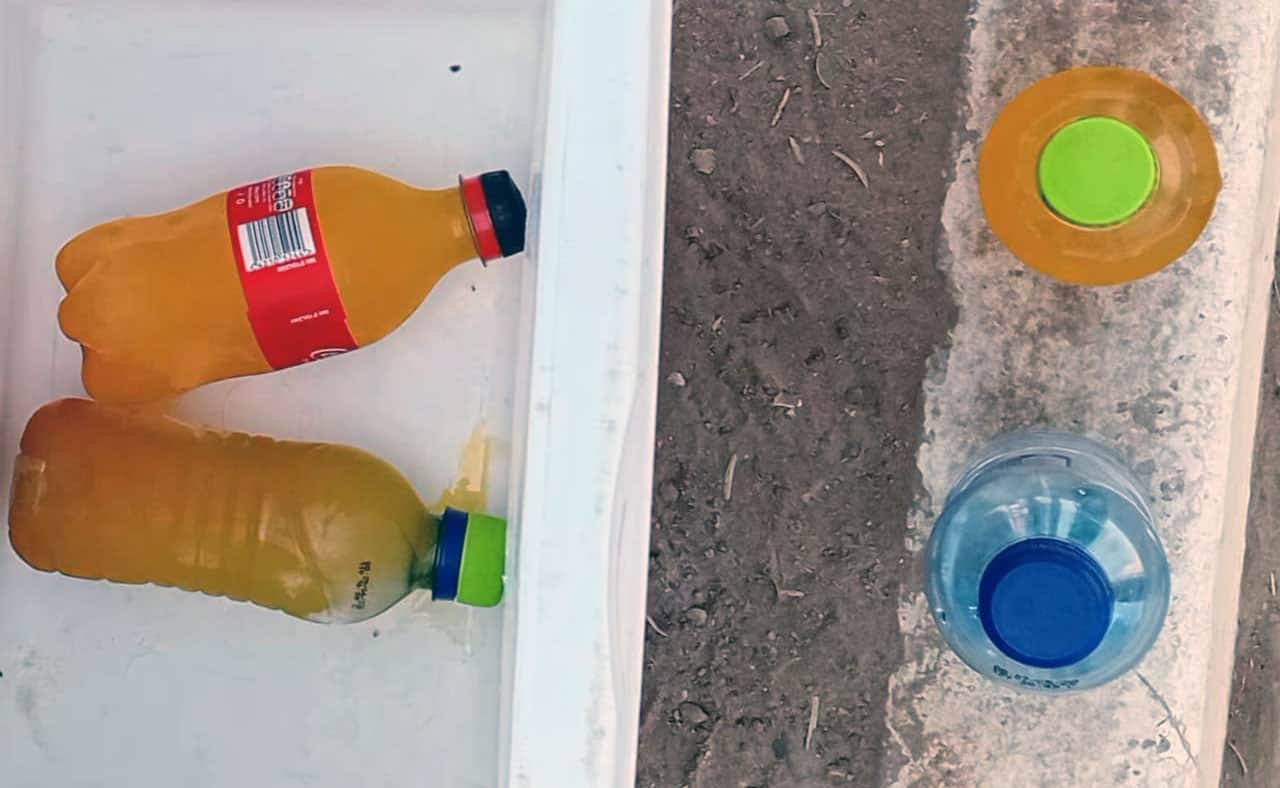
Mr. Mbamanovandu is 30 years old. He recycles plastic containers in order to store animal lick, a nutritious supplement for livestock. He said “I walk to the supermarket, during certain occasions, like when the town is overcrowded with [livestock] auctions, end of the month and more during pensioners’ grant day. During those days, I collect close to 600 plastic bottles. I collect these, clean them up and fill them up with animal lick for my farmers who cannot afford the original containers. This way, I make sure that there is bread on my table everyday. During winter, my recycling process becomes slower since it is very cold. I cannot go look for plastic bottles. [During summer,] bottles have holes due to the heavy sun exposure. I won’t give up due to seasonal [challenges] because I survive on these items.” This shows how certain weather conditions can directly impact a recycler’s collection process, but they are still willing to endure these conditions in order to make a living.
As a reflection, my teammates and I believe that the local municipality should have a stronger role in waste management by actively helping the local recyclers. For instance, placing more public dustbins on the streets would facilitate young entrepreneurs’recycling businesses, like Ms. Kandorozu’s and Mr. Mbamanovandu’s. This would help them easily find their plastic bottles without any damage from the heatwaves or heavy rain. Under these extreme climate conditions, recyclers also prefer adequate transport to better collect their material, as well as tents to cover their products.
No shelter, no sales: Otjinene street vendors and extreme weather
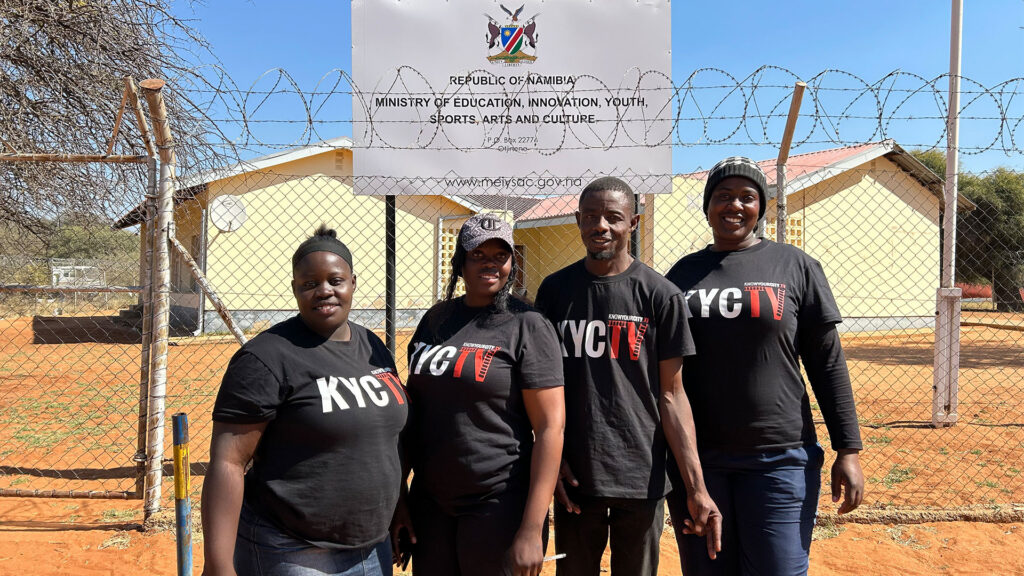
By Kavezembua Kotjipati, Charmaine Upingasana, Turipi Uakavi and Uazepaisa Uaseta of the On the Street crew, KYC.TV NamibiaImagine trying to earn a living under a scorching sun or during a heavy downpour. For many street vendors, this is a daily reality as climate change makes the weather conditions more unpredictable. Overall, street vendors play a vital role in supporting livelihoods and making essential goods more accessible to the local community. They create employment for themselves and empower marginalized groups to generate income. We, the “On the Street” team of the KYC.TV youth in Namibia, are very concerned about the suffering of street vendors affected by climate change.
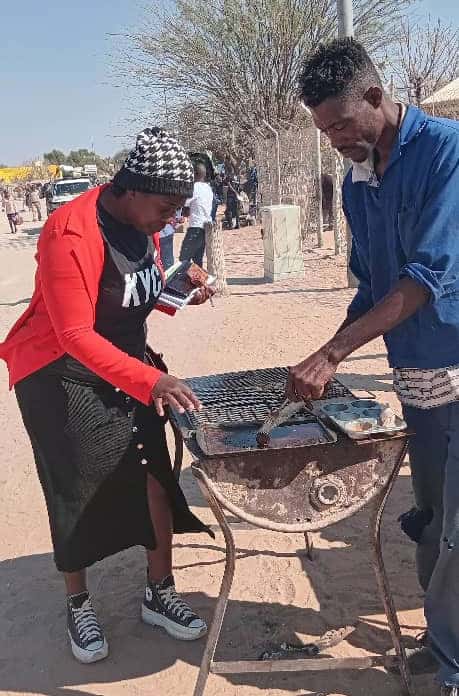
The current population of Otjinene is 6,272, with an annual population growth rate of 4.5%, according to the Namibian Statistics Agency. However, this agency does not count the community’s employment, so we went out to the field and counted them ourselves. In a July afternoon of 2026, we counted a total of 82 street vendors. Amongst these 82 vendors, 43 were selling clothes, 27 sold kapana, 12 sold fruits and veggies. Mr Kamati is 30 years old and a clothing vendor. He started selling clothes in 2018. He has been facing downpour rain challenges during rainy seasons. The rain damages the clothing and he ends up closing the business for two to three days in a week. When no sales are made, he cannot afford to pay rent and sometimes he starves.
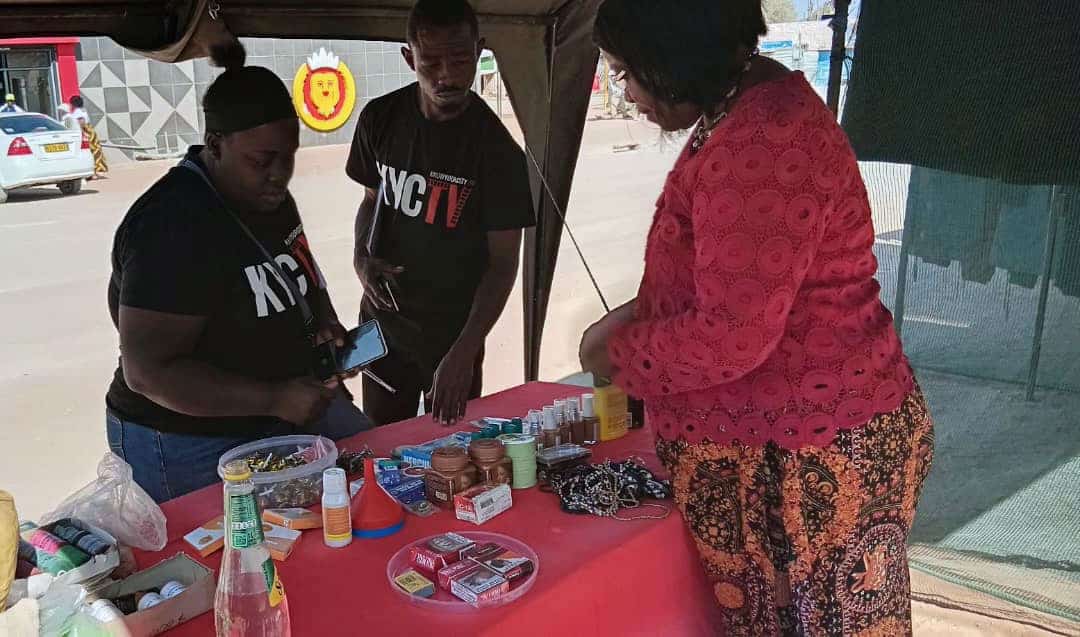
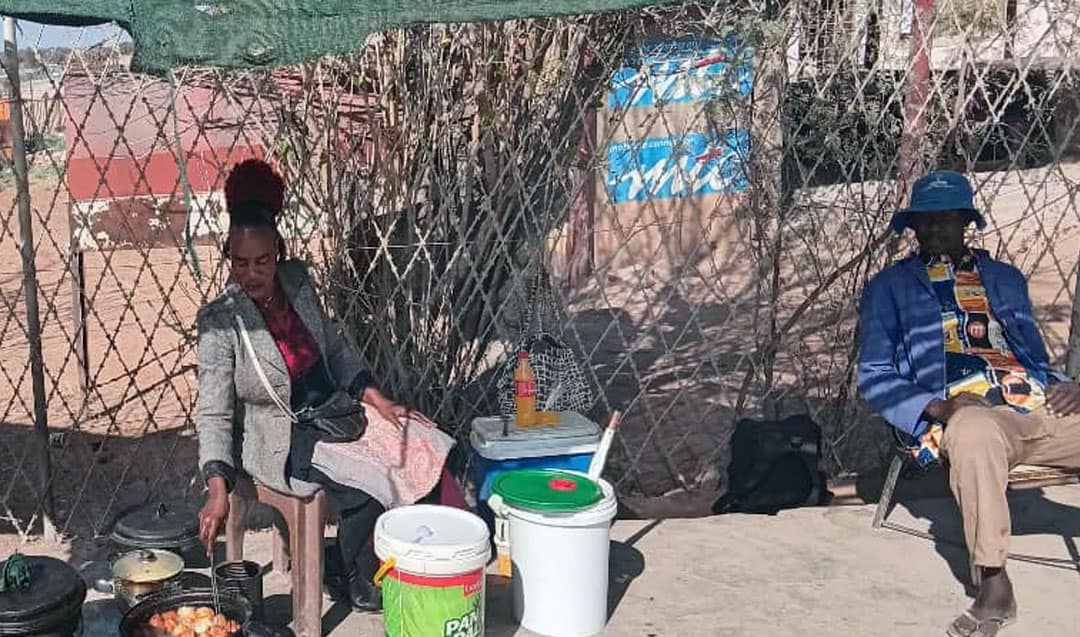
Miss Anna is 45 years old and a kapana seller. The word kapana simply means a public place in Namibia where food is being prepared and sold. The term originates from the Oshiwambo and Ndonga languages. Miss Anna complained about the strong winds, which lift up the sand into the food. This makes her cooked products gritty and soiled, resulting in her losing her daily income simply because customers wouldn’t buy under those conditions. She also said if she didn’t make any sales, she would go hungry. She is the bread winner of the family, and sometimes she can’t even afford to pay school fees for her children. Another street vendor added that dust affects their health, as it impacts their breathing and physically disturbs their sight. Both vendors stated that not getting any customers is threatening their way of living.
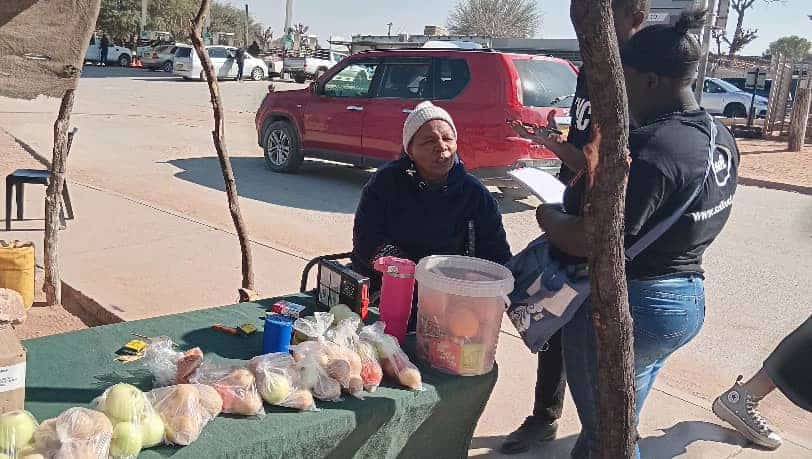
To our surprise, we met a SDI Namibia federation member, Ms. Vatjizaije Karupa, who gave us details of why she started selling on the streets back in 2023. She said she experienced financial difficulties in her federation’s savings group, so she decided to start selling produce on the streets. Despite the heatwaves and scorching sun, she kept on so that she could improve her savings. “Most of the fruits and vegetable sellers suffer from heatwaves due to no proper shelters [for selling]. The product ends up rotten and contaminated,” she said.
Climate change is making life increasingly difficult for street vendors by damaging their goods, reducing their income and exposing them to dangerous conditions. Despite these challenges, they continue to provide essential goods and services to support their communities. Moreover, all of the interviewers asked to be assisted with proper shelter, chairs and tables. Some even asked for fridges and catering equipment. As our team wandered around Otjinene having conversations with the street vendors, we discovered there are some ways in which their conditions could significantly improve. Having a cooler storage could cater for all the nearby vendors, keeping their products cool while they are out selling. Also, more accessible public toilets need to be addressed, as well. Ultimately, local authorities need to be present to help out these local entrepreneurs.
KYC.TV provided the lens. The federation provided the platform
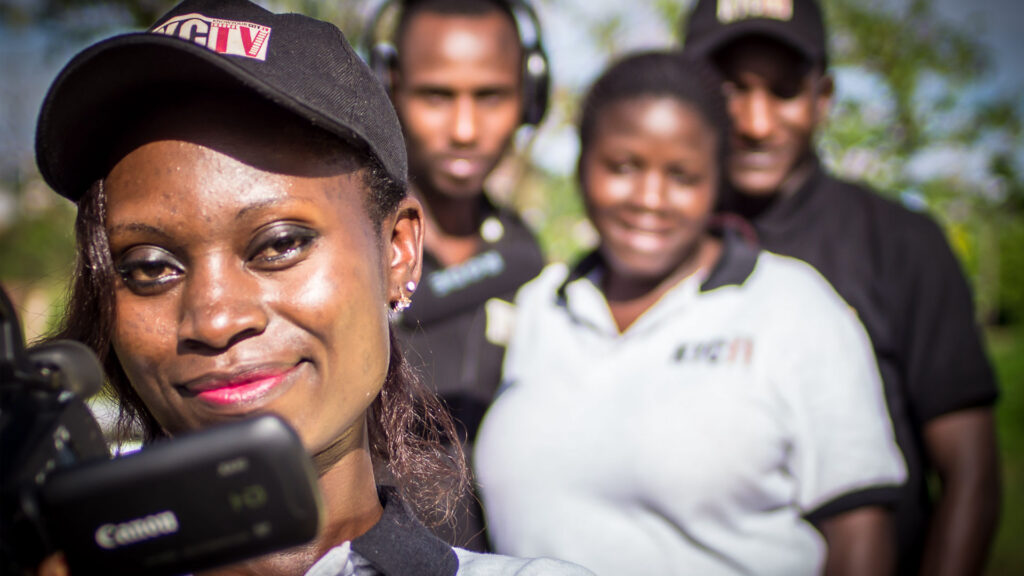
By Lutakome Benon (KYC.TV Uganda)
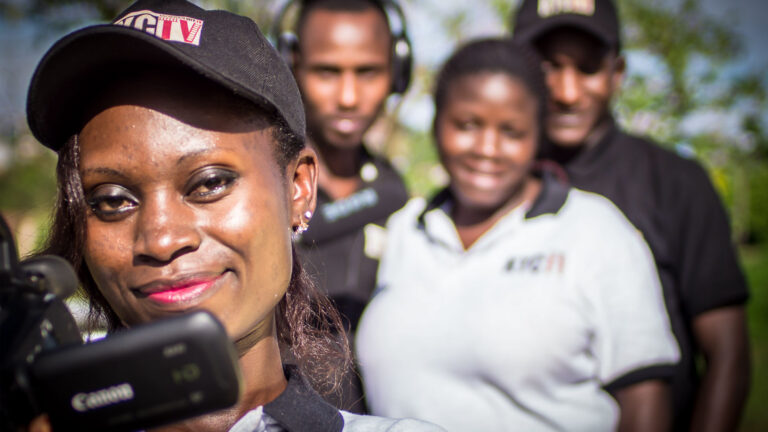
SDI is a movement that spans generations. Mamas who started savings groups decades ago, now organise alongside a new generation of federation members who film, blog and produce podcasts. Kalungi Joweria is one of many young people who have grown up in an SDI federation, where savings, organising and leadership are passed from one generation to the next.
Kalungi grew up in the informal settlement of Bukoto 1, Nakawa Division, Kampala. While still at school, she started a small cosmetics business, which she has continued to run alongside her other commitments.
“From the very beginning, confidence became my anchor,” she says.
Her confidence stood out and community leaders took notice. One leader from the Uganda SDI Federation encouraged her to join her first youth savings group, the Bukoto 1 Youth Saving Group in Bukoto 1 Parish, Nakawa Division.
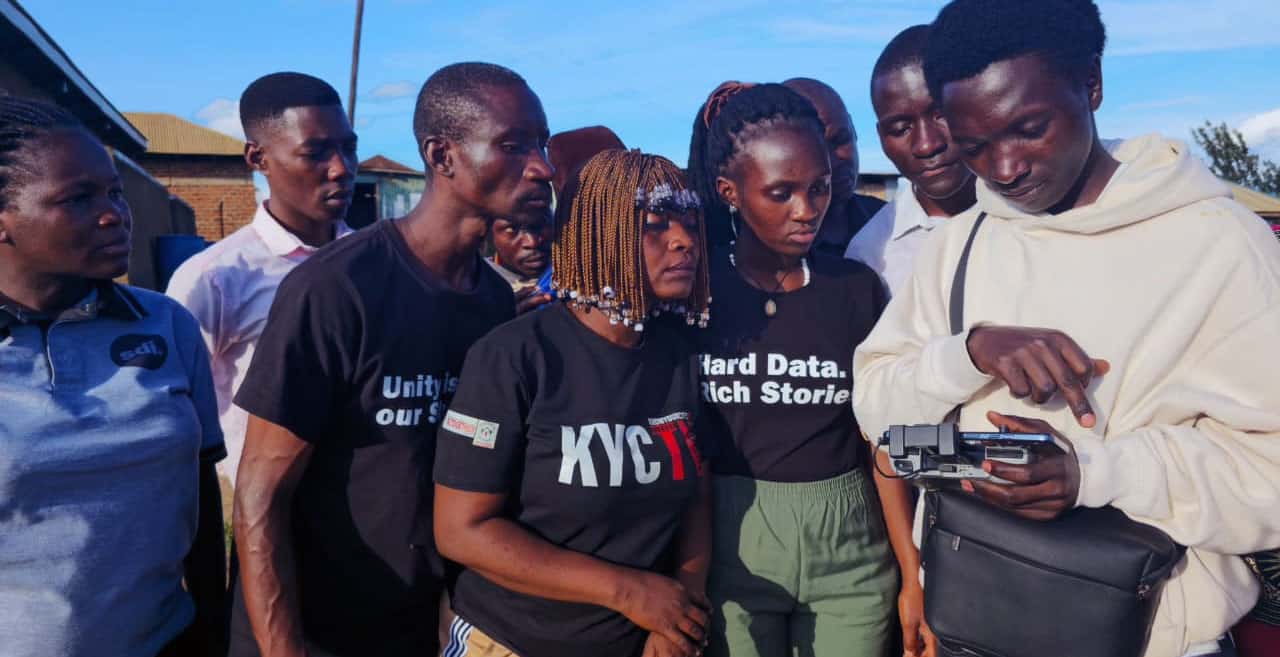
The KYC.TV lens
Kalungi began building connections with local leaders and joining campaigns to upgrade informal settlements. As she became more involved in the SDI network, new opportunities followed. One of these was Know Your City.TV (KYC.TV).
ACTogether Uganda invited young people interested in media production, including filmmaking, to apply for a training programme. The opportunity reached Kalungi through her group’s chairperson.
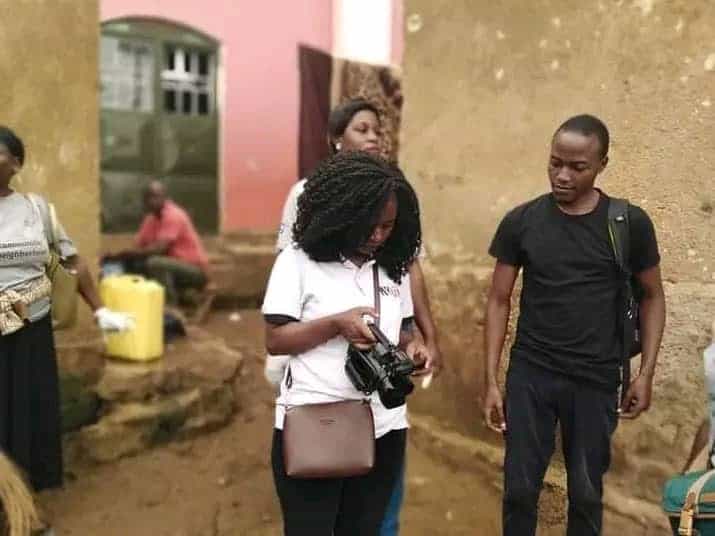
In 2015, Kalungi, together with Mawejje Allan, Nsimo Joan and Muwanguzi Solomon, was selected to attend training in South Africa, led by James Tayler, SDI’s Youth and Media Manager at the SDI Secretariat. Together, they formed what became the KYC.TV Team Uganda.
Since then, Kalungi has used storytelling, videography and photography to document the work of the Federation. Guided by the KYC.TV slogan, “make media to make change”, she has trained savings groups across the Federation in documentation and storytelling, while taking on an active leadership role within KYC.TV.



The KYC.TV Team Uganda continues to nurture new storytellers. Today, its members are expanding into blogging and podcasting, creating new ways for the knowledge, experiences and organising of Federation members to reach audiences around the world.
To follow more of SDI Uganda’s work, find them on Facebook, Instagram and YouTube.
“Plan with us, not for us” – SDI Nigeria federation speaks out on forced evictions
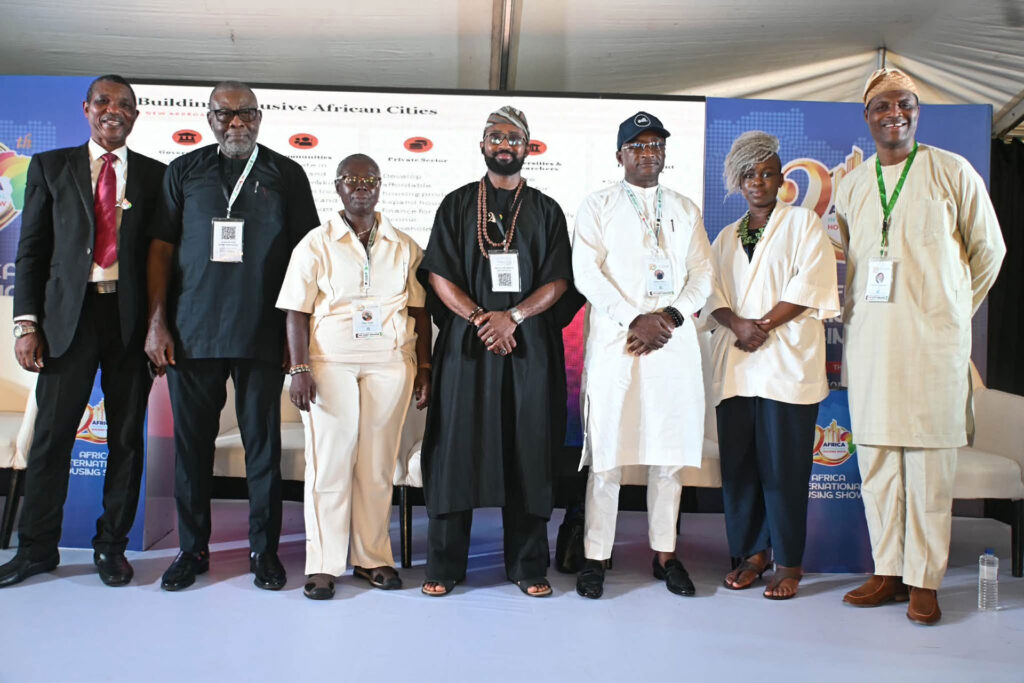
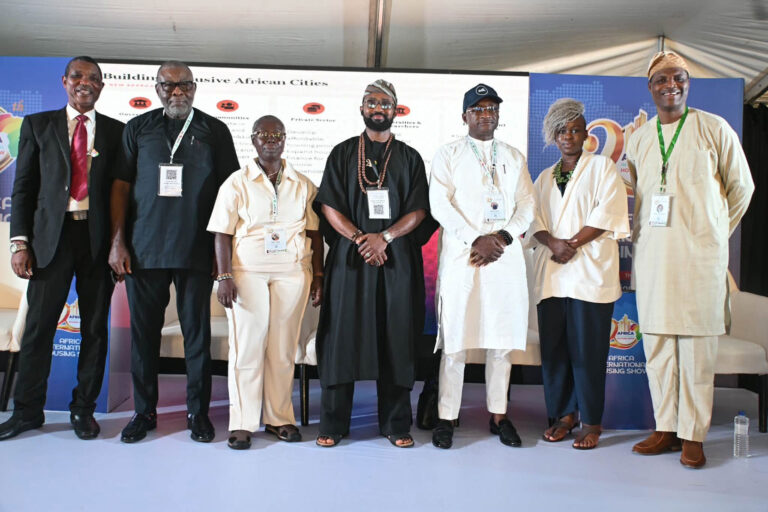
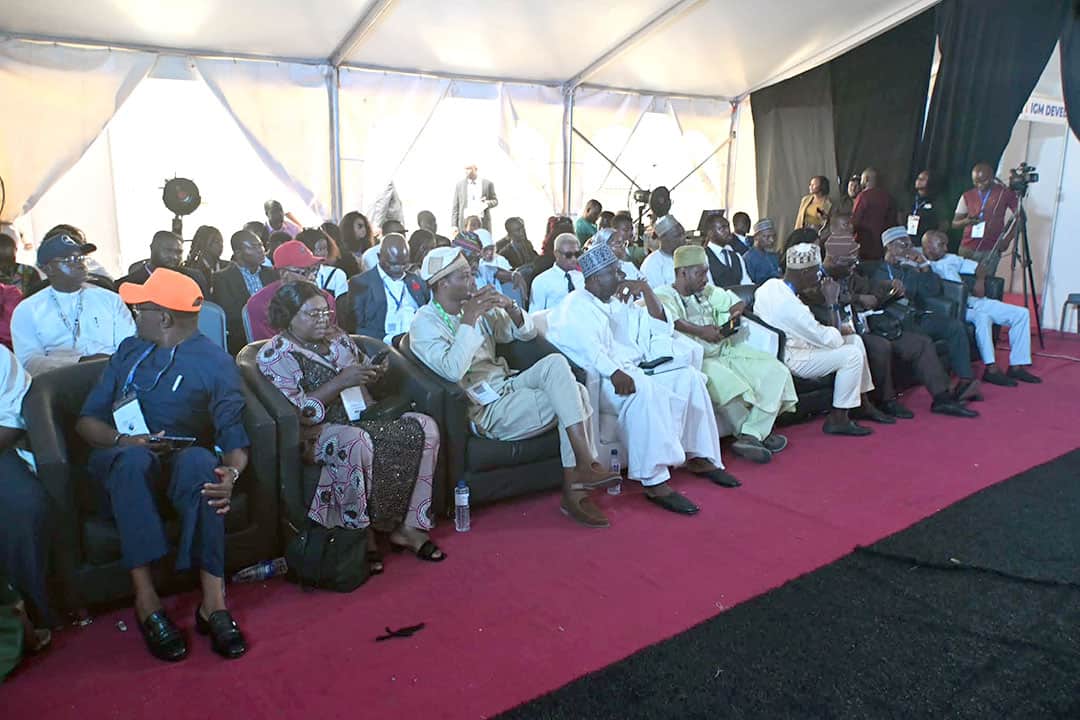
Representatives from the Shantytown Empowerment Foundation (SHEF) and the SDI Nigeria Federation joined a panel on Housing Solutions for Low Income and Informal Workers in Africa. This was part of the 20th anniversary of the Africa International Housing Show (AIHS) in Abuja, Nigeria.
The theme of the show was Financing Low-Income and Informal Sector Housing for Africa. Policymakers, housing professionals, partners and community representatives came together to look at practical ways to deliver inclusive and affordable housing.
Esther Bimbo Oshobe, President of the SDI Nigeria Federation, said the event gave the Federation a chance “to speak out and address homelessness, loss of livelihoods, separation of families, and loss of both adults and children, all caused by forced evictions by government.”
Bimbo was speaking about the mass evictions and demolitions in the Makoko, Oko Agbon and Sogunro communities in Lagos. More than 40,000 people were displaced in Makoko.
“When we say plan with us, not for us, it means we should be involved. We spoke about forced eviction not being the solution. So much research has already been done. We keep hoping for the best. If 70 to 80 percent of the population live in slum communities, why not give us a place among the decision makers?” she asked.
Rasheed Shittu, Executive Director of Shantytown Empowerment Foundation, said, “sustainable housing must be built on real community participation, secure land tenure, access to basic services, and partnerships that recognise the knowledge and contributions of residents living in informal settlements.”
Bimbo asked, “Where are the low income homes that we can afford? Why push us onto the streets by forcing us out of our homes? Slum upgrading can be done with us, by us, if government gives support and resources. Forcing us out of our homes, with nowhere to go but under bridges, only creates more slums.”
AIHS 2026 delegates adopted a 24-point Abuja Declaration. It calls on African governments to make affordable housing a priority, and to develop, finance and monitor national housing strategies across the continent, particularly for low-income earners and workers in the informal sector.
Rasheed thanked the organisers for creating the platform. “We look forward to continued collaboration in advancing housing policies and investments that leave no one behind,” he said.
“I hope government looks at the different suggestions we made. Having our voices in the conversation is a great step. We gave examples from other SDI affiliate countries, and we hope for better results.”
Bimbo concluded, “We are like water. We will always find our way.”

The Abuja Declaration on Housing Solutions for Low-Income and Informal Workers in Africa
Following extensive deliberations during the 20th Anniversary (Legacy Edition) of the Africa International Housing Show held from 13–18 July 2026 in Abuja, Nigeria, under the theme, Housing Solutions for Low-Income and Informal Workers in Africa, participants comprising Ministers, Governors, Members of Parliament, Mayors, development finance institutions, multilateral agencies, UN-Habitat, investors, mortgage institutions, housing cooperatives, developers, professionals, researchers, financial institutions, manufacturers, youth leaders and civil society organisations resolved as follows:
We hereby declare that:
- Affordable housing must be recognised as a strategic national development priority and a key instrument for poverty reduction, job creation and economic growth.
- Every African country should develop a National Affordable Housing Strategy with measurable annual housing delivery targets.
- Governments should increase annual budgetary allocations to affordable housing and supporting infrastructure.
- African governments should prioritise housing for low-income earners, informal workers, women, youth and persons living with disabilities.
- Land administration systems should be modernised through digitalisation, simplified land registration and reduced transaction costs.
- Governments should establish fast-track approval systems for affordable housing developments.
- Housing finance institutions should develop mortgage products specifically designed for informal sector workers using alternative methods of assessing income.
- Housing cooperatives should become a major delivery platform for affordable home ownership across Africa.
- African governments should strengthen partnerships with pension funds, insurance companies, sovereign wealth funds and private investors to finance affordable housing.
- Development Finance Institutions should expand concessional funding for affordable housing projects across Africa.
- Governments should encourage local production of building materials to reduce construction costs.
- African countries should promote innovative and alternative building technologies that lower housing costs while maintaining quality.
- Governments should provide tax incentives and fiscal support for developers delivering verified affordable housing.
- Housing policies should deliberately promote women and youth participation in housing development, ownership and construction value chains.
- African cities should prioritise slum upgrading, urban regeneration and climate-resilient settlements instead of forced evictions.
- Digital technology, Artificial Intelligence and data systems should be integrated into housing planning, land management and mortgage administration.
- Transparency, accountability and anti-corruption measures should be strengthened throughout the real estate sector.
- Strong collaboration among governments, the private sector and development partners should become the primary model for housing delivery.
- African governments should harmonise housing policies and encourage cross-border investment in real estate.
- AIHS should establish an Annual Africa Affordable Housing Performance Index to monitor the implementation of these resolutions.
- AIHS should launch an Africa Housing Innovation Network to support research, innovation and knowledge exchange.
- AIHS should continue recognising outstanding individuals and institutions through the 100 Champions of Affordable Housing in Africa initiative.
- Participants call on the African Union to adopt affordable housing as a continental development priority and encourage Member States to implement the recommendations of this Declaration.
- Participants reaffirm their commitment to work collectively towards ensuring that every African has access to decent, safe, affordable and sustainable housing.
Conclusion
Participants expressed appreciation to the Government and people of Nigeria, the Federal Ministry of Housing and Urban Development, development partners, sponsors, exhibitors, speakers, volunteers and the Board of the Africa International Housing Show for successfully hosting the 20th Anniversary (Legacy Edition).
The communiqué was unanimously adopted in Abuja, Federal Republic of Nigeria, on 18 July 2026, and shall be known as the Abuja Declaration on Affordable Housing for Low-Income and Informal Workers in Africa.
This declaration is AIHS’s signature legacy document and was presented to: The President of Nigeria, The African Union, UN-Habitat and African Ministers responsible for Housing.
When Young People Lead, Communities Move Forward
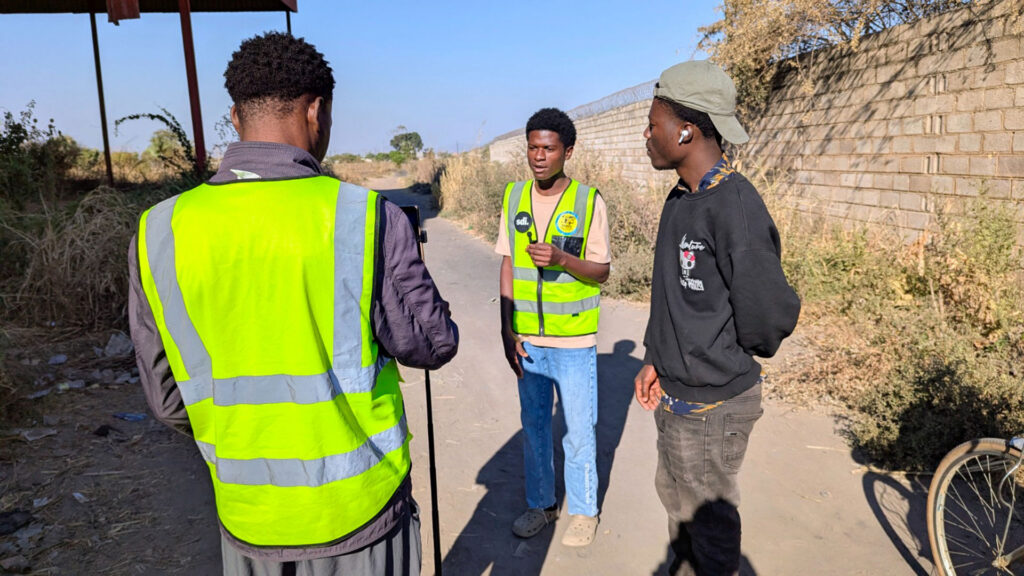
By Kafue Youth Federation, Zambia
Informal settlements are often described by what they lack: poor housing, no jobs, few services. But spend time in Kafue’s informal settlements and you see a different story. Behind every challenge are young people with ideas, energy, and knowledge of their own communities that no outsider can match.
That belief is at the heart of the SDI Impact Innovation Initiative, now in its first year in Kafue.

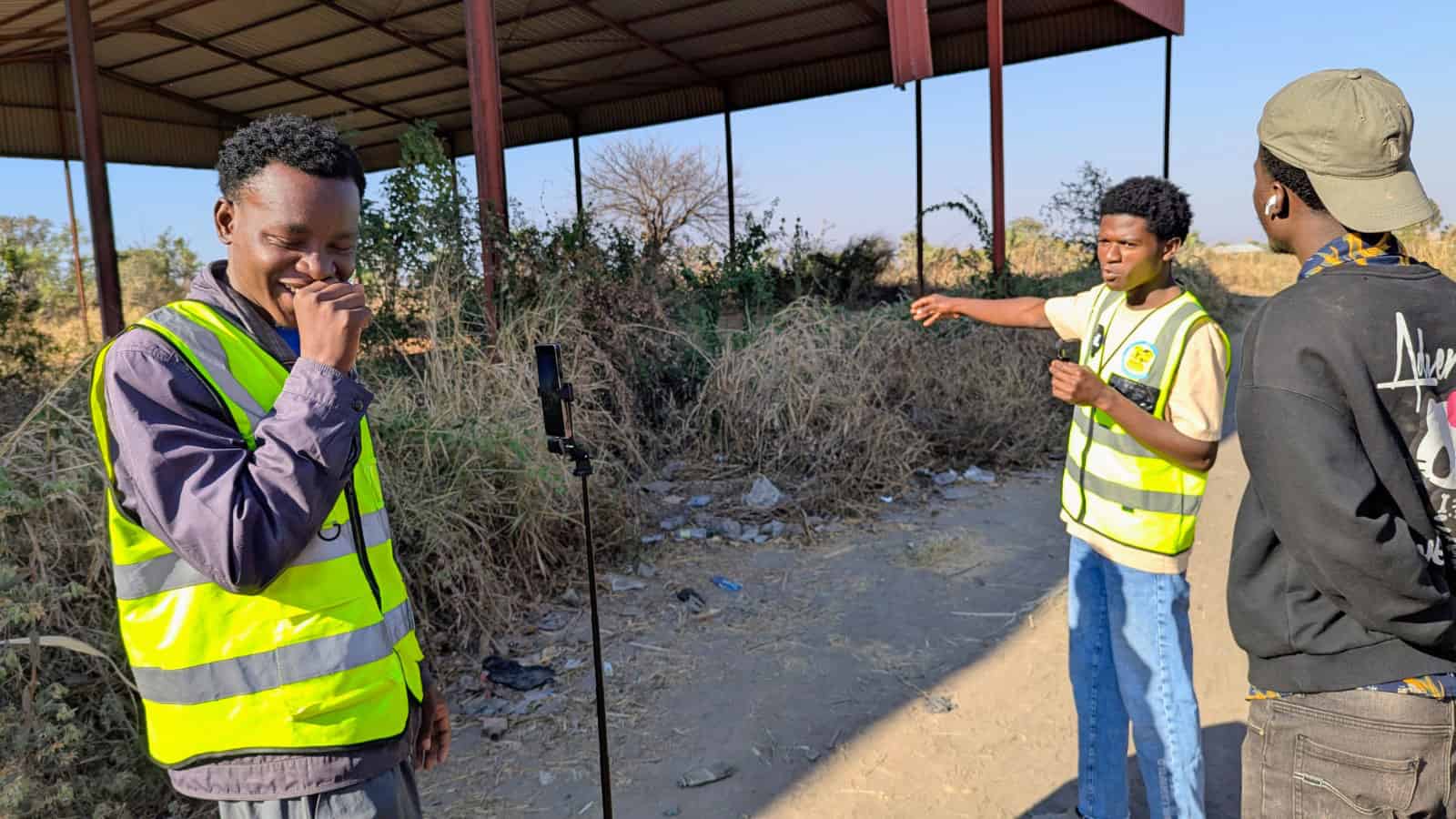
Over the past year, 230 young people from Soloboni, Mutendere, Flashbutt, Kalundu View and Lumumba came together to form the Know Your City (KYC) Youth Collective. More than half are young women. They were trained in community profiling, digital data collection, storytelling, learning, monitoring and evaluation and ethical research practice. Many had never seen themselves as researchers or leaders before. Now, their work is helping shape the future of their settlements.
One of the biggest achievements this year was profiling 3,226 households across the five communities.
One of the biggest achievements this year was profiling 3,226 households across the five communities. The result is more than numbers on a spreadsheet. The communities now have reliable information about their living conditions, livelihoods, access to services, climate challenges and opportunities for growth. For many residents, this is the first time their reality has been documented by people who understand them.
Too often, decisions about informal settlements are made without accurate local information. Investments are based on guesswork instead of evidence. When young people from the community collect the data, the knowledge belongs to the community. That knowledge can help local authorities plan better, help partners invest wisely and give communities a stronger voice when they push for what they need.
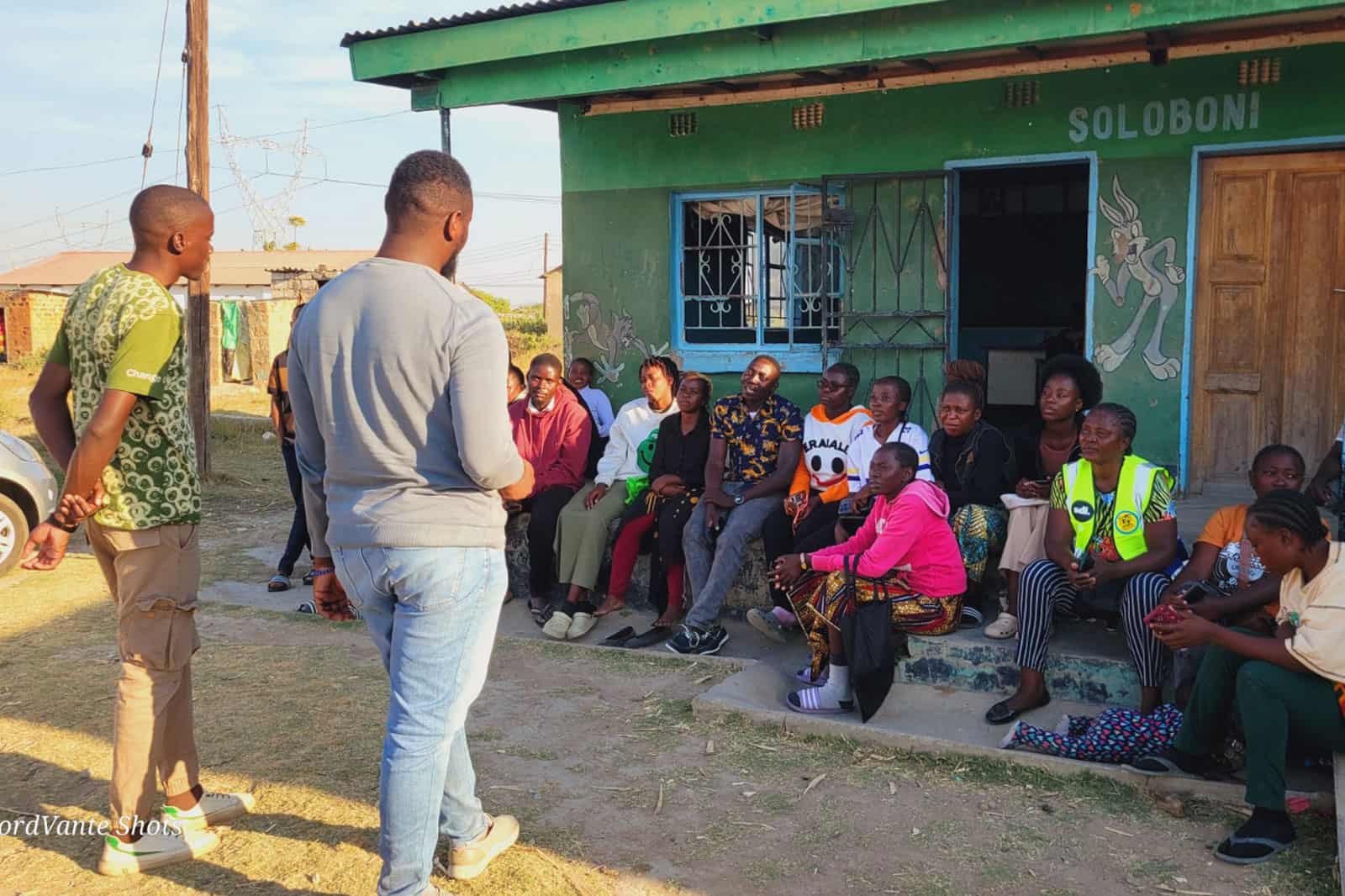
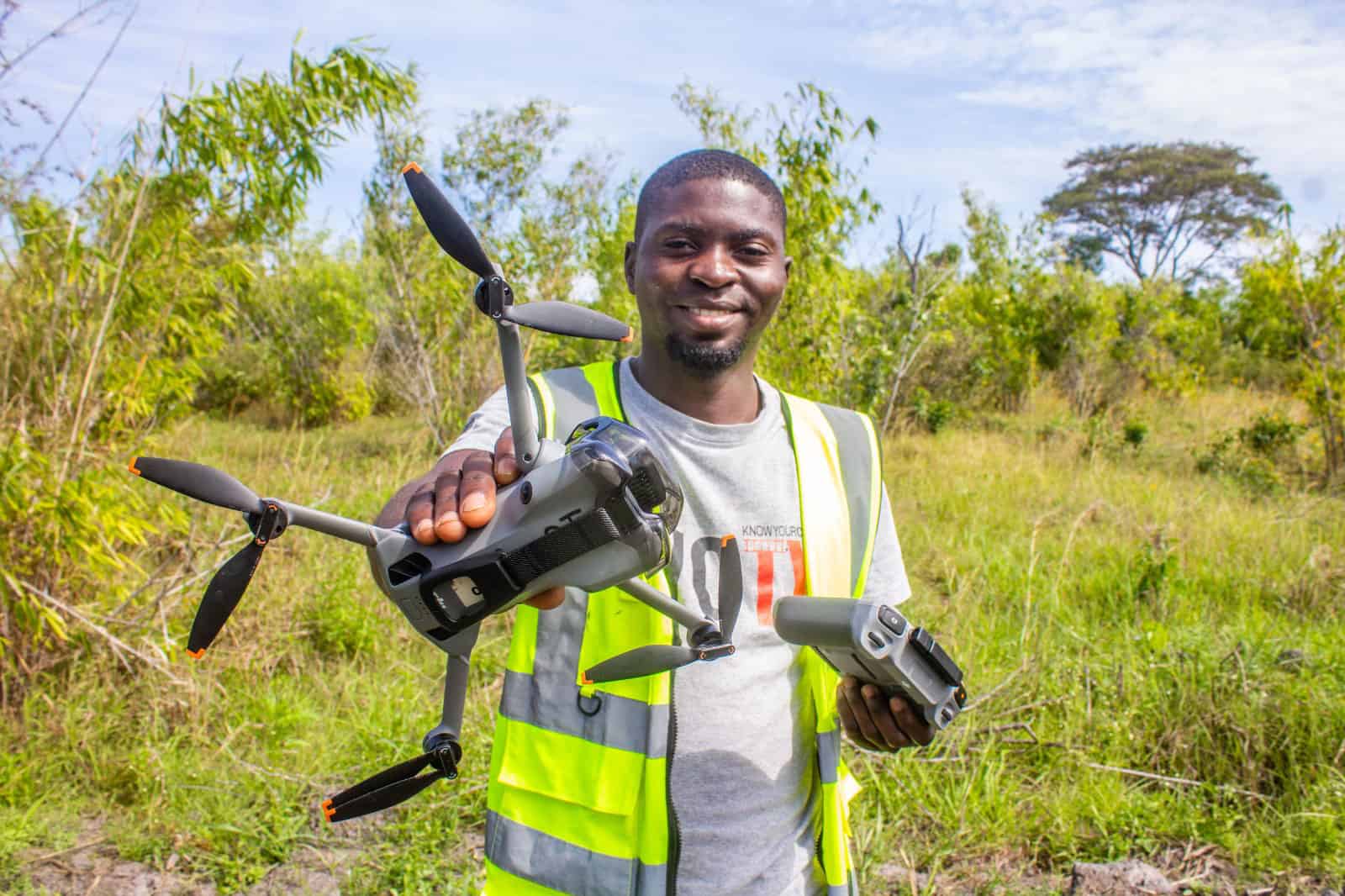
The gains go beyond data. Young participants have gained confidence, leadership skills, and practical experience that will stay with them long after the project ends. Some who were once nervous about speaking in public are now facilitating discussions, engaging local leaders and coordinating activities in their communities. They are creating their own opportunities.
Strong partnerships have shaped this work with the Kafue Town Council, Ward Development Committees, community leaders the Humanitarian OpenStreetMap Team (HOT) show is possible when institutions and communities share a common goal.
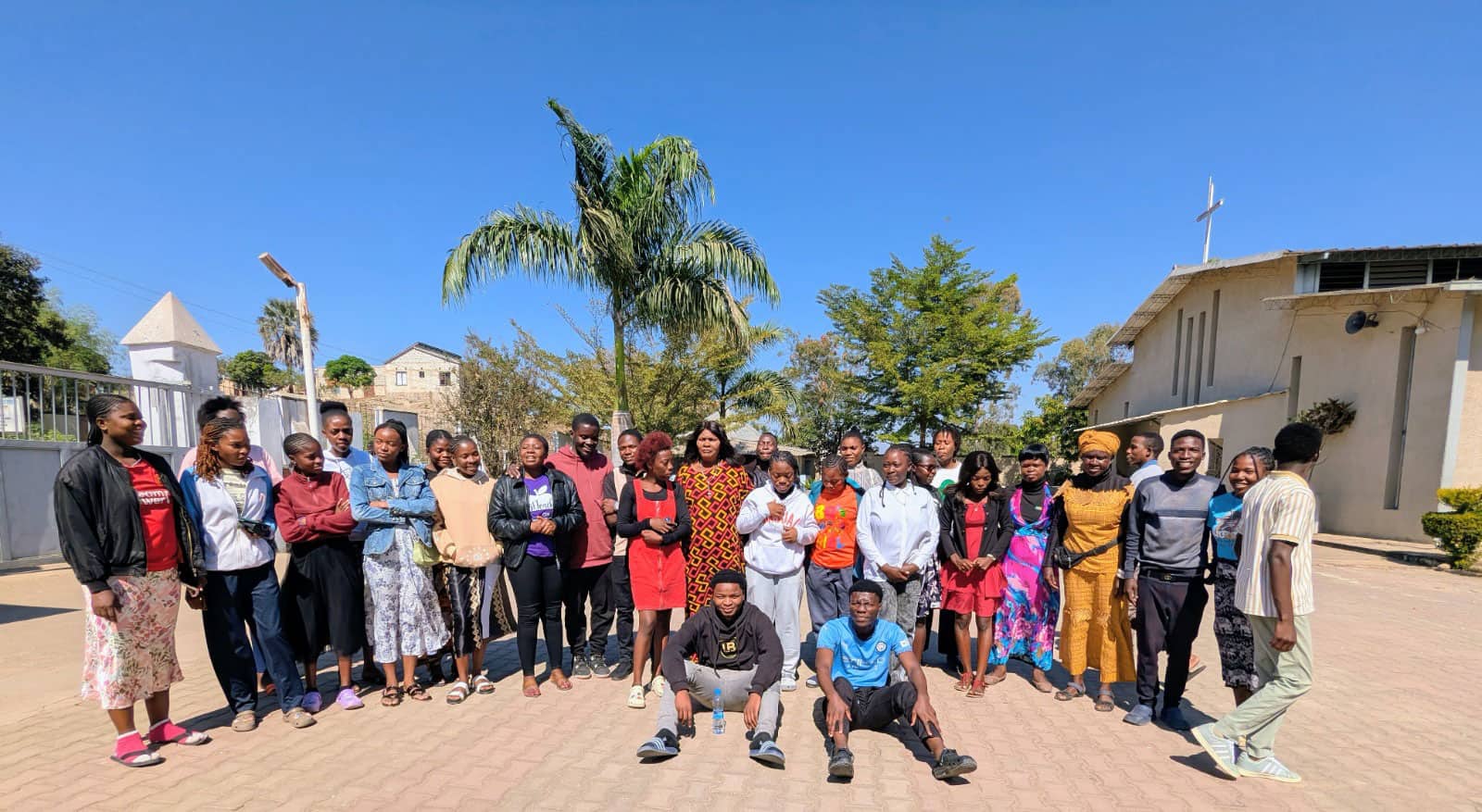
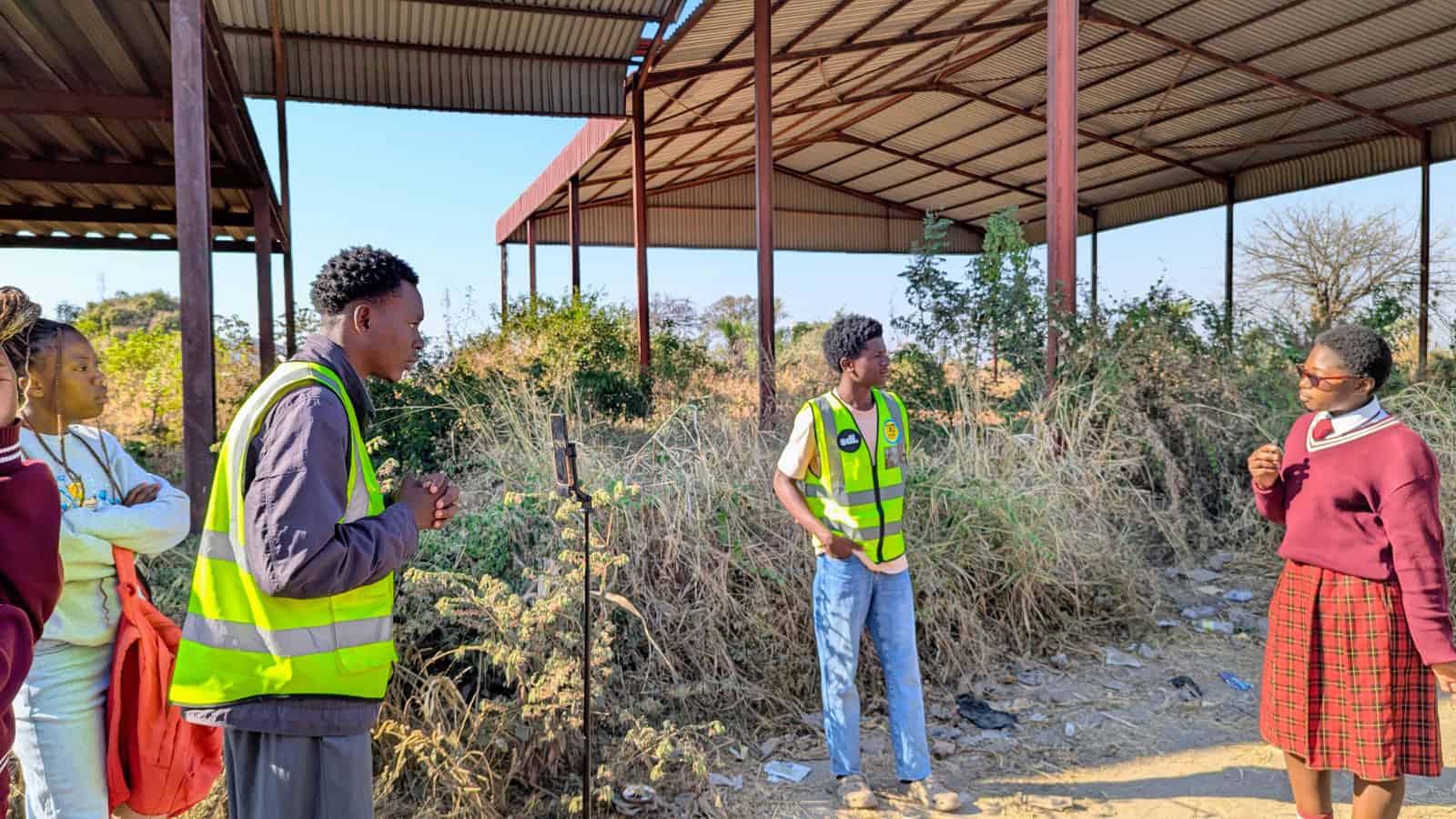
Year One built the foundation. Year Two is where the ideas from the past twelve months start to take shape.
The information from thousands of households will be studied to find opportunities in youth-led business, climate-smart farming, waste management and digital work. A Youth Knowledge Hub will give young people a space to study data, produce their own knowledge, and work with partners. Learning Labs will bring together communities, government, business and organisations to test solutions built on real community priorities, not assumptions. Drone mapping and geospatial analysis will add another layer, helping communities and local authorities see settlement conditions clearly and plan better.
Youth unemployment remains one of the biggest challenges in Zambia, especially in informal settlements. But young people are not just looking for jobs. They are looking for chances to contribute, build and shape better futures for themselves and their communities. By combining local knowledge with skills, technology and partnerships, this initiative is helping young people turn information into action and ideas into opportunities.
804 Youth. 3 Settlements. 5 Days. What We Learned.
By Asana Alhassan, Joan Mwinfang Aadaaryeb, Abdul Rasheed Yussif and Abdullah Salman
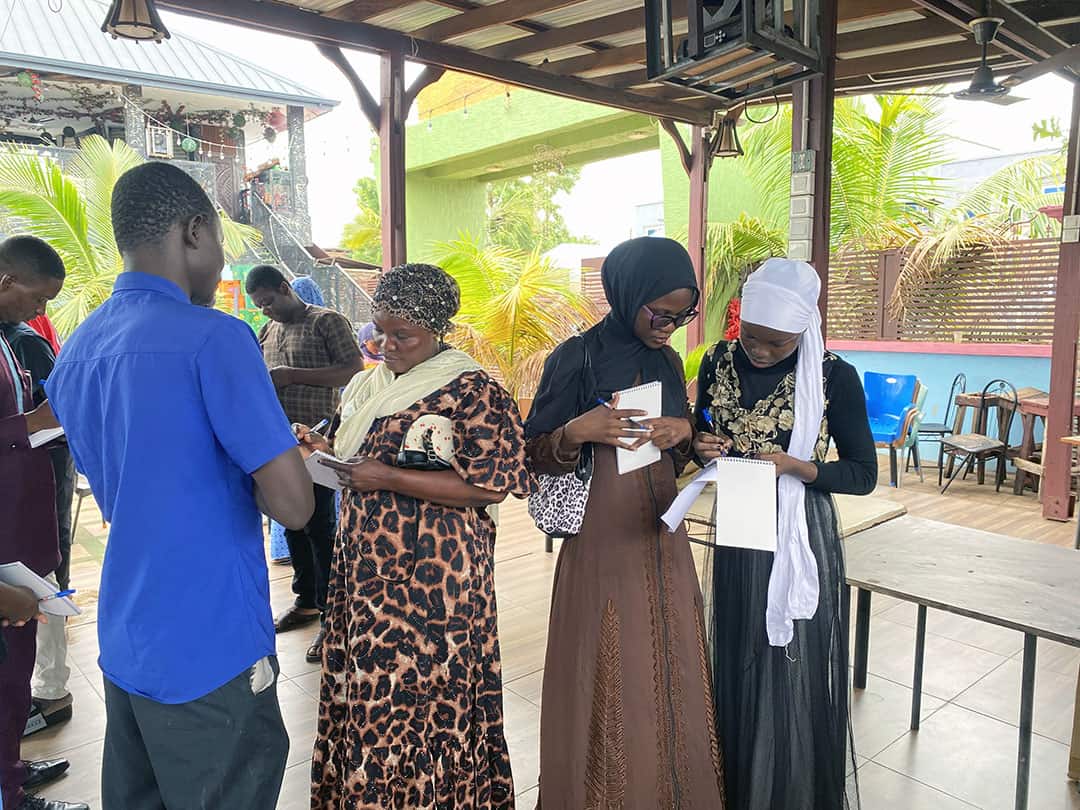
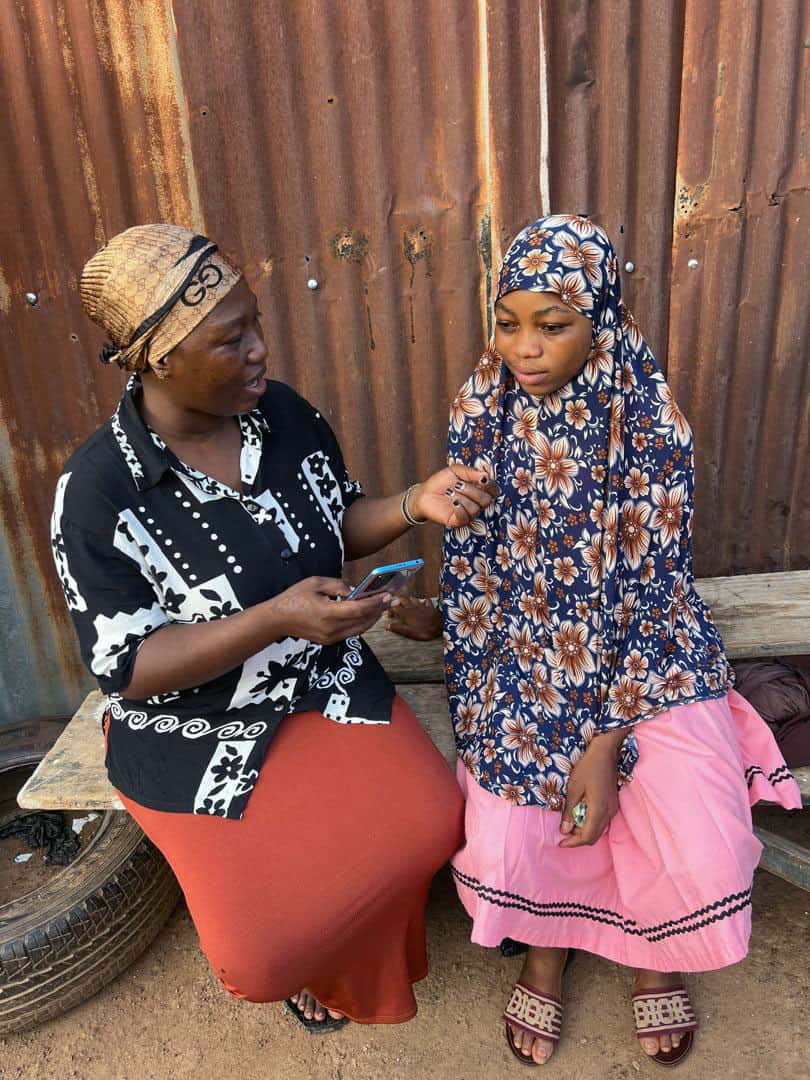
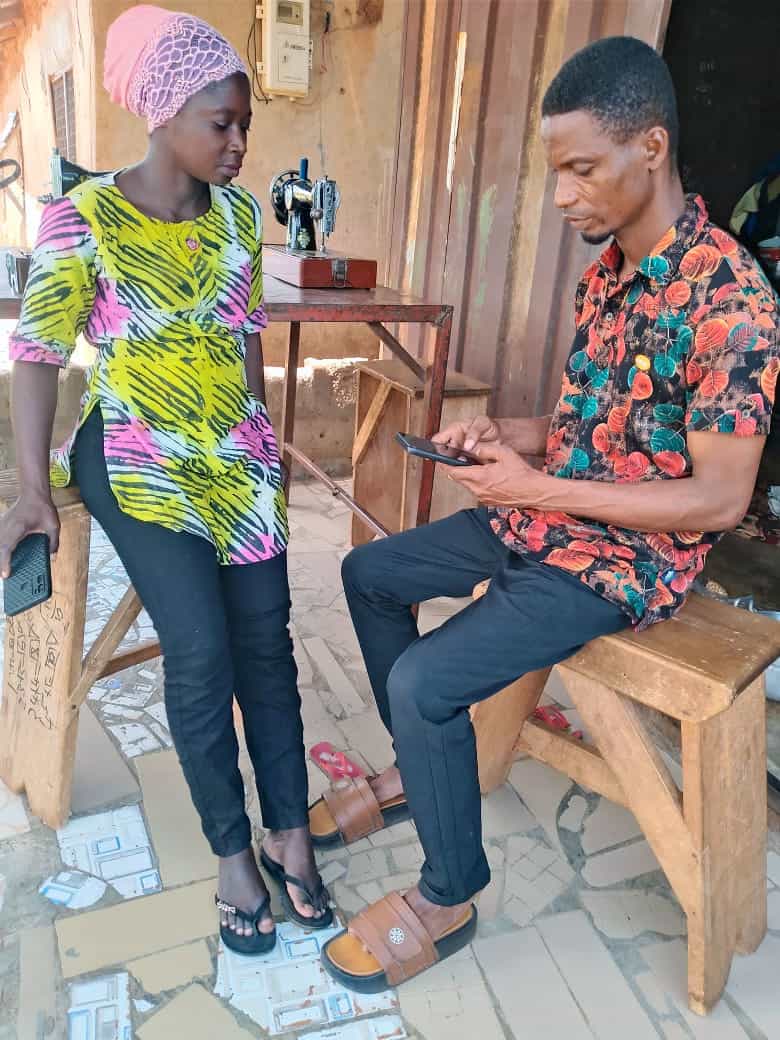
In just five days, a team of 30 trained SDI youth data collectors profiled 804 young people across the Tamale settlements of Lamashegu, Jisonaayili, and Kanvili.
Tamale is one of the fastest-growing cities in West Africa, and with that growth comes both urgent challenges and significant opportunity. Situated at the crossroads between southern Ghana and the Sahel, the city has long served as a hub for trade, migration and cultural exchange. Its population is predominantly young, bringing with it a depth of talent, creativity and energy that remains largely untapped.
Tamale is also the birthplace of Dr. Sulley Gariba, in whose memory the SDI Impact Innovation Initiative is dedicated.
The data collection exercise provided a detailed snapshot of the realities, aspirations and opportunities among participating youth in these communities, made possible through the Impact Innovation Initiative, led by People’s Dialogue Ghana and the Ghana Federation of the Urban Poor (GHAFUP) in partnership with SDI.
While the findings do not represent all youth in Tamale, they offer valuable insights for local government, development partners, civil society partners and community leaders looking to support youth development where it matters most.
Building Legitimacy
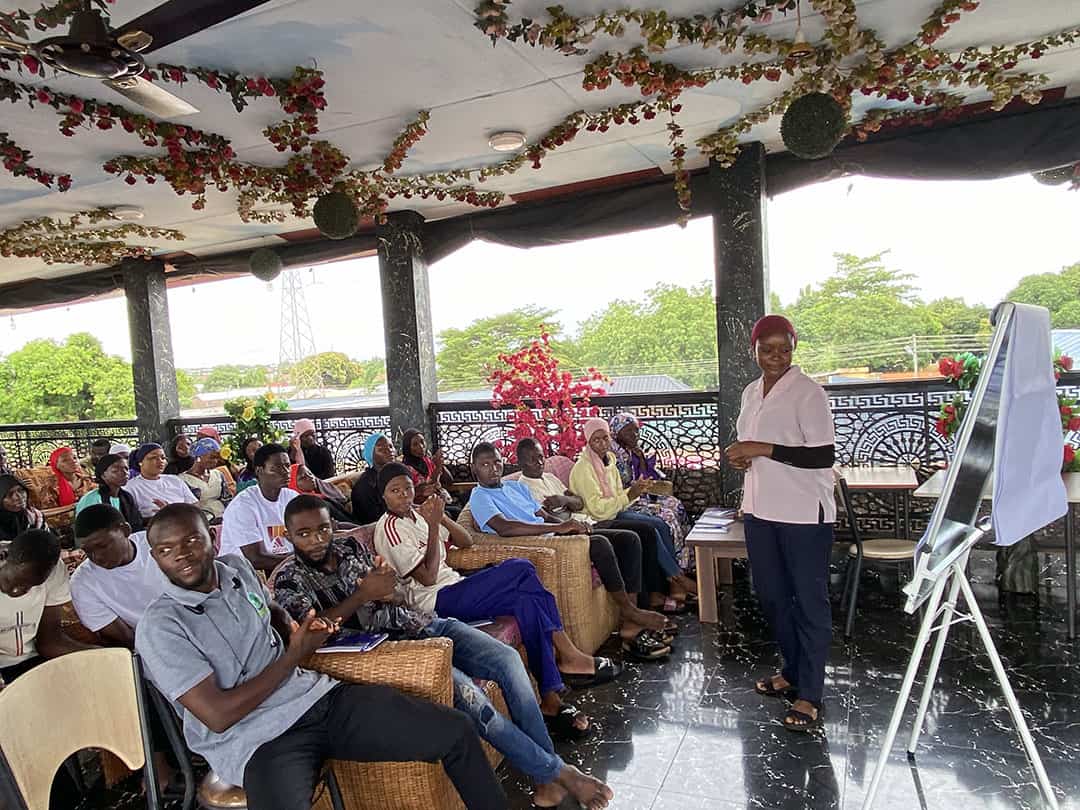
Before any data was collected, trust had to be earned. The project team began by engaging traditional authorities such as chiefs and elders whose influence shapes how communities receive and respond to any new initiative. Through a series of dialogues, the team introduced the work, clarified its objectives and made space for community concerns to be heard and addressed.
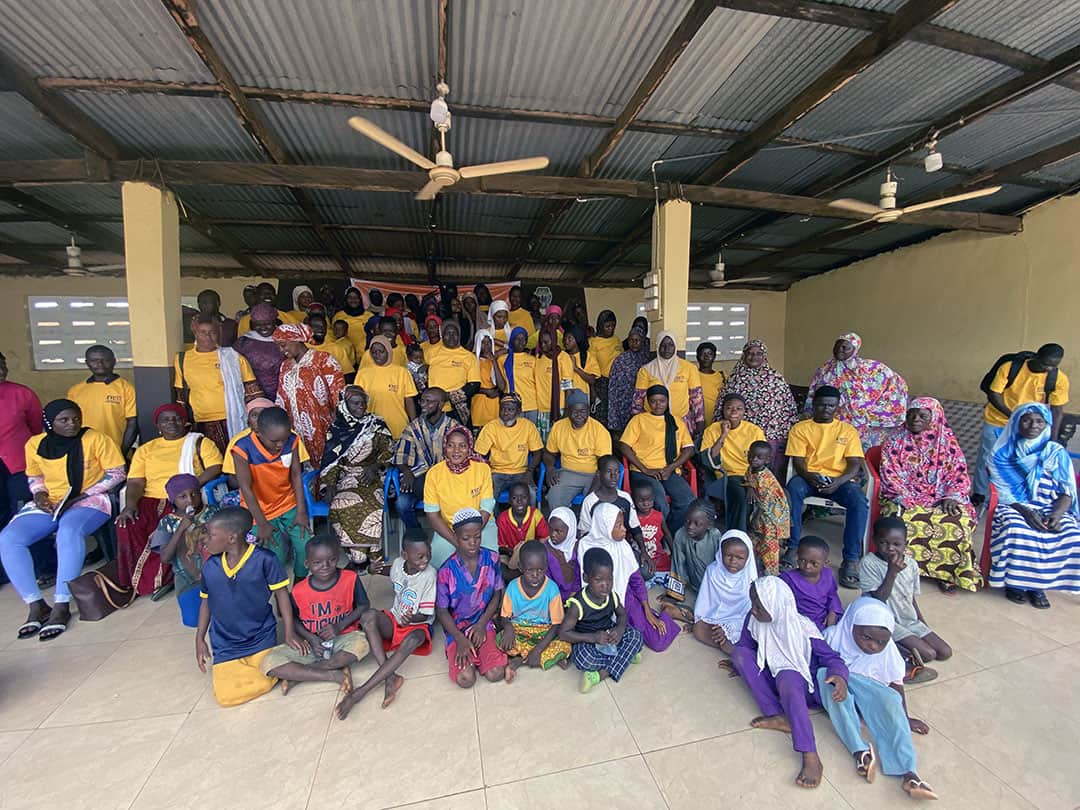
The result was a formal endorsement from traditional leaders, who did not simply grant permission but actively encouraged young people to participate. That backing ensured that the initiative was understood not as something imposed from outside, but as an effort rooted in and aligned with community priorities.
Engaging with traditional leaders, community groups and local government officials is SDI practice and vital for the sustainability of any initiatives and process.
Youth Leading the Way
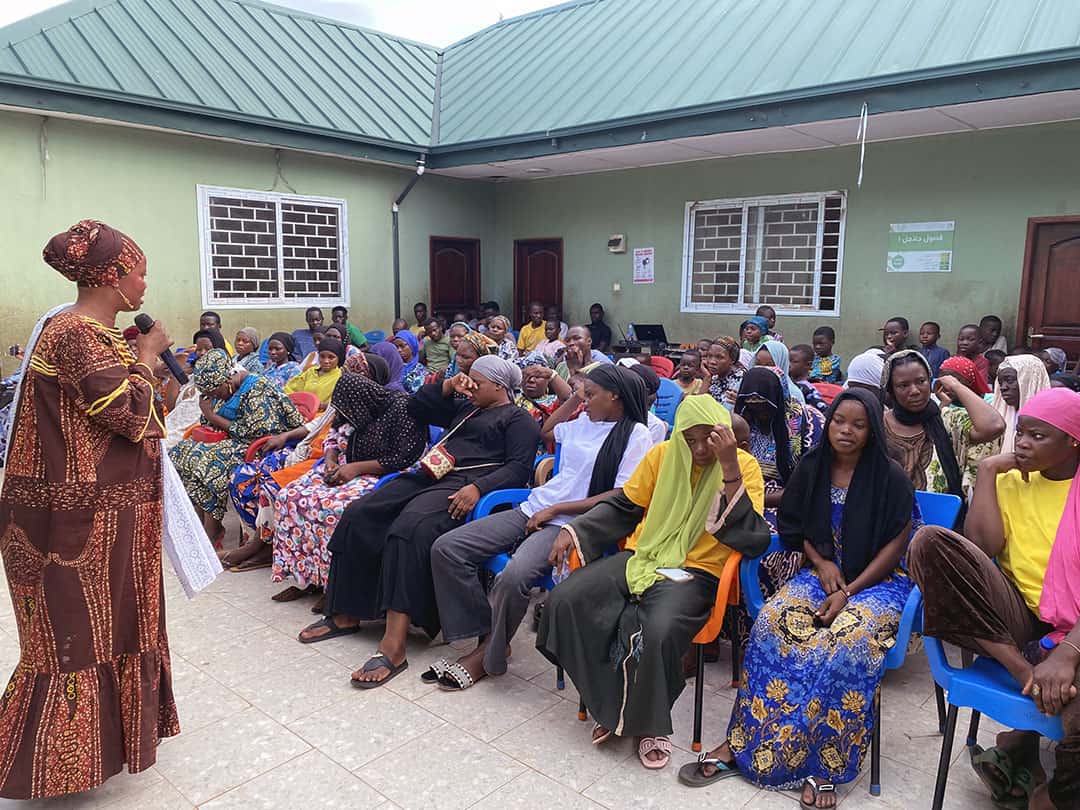
One of the most remarkable stories behind the numbers is the process itself. With community support and the endorsement of traditional leaders, young people took the lead in collecting data from their peers.
The result was a profiling exercise that reached 804 young people in only five days, demonstrating the power of youth-led action when the right resources are made available.
What the Data Tells Us
Young Women Showed Up:
53.6% of the youth profiled were female, highlighting strong participation from young women across the three settlements. This reinforces the importance of ensuring that future programmes, training opportunities and economic interventions continue to be inclusive and responsive to the needs of young women.
The Reality of Employment:
The data reveals a generation that is working hard to create opportunities for itself.
Among the youth profiled in Tamale:
- 35% are self-employed, primarily within the informal economy.
- 17.2% are unemployed.
- Only 5% reported being in formal employment
These numbers highlight both the resilience and the challenges facing young people. Many are actively finding ways to earn a living, but access to formal employment remains limited.
skip render: ucaddon_uc_piechart
skip render: ucaddon_semi_circle_progress_bar
skip render: ucaddon_semi_circle_progress_bar
A Digital Opportunity
One of the most promising findings emerged from the digital landscape. While 83.3% of respondents reported familiarity with smartphones, about 48.6% identified as digital beginners, highlighting a significant opportunity for digital skills training and workforce development.
The message is clear: the challenge is no longer simply access to devices, it is access to digital skills.
Why This Matters
Africa is the world’s youngest continent. More than 60% of its population is under the age of 25. The findings from Lamashegu, Jisonaayili, and Kanvili speak directly to that reality.
Young people are participating. Young women are engaging. Smartphones are already in use. Informal businesses are thriving despite challenges. Yet gaps remain in employment opportunities and digital skills development. For local governments, development organisations, civil society actors and donors, this is an opportunity to invest where the impact can be greatest:
- Digital literacy and workforce readiness programmes
- Youth entrepreneurship and business support
- Employment creation initiatives
- Skills development tailored to local economic opportunities
- Gender-responsive youth programmes
The Bigger Message
SDI youth are showing much-needed leadership in the settlements they live and work in. The success of profiling 804 young people in just five days is remarkable by any measure. Few professional consultants or research firms could achieve this reach or depth of access in the same timeframe. This is the unique capacity of on-the-ground movements and grassroots organisations like SDI, rooted in communities, trusted by residents and able to generate data from within settlements that would be very difficult to replicate by third parties.
But who this data serves matters as much as what it reveals. Community-led data collection carries with it a degree of accountability that conventional research often does not.
It is not extracted and handed upward to funders or policymakers. It carries accountability to the settlements and to the young people who were not merely subjects of this exercise but active participants in it. This data and the innovation it drives, is meant to benefit those who made it possible in the first place.
These young leaders have embraced the power of data as a tool to navigate the challenges in their settlements and cities and by directly addressing problems in their settlements, explore livelihood opportunities for themselves.
Strengthening SDI Federations
The Impact Innovation Initiative is not only a data exercise; it is an opportunity to strengthen the SDI federations in Tamale. This is particularly significant given the lasting damage inflicted by the COVID-19 pandemic, which severely disrupted the livelihoods of women in Tamale and weakened community federations built over many years.
In response, the initiative is actively revamping SDI federation and savings groups across six settlements: Jisonaayili, Kanvili, Choggu, Sognaayili, Kalipohini, and Lamashegu. The work is twofold: rebuilding the women’s federation movement that sustained these communities before the pandemic and simultaneously nurturing a new youth movement capable of carrying that legacy forward.
SAMASOL Passive Cooling Infrastructure: Community-led Climate Adaptation in Action
By Celine Santos
As temperatures continue to rise due to climate change, urban poor communities are vulnerable to extreme heat. To address this challenge, a passive cooling infrastructure initiative was implemented as a catalytic demonstration of climate-responsive housing in the Samahan ng Matute at Soliman Homeowners Association Inc. (SAMASOL HOA) in Davao City. The initiative also strengthened the capacities of neighboring homeowners’ associations (HOAs), including those from Kidapawan and other communities across the Davao Region, through knowledge-sharing and skills development.
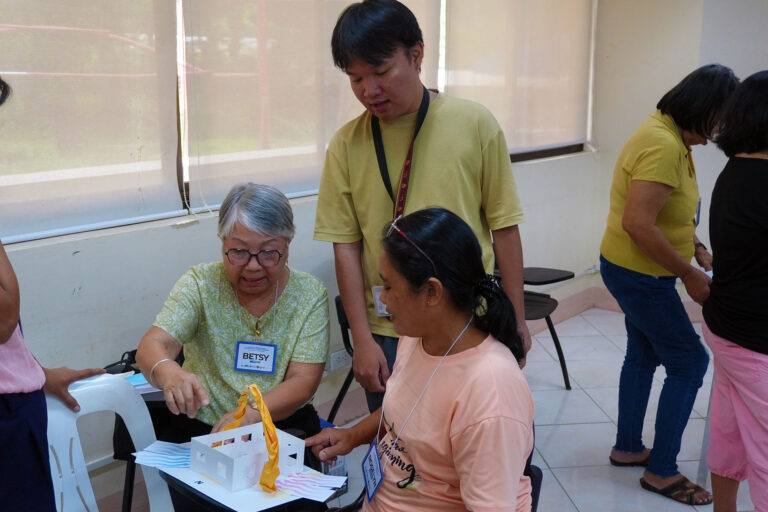
As part of the project, three passive-cooling retrofit houses were completed, demonstrating practical, affordable housing improvements that enhance indoor thermal comfort while reducing reliance on electricity. Capacity-building activities equipped community members and leaders with the knowledge and skills to understand the benefits of passive cooling, retrofit existing homes, and adapt household structures to changing climate conditions. These activities also strengthened participants’ competencies in planning, implementing, and maintaining green infrastructure interventions for climate adaptation, while promoting the integration of climate-responsive and green infrastructure principles into local development planning, environmental management, and community resilience initiatives.
The From Islands to Highlands: Strengthening Community-led Climate Adaptation in the Philippines project, implemented by the Philippine Action for Community-led Shelter Initiatives, Inc. (PACSII) under the Swedish International Development Cooperation Agency (SIDA) supported Accelerating Locally-Led Responses to Climate Change in Informal Settlements program of Slum Dwellers International (SDI), in partnership with the Homeless People’s Federation Philippines Inc. (HPFPI) and the Technical Assistance Movement for People and Environment, Inc. (TAMPEI), adopted a community-led approach to climate adaptation. Homeowners actively participated in the planning, design, and implementation of the passive cooling retrofits, ensuring that the interventions reflected their needs, priorities, and locally available resources. The three completed retrofit houses now serve as demonstration sites, allowing neighboring communities to observe firsthand that practical, low-cost housing improvements can enhance resilience to extreme heat, improve indoor thermal comfort, and contribute to healthier, more comfortable living conditions.
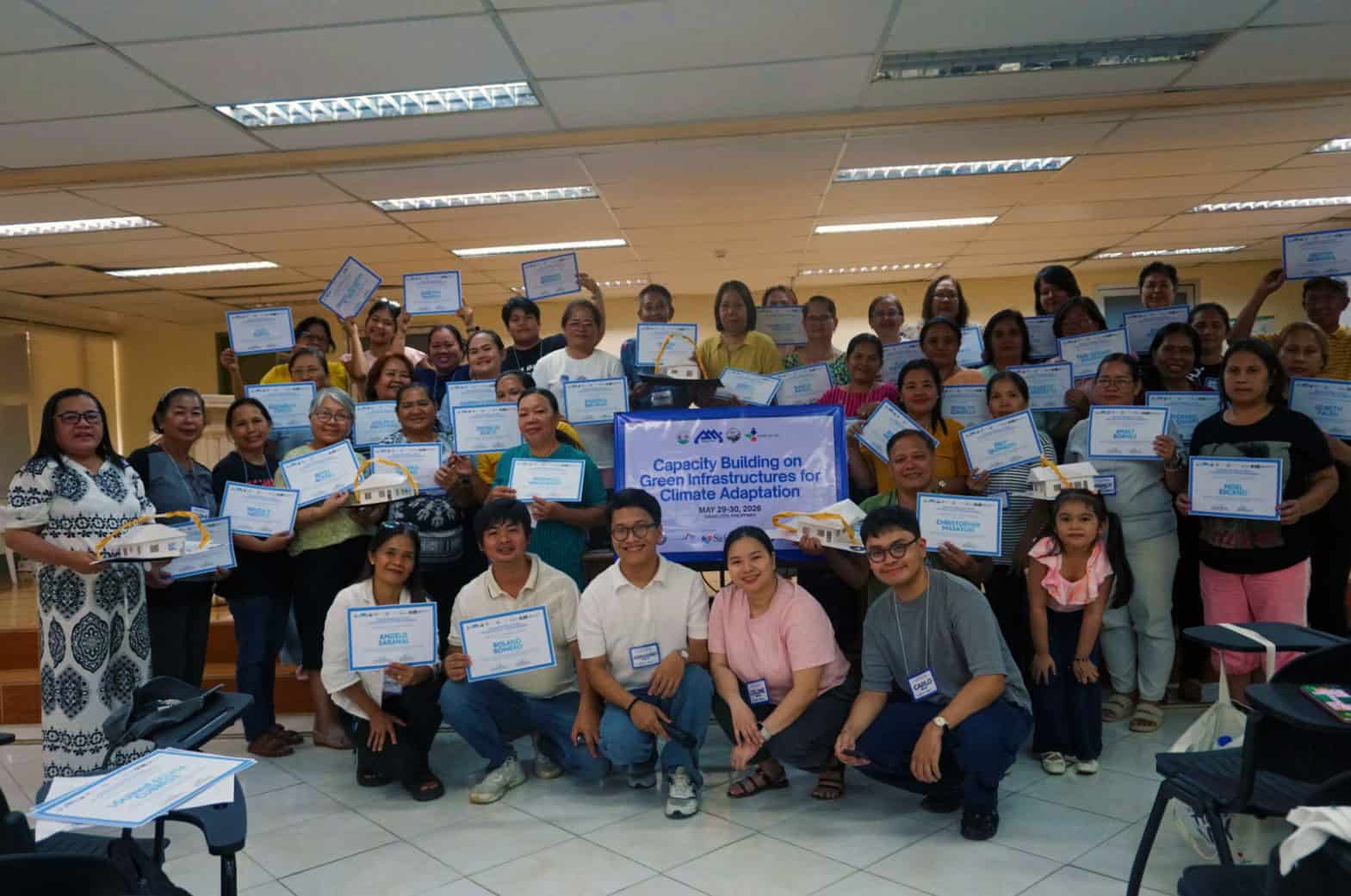
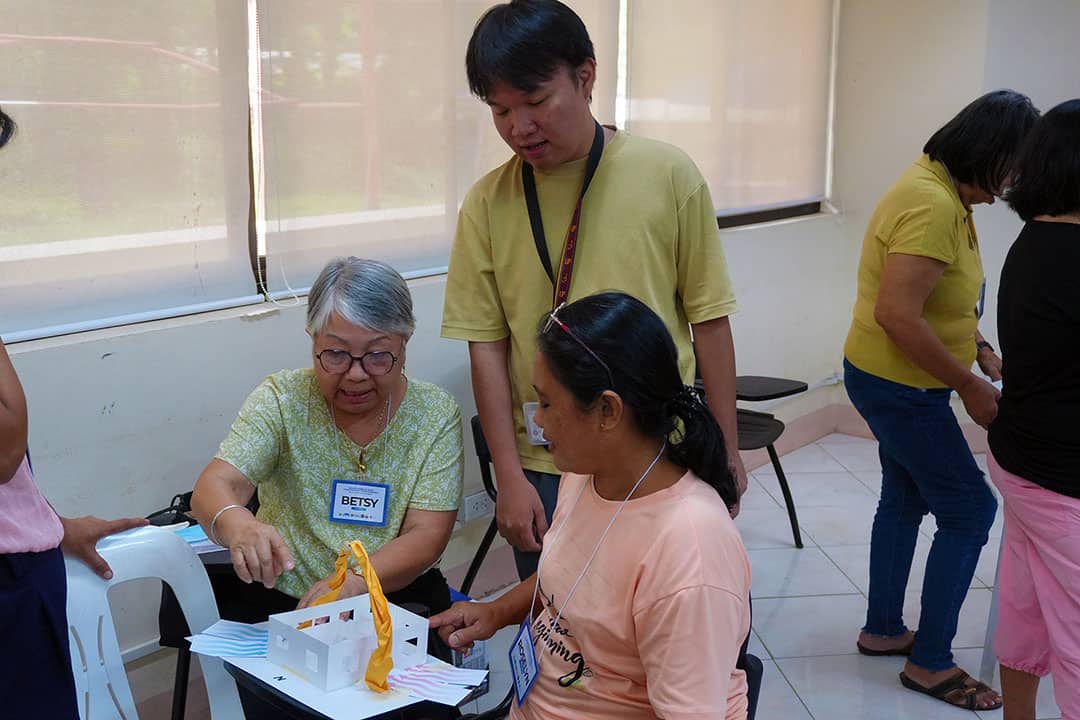
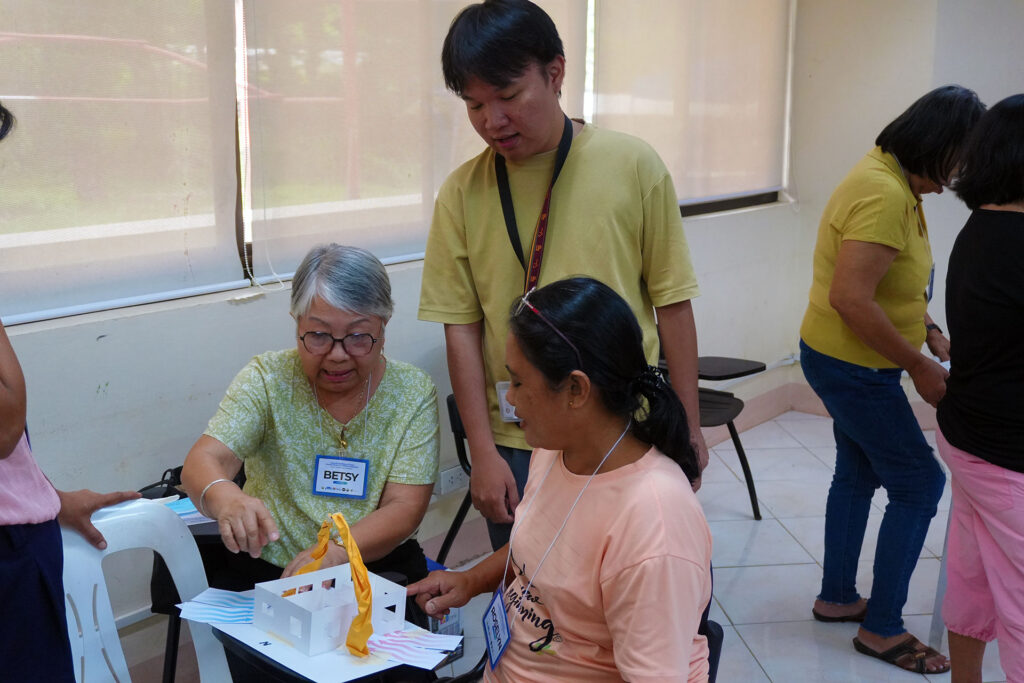
To support the scaling of these interventions, PACSII, together with TAMPEI and HPFPI, organized a Capacity Building on Green Infrastructure for Climate Adaptation, bringing together homeowners’ associations from across the Davao Region. Through technical sessions, site visits, peer learning, and participatory action planning, participants gained practical knowledge on passive cooling, climate-responsive housing, and green infrastructure. Inspired by the SAMASOL experience, participating communities developed their own action plans to replicate passive cooling and other nature-based climate adaptation solutions within their respective communities.
The success of SAMASOL Passive Cooling Infrastructure demonstrated how community-driven innovation can transform housing into a practical climate adaptation solution. By combining local knowledge, technical expertise, and strong community participation. The project has created a scalable model that contributes to healthier homes, reduced energy costs, and more climate-resilient communities. The lessons generated through this initiative will continue to inform the expansion of passive cooling and green infrastructure interventions across other project sites in Mindanao and beyond.


Call to Action: Understanding Meaningful Youth Engagement (MYE) in Urban Poor Communities
By Celine Santos
Meaningful Youth Engagement (MYE) in informal settlements and urban poor communities is crucial, as young people are often challenged by risks such as climate-related risks, insecure housing, unemployment, limited access to services (e.g., health and education), disaster vulnerability, waste management issues and social exclusion. Through continuous technological advancements and globalization, the youth provide critical insights into their local realities, community dynamics, and innovative, realistic solutions that contribute to traditional planning and decision-making processes.
Through the efforts of Philippine Action for Community-Led Shelter Initiatives, Inc. (PACSII) and Homeless People’s Federation Philippines Inc. (HPFPI), with the Accelerating Locally-Led Responses to Climate Change in Informal Settlements and Slum program, launched by Slum Dwellers International (SDI), supported by funding from the Swedish International Development Cooperation Agency (SIDA), one of the priorities is strengthening the youth network in the Philippines through the HPFPI Youth in becoming an established National Youth Chapter in the Federation Hub. The SIDA youth engagement pilot site in Iloilo launched the city-level “Kumustahan,”[1] transforming the Iloilo Youth Hub from a single-site initiative into a national learning hub supporting youth-led climate and urban initiatives across Luzon, Visayas, and Mindanao. The Kumustahan highlighted varying levels of youth organizing, identified areas needing support and focused on strengthening youth councils, expanding membership, and scaling youth-led initiatives on climate action, DRR-CCA, waste management, urban development, and community engagement.
It also identified key priorities such as intergenerational mentorship through exposure, youth leadership development, advocacy, resource mobilization, and institutionalizing meaningful youth participation through trainings and workshops within federation structures.
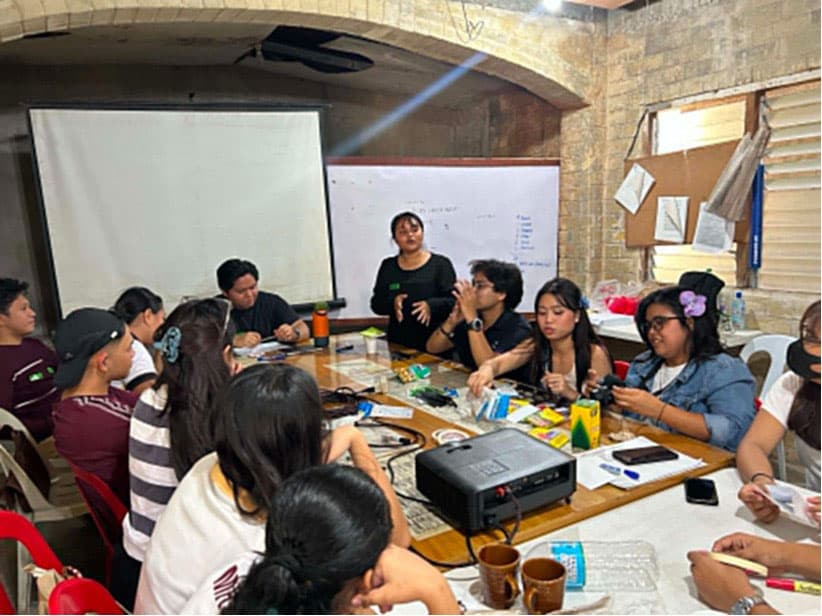
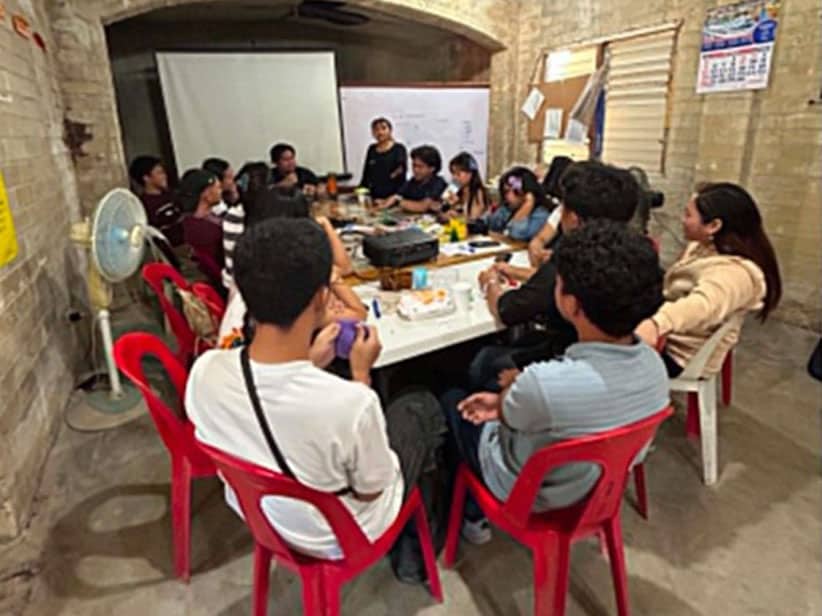
Youth Members of Homeless Peoples’ Federation Philippines Inc. (HPFPI) in Visayas Conducting their Regional Strategic Planning
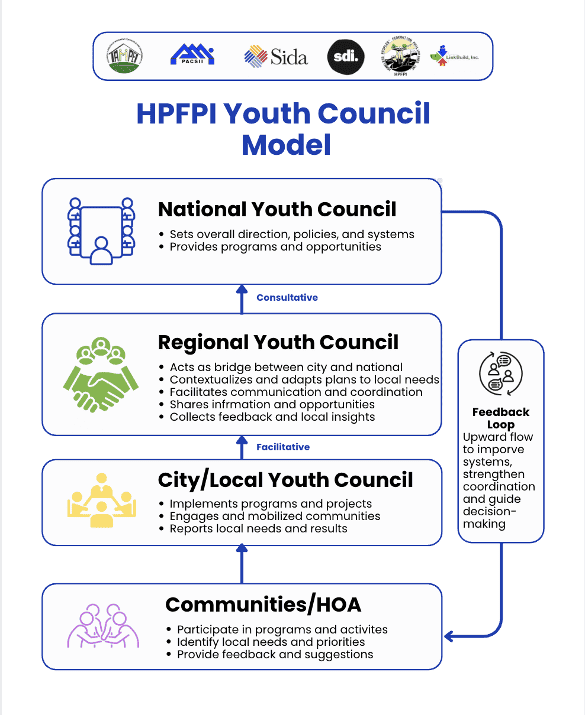
The Youth Council model begins within the individual Homeowners’ Associations (HOA), where youth participate in local programs and activities with the federation to identify needs and priorities. This entails a feedback mechanism that flows upward to help improve systems, strengthen coordination, and guide future decisions at all levels. Moving upward, the city or local youth councils, which comprise a collection of HOAs, carry out programs and directly engage communities in various activities and initiatives. The Regional Council, which is composed of the city youth councils, serves as the bridge that coordinates communication, adapts national plans to local contexts, and facilitates implementation. Lastly, the national level provides overall guidance, oversight, systems, and policies for the HPFPI Youth Council.
The city-level check-ins concluded in the first quarter of 2026, and now the Youth is on the Regional Strategic Planning (RSP) within the three major islands of the Philippines: Luzon, Visayas, and Mindanao. Moreover, the formation of Youth Councils at the Regional level of the HPFPI Youth recognizes the role of Youth as a bridge between the national network and local communities by ensuring effective communication, adapting national systems to regional needs, and facilitating coordination with city and local councils. Through exposure, mentorship, and training, the youth council is geared towards its alignment with the bigger Federation goals while maintaining agency, leadership roles, and meaningful contributions beyond simply supporting existing structures. Furthermore, strengthening youth leadership, strong information flow, local adaptation, and continuous learning are essential for building effective and sustainable council systems.

[1] Kumustahan is a Filipino term for check-in or catching up from the greeting “kumusta” or “how are you?”